
Content table of contents
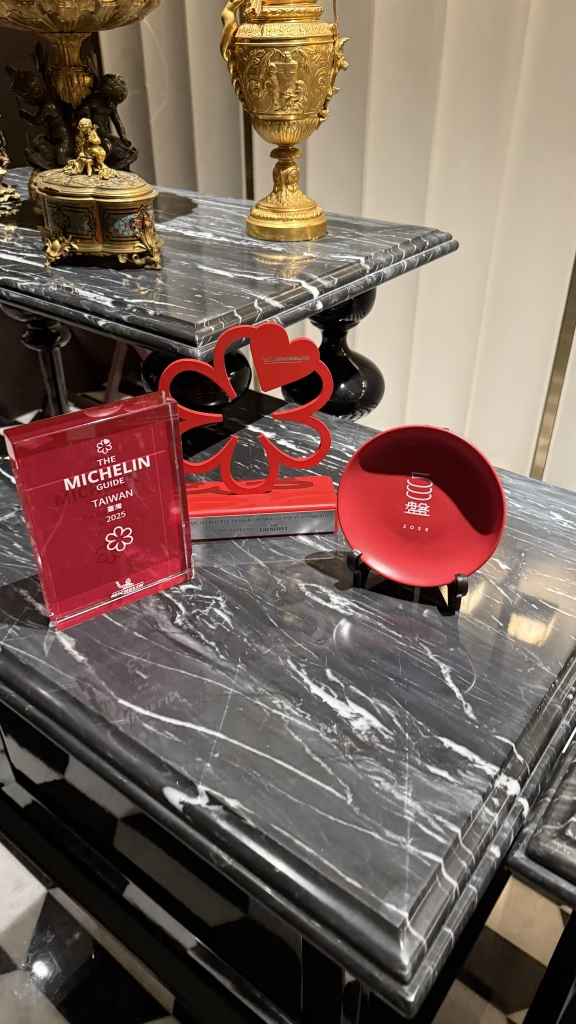
Only one year after its opening, AMAZE won a Michelin star. AMAZE is undoubtedly one of the most watched Chinese Fine Dining restaurants in Taipei in recent years.
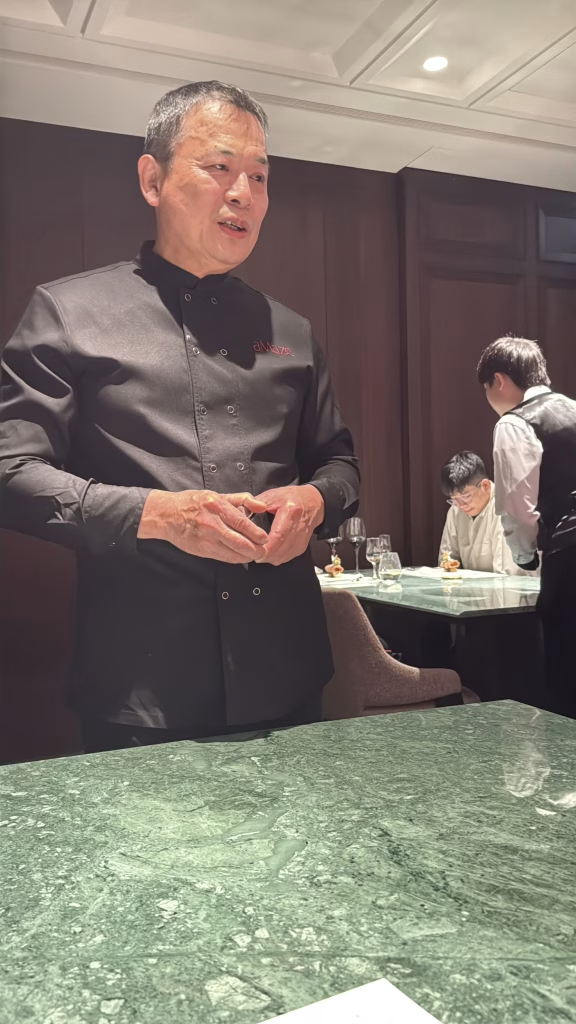
The restaurant was founded by Yang Guangzong, who was the head chef of Tianxianglou, a former Michelin-starred restaurant. He tried to incorporate traditional Jiangsu and Zhejiang cuisine as the basis, integrate the structure and setting of Western-style fine dining, and add elements of Korean cuisine to build a set of contemporary expressions of "Chinese cuisine and Western food".
#Taipei Michelin #One Michelin star #Chinese food #Chinese style finedining#amaze
(Dining in January 2026)
AMAZE Xinyan Introduction and Dining Experience
With the theme of "Autumn harvest", this season's menu pays tribute to the land through autumn crabs, seasonal vegetables and medicinal flavors.
Cooking record
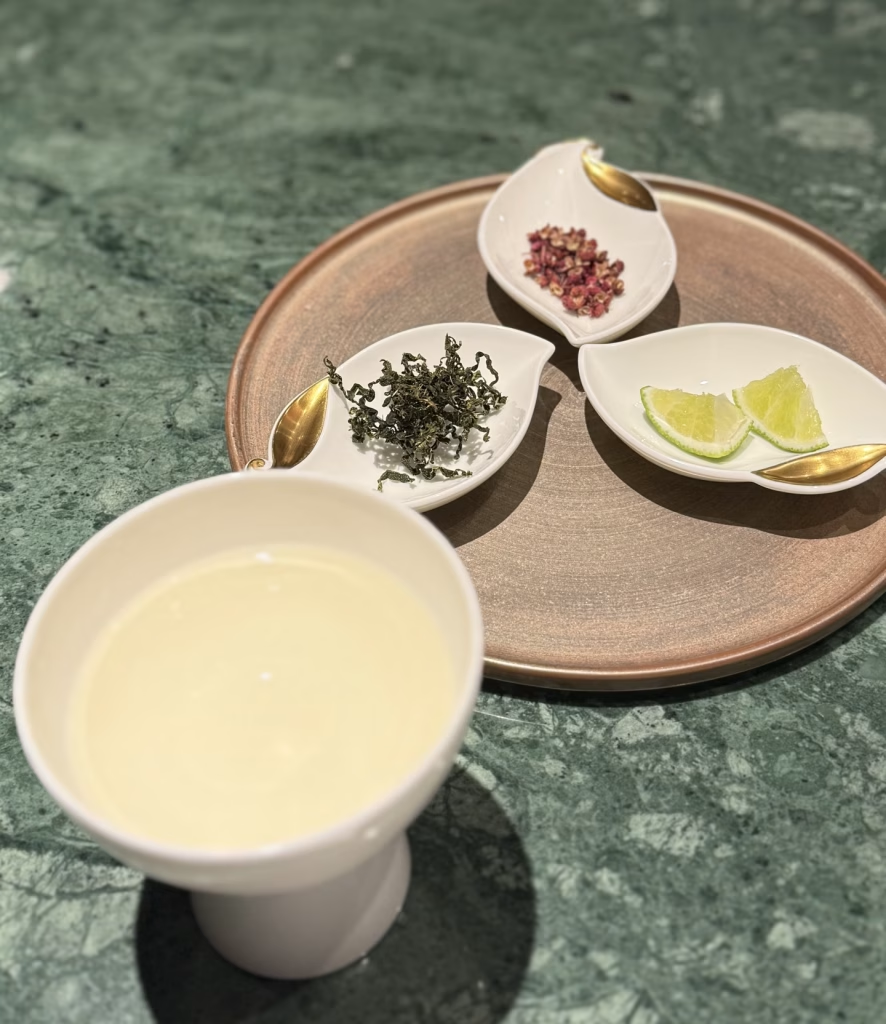
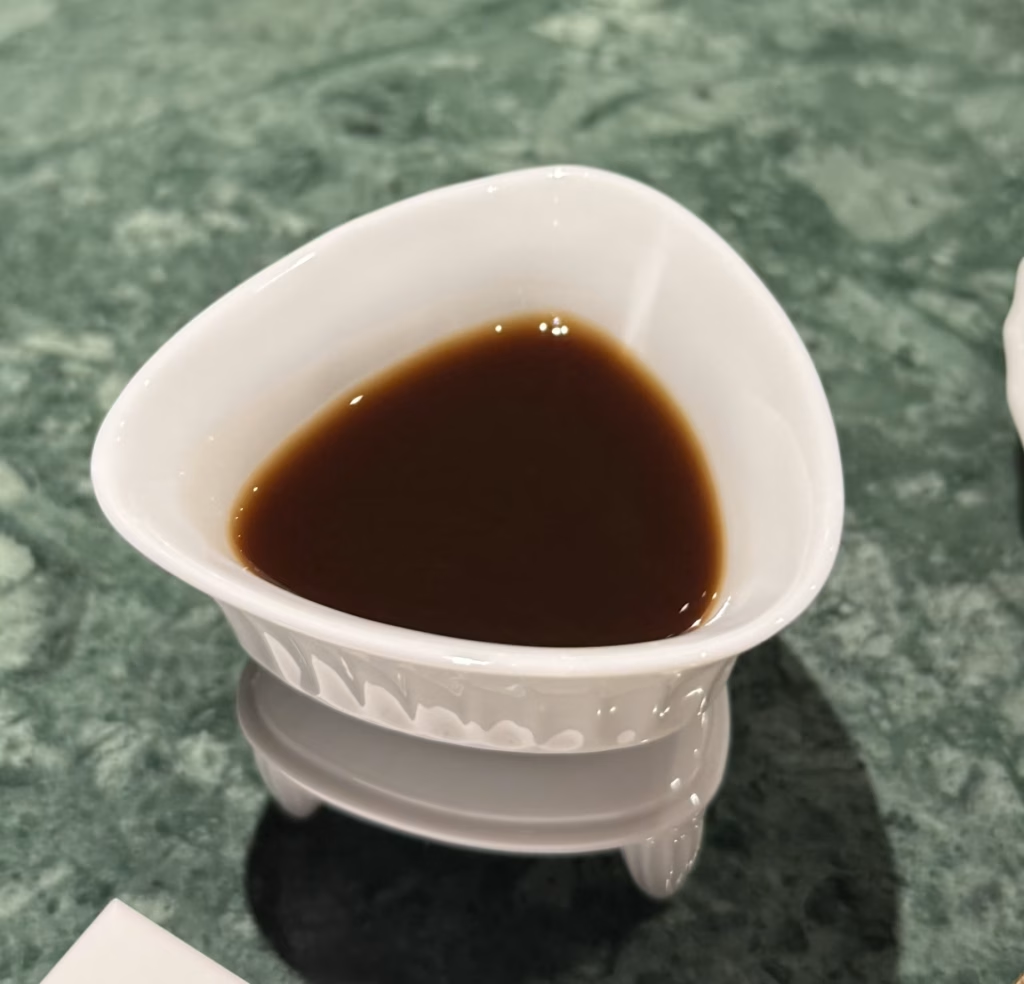
Welcome tea|Red Thorn Onion Tea
The red thorn onion from Pingtung is a spice commonly used by the aborigines of Taiwan. The restaurant makes it into a decaffeinated tea version. The entrance has a fresh and sour fragrance similar to lemon, and the finish has a subtle peppercorns and creamy smoothness. Illusion.
The interesting thing about this tea is that it does not add lemon or pepper, but naturally presents these flavors, as if it is an illusion experiment on smell and taste. As the opening, it successfully established the restaurant's attempt to explore the "reinterpretation of Taiwanese terroir".
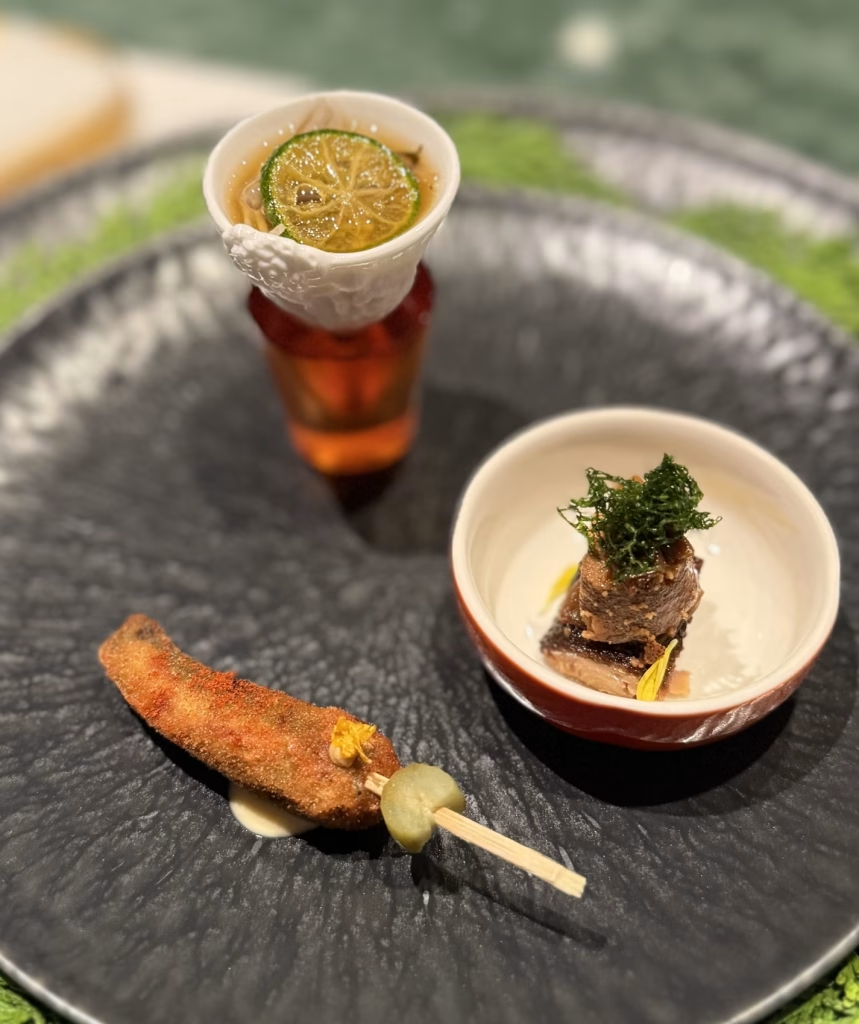
Three appetizers|Pepper inlaid meat・shallot fragrant fish・Jellyfish
This group of appetizers presents an extension of Chinese cold appetizers with three different techniques:
Pepper inlaid meat
Pingtung Green dragon pepper is filled with meat puree mixed with pork and chicken, fired with stock and red vinegar, crispy and fried, with tofu milk and grapefruit peel. The flavor level is complete, but the whole is still within the familiar range, lacking stunning breakthroughs.
Scallion ayu
Yilan Dongshan fragrant fish is based on the technique of scallion roasting, combining ginger vinegar and Basamik vinegar, trying to establish a sour structure that blends Chinese and Western flavors. The fragrance of green onions is rich, but the overall trend is still towards technical display rather than the establishment of emotional memory.
Jellyfish-Ulva-Kumquat
Jellyfish are seasoned with Japanese ulva and kumquat lemon, and take a refreshing sweet and sour route. It is reasonable as an opening for taste, but it also lacks a distinctive memory point.
Overall, the three appetizers completed the function of "opening", but failed to establish a clear emotional high point.
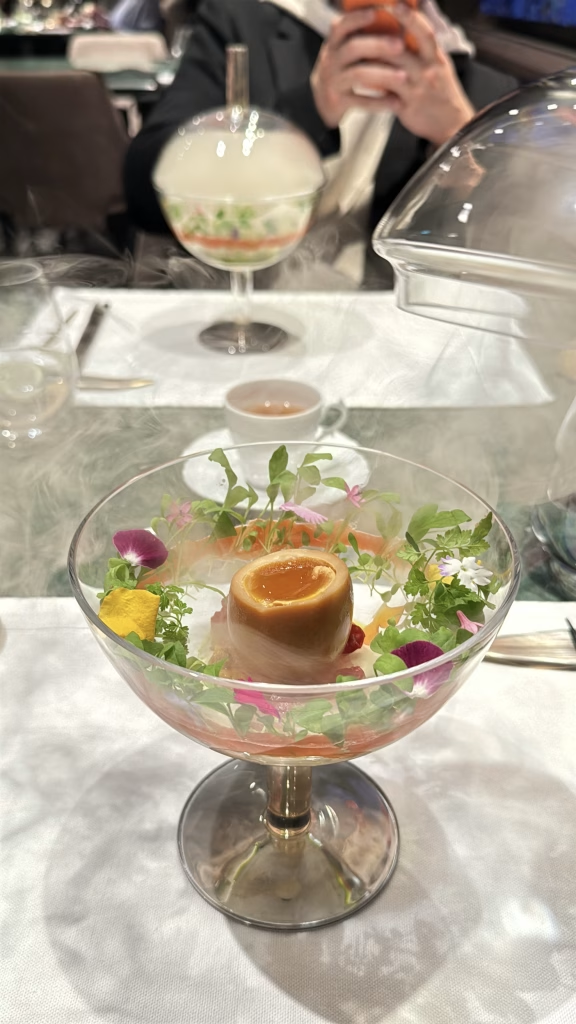
Smoked egg|Tomato|Cheese
This dish is undoubtedly the most visually dramatic one.
After the covered container was opened, the smoke slowly dissipated, and a Pingtung duck egg smoked with red jade black tea appeared in the "egg garden" composed of cheese, tomato and Iberian ham.
Conceptually, it combines the elements of Jiangsu and Zhejiang smoked eggs, tomato scrambled eggs and Italian cabri salad, trying to reconstruct a familiar Chinese home-cooked dish.
However, the problem lies in flavor integration:
The tea flavor of the smoked egg itself is delicate, but it lacks a real flavor connection with the combination of cheese and vegetables at the bottom, making this dish more like a successful visual narrative than a complete work of taste.
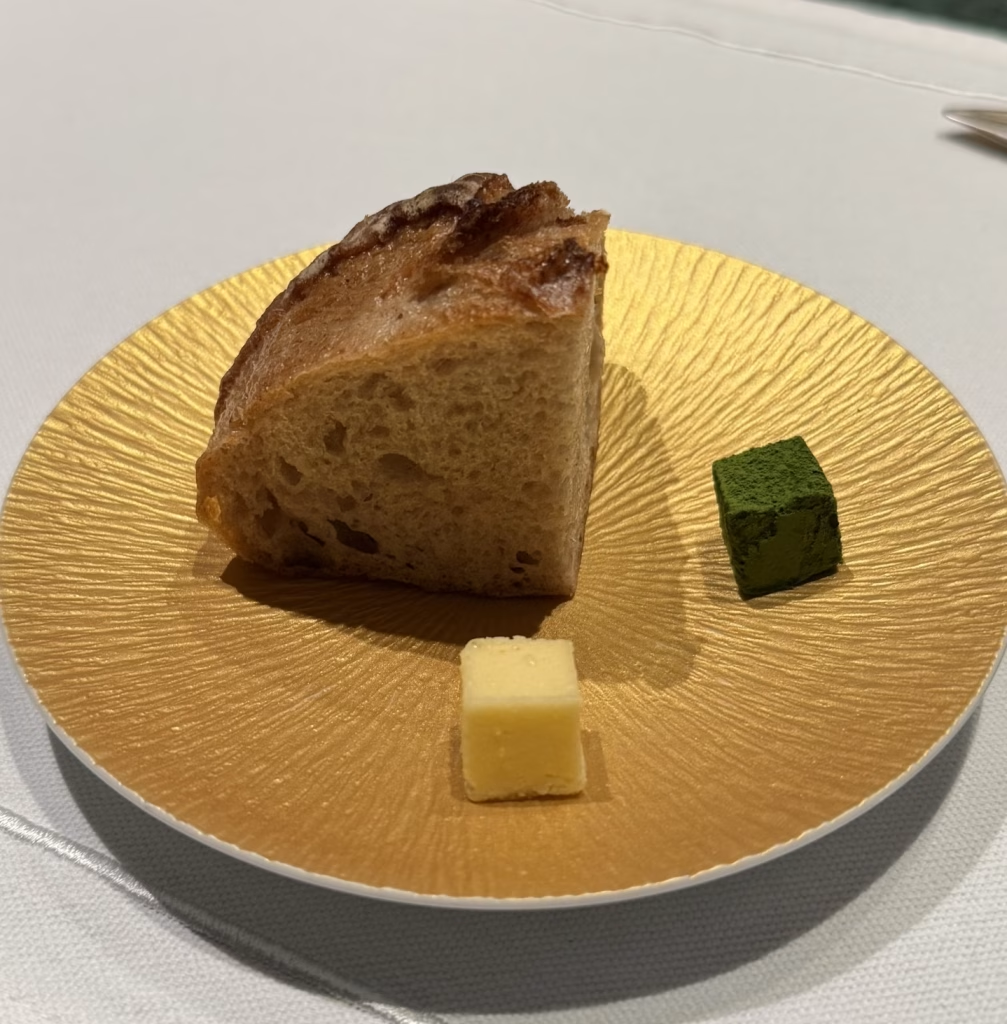
Sour steamed buns|Seaweed Cream・Spice Cream
Sour steamed buns made from autotrophic yeast combine the fermented aroma of European sour breads with the elastic structure of Chinese steamed buns.
Both creams are highly creative:
海藻Seaweed matcha cream: with ocean and herbal flavor
八Star anise clove spice cream: Presents the deep warmth of Chinese spices
This seemingly simple bread course has become one of the manifestations of successful cultural integration.
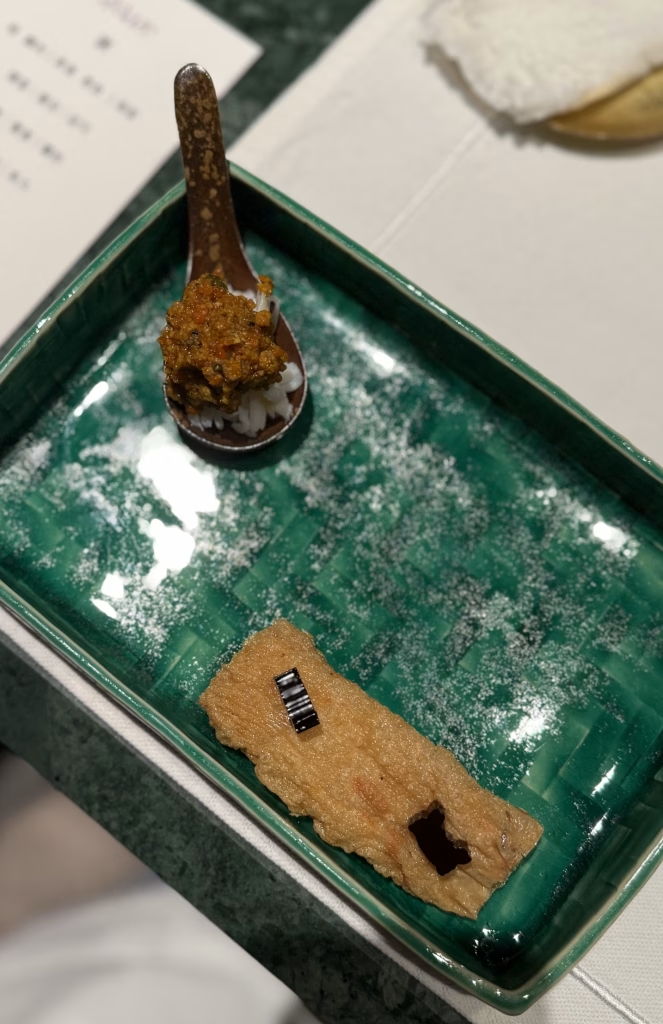
Fresh Crab|Crab Yellow|Ring the bell
The crab paste of Taiwanese red crabs and virgin crabs, crab yellow and crab meat, plus Japanese king crab legs as the base; the bell is stuffed with homemade salted lemons, and then Zhenjiang vinegar, sugar, and minced ginger are used to make crab vinegar jelly (even made into the shape of a small crab), the taste is sweet and sour.
It's really satisfying to take a bite of crab meat, but the element of "ringing" and the phase of crab meat are a bit awkward. The taste and flavor directions are not complementary, but more like two dishes are placed in the same picture. There is less reason to tie them into a group.
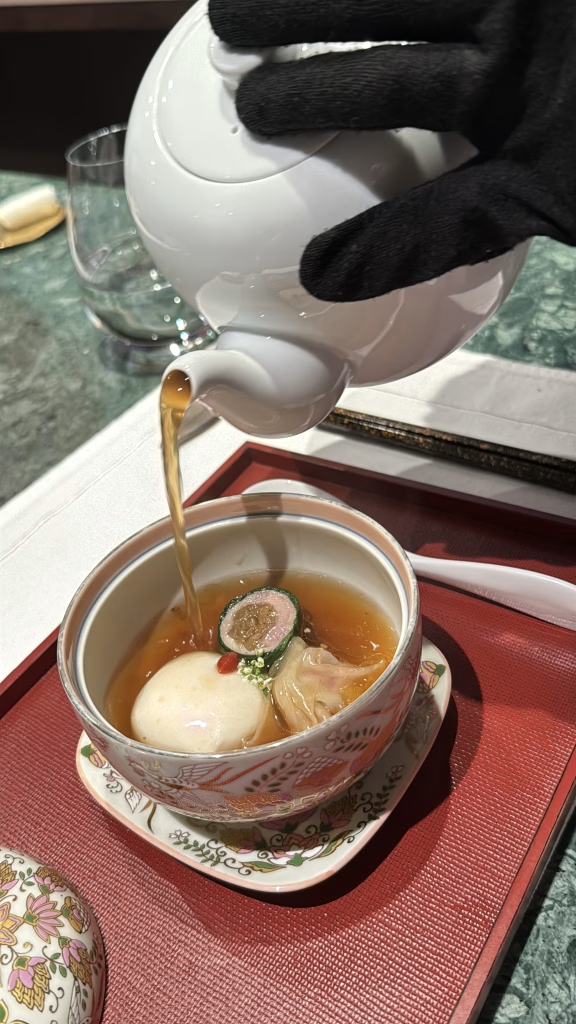
Ginger Mother|Duck|Fish Ball
The ambition of this bowl of soup is very big: on the left is the floating fish ball that the chef is good at. It is made with Penghu Qixing spotted fish and raw medicine. It is as white and fat as a cloud, but the entrance is as soft as tender tofu; on the right is the duck meat roll with sauerkraut, with spinach on the outer layer and Yilan duck and pickled sauerkraut on the inner filling., The level is clear; there is also a special small wonton hidden at the bottom of the bowl, which contains duck liver-the duck liver is so soft that it looks like an egg accidentally found.
The soup topped at the end is inspired by turmeric duck. Beigang black sesame oil, Yilan duck and medicinal materials are boiled for a long time, and then treated with a Western-style clarification method. It tastes rich but clean.
This is my favorite dish of the night: it has both the stability of Chinese winter soup and the precise convergence of fine dining.
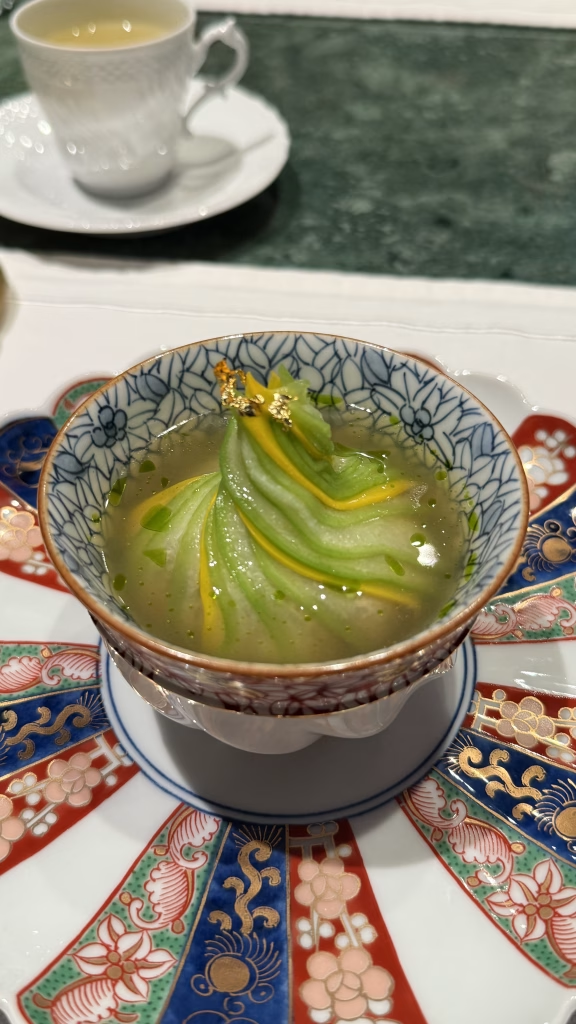
Assorted coriander|loofah
Excellent!
Ten kinds of coriander have the meaning of "perfect and perfect" in Jiangsu and Zhejiang cuisine. Here, more than a dozen kinds of autumn vegetables are dried and fried (yellow leek, leek, silver bud, carrot, fungus, mushroom, etc.), and then loofah and yellow comb melon are steamed at high temperature to lock in the sweetness, and the soup is made of loofah., Festival melon and dried fresh bamboo shoots are steamed, almost no artificial seasoning is used, but the vegetables are allowed to cook by themselves.
Its beauty lies in "Qing"-so clear that you will suddenly realize that the sweetness of vegetables can also be as layered as stock. This is my second favorite kung Fu dish.
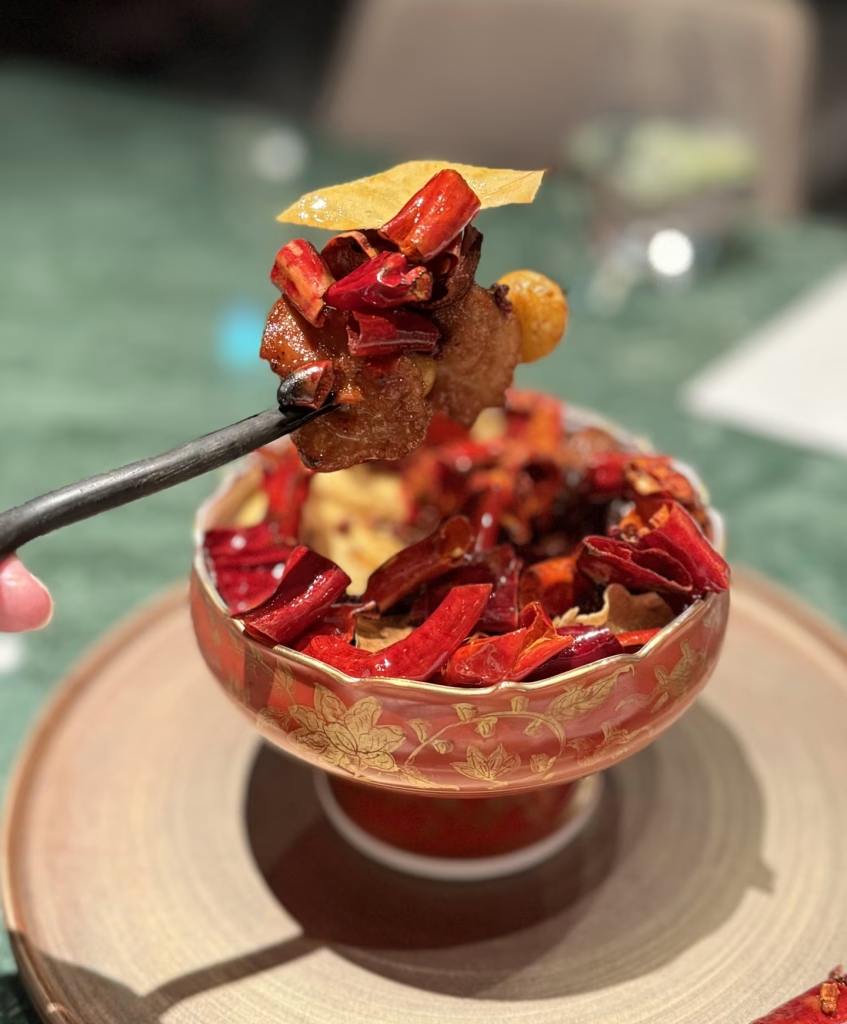
Off menu Kung Pao Chicken
Dawushan organic chicken thighs, roasted ginkgo biloba, and self-fried fragments of Mexican spices are added to echo the aroma of Gongbao. The spiciness takes a gentle route, focusing on "spicy with fragrance and spicy with hemp."
It's a pity that when the actual entrance is made, the spicy is more like stopping on the surface. The chicken itself does not have the taste and sauce-grabbing power it deserves. The smell is very lively, but the meat has no taste.
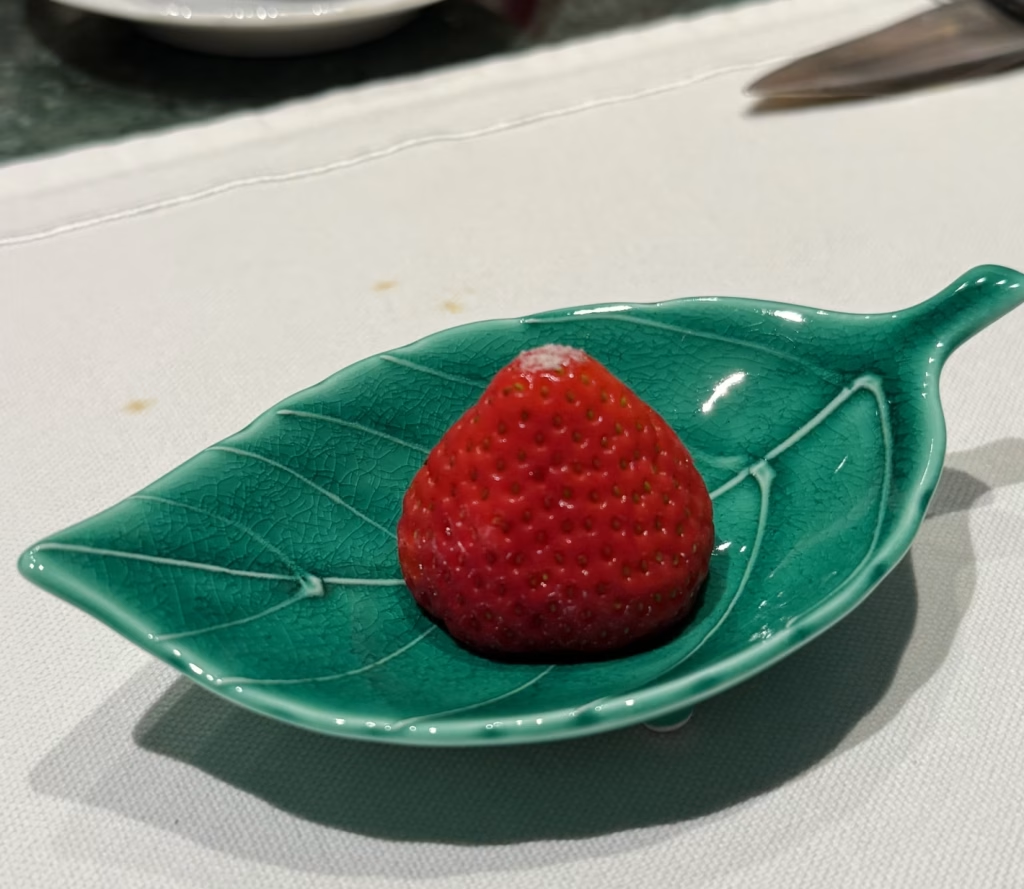
Clear your mouth a little bit|Strawberry-lemon jelly
Kumamoto strawberries are filled with lemon jelly, and the ratio of sour to sweet is precise, which is an excellent functional transition.
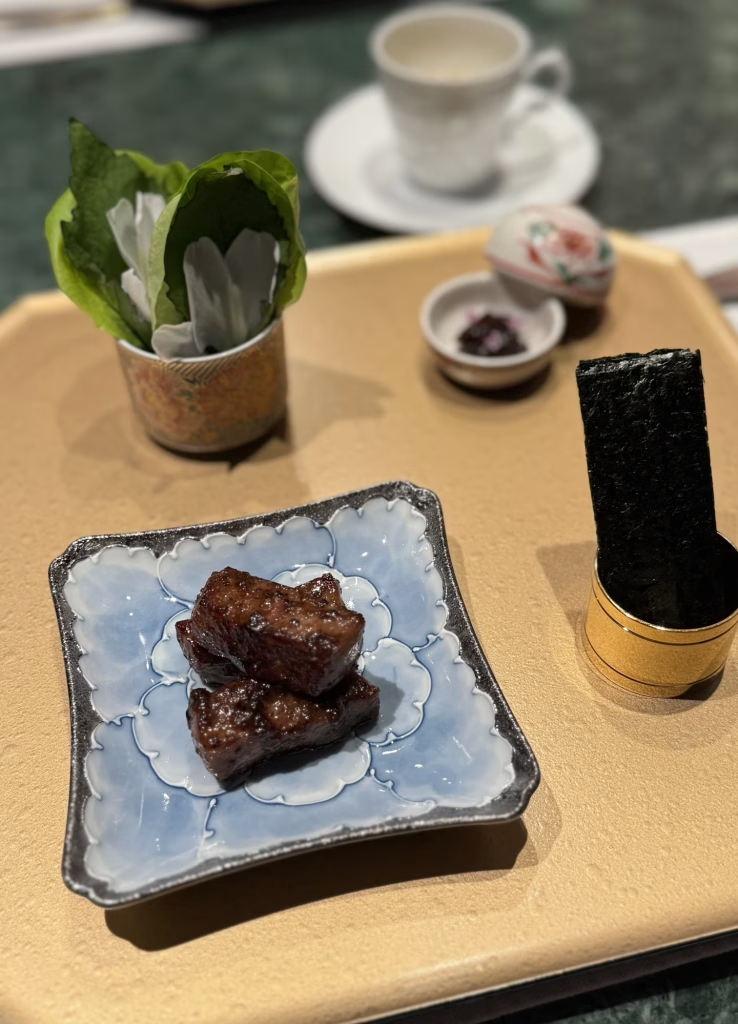
Black pepper|Wagyu Beef
The cooking technique itself is not bad. Miyazaki A5 wagyu beef is first dry-fried by New Yorkers, and then the black pepper sauce made with black pepper and horseradish is quickly fried over high heat in Chinese style. The aroma of black pepper is strong, and it is combined with old Japanese seaweed, 17-year-old perilla plum and three kinds of Taiwanese lettuce, wild ginger flower, etc.
But my biggest question comes from the narrative of the menu. When a whole set of "Chinese cuisine and Western food" is the core, the main meal ends with "Korean cuisine wrapped in meat". When the overall menu tries to establish the context of "reinterpretation of Chinese cuisine", it suddenly turns to Korean food.In this way, the overall story is broken. Logically, it's a bit like suddenly changing the chapter title, and the narrative is not coherent enough.
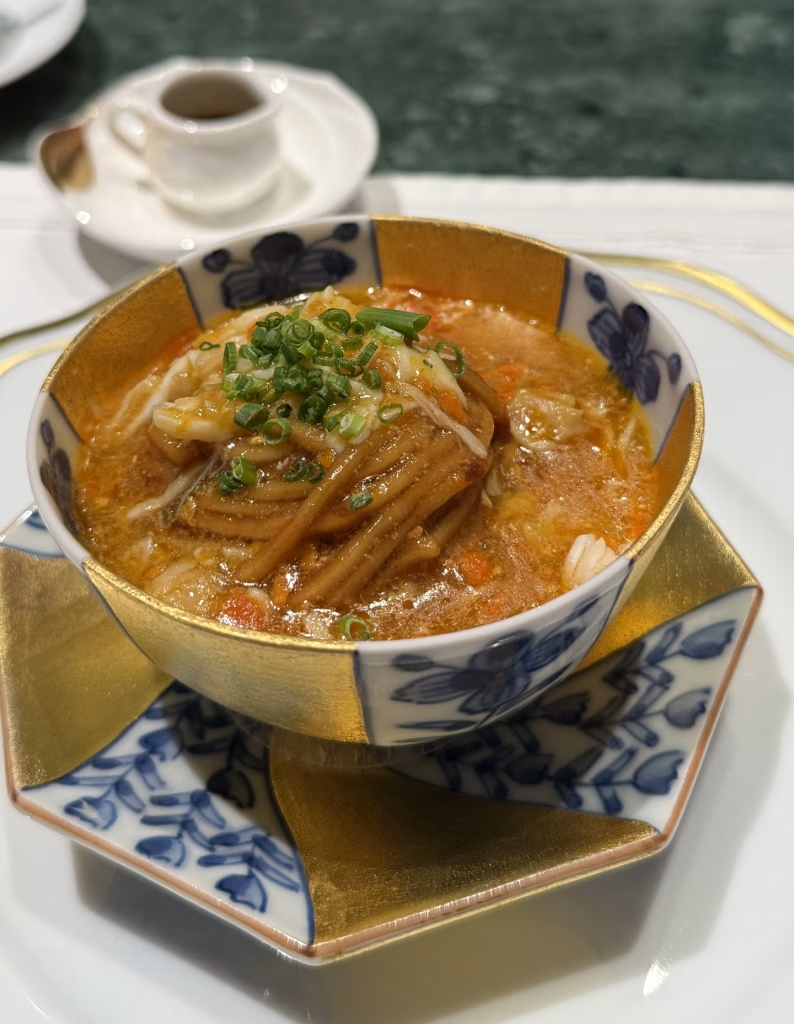
Fresh crab|Noodles
I actually like it very much. The crab paste of red crab and virgin crab, crab yellow crab meat, and Hokkaido crab legs are very full of crab flavor. The noodles are based on Taiwanese scallion oil and lard noodles, and Zhenjiang vinegar, minced ginger, and sugar-flavored crab vinegar are provided as a second variation. It is more delicious after adding vinegar., As soon as the acidity comes in, the sweetness of the crab will be more three-dimensional. It's a pity that the noodles were a little sticky when they were served, and the taste failed to maintain its due cleanliness.
Sydney|Gong Yan
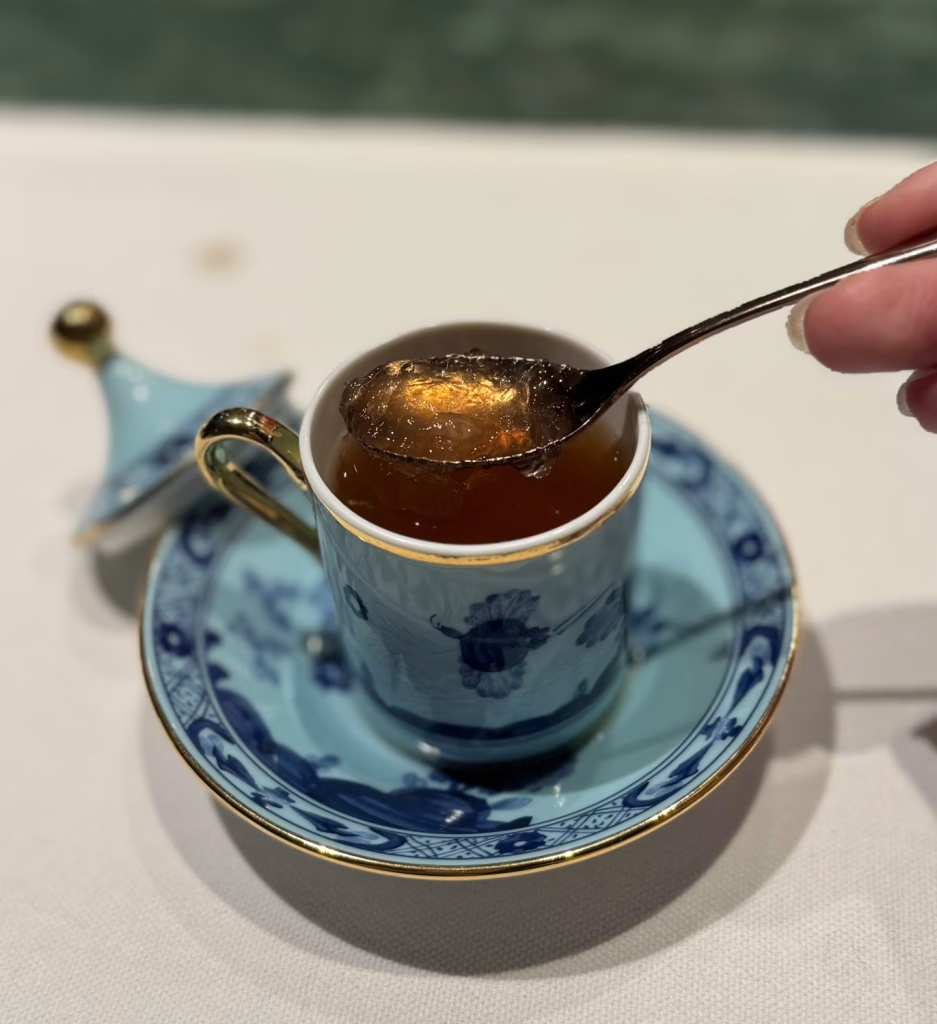
The bird's nest is made of bird's nest from the Sabah region of Malaysia, which is advertised as environmentally friendly breeding. It is based on the steamed juice of Taiwanese prunes, and spices such as Tianxiang and star anise are added to stew it. Finally, a layer of jasmine water is lightly sprayed on the inside of the lid, so that the aroma arrives first when the lid is lifted.Nasal cavity.
The concept is very complete: the sweetness of pear juice, the softness of bird's nest, the warmth of spices, plus the floral fragrance of jasmine, the picture is also very clean. It's a pity that the sweetness is too high after the entrance, and the presence of spices and flower water pushes the sweetness up again, but on the contrary, it makes the whole look a little sweet and greasy, missing a little of the lightness and whiteness it deserves.
Jujube paste pot cake|Tieguanyin
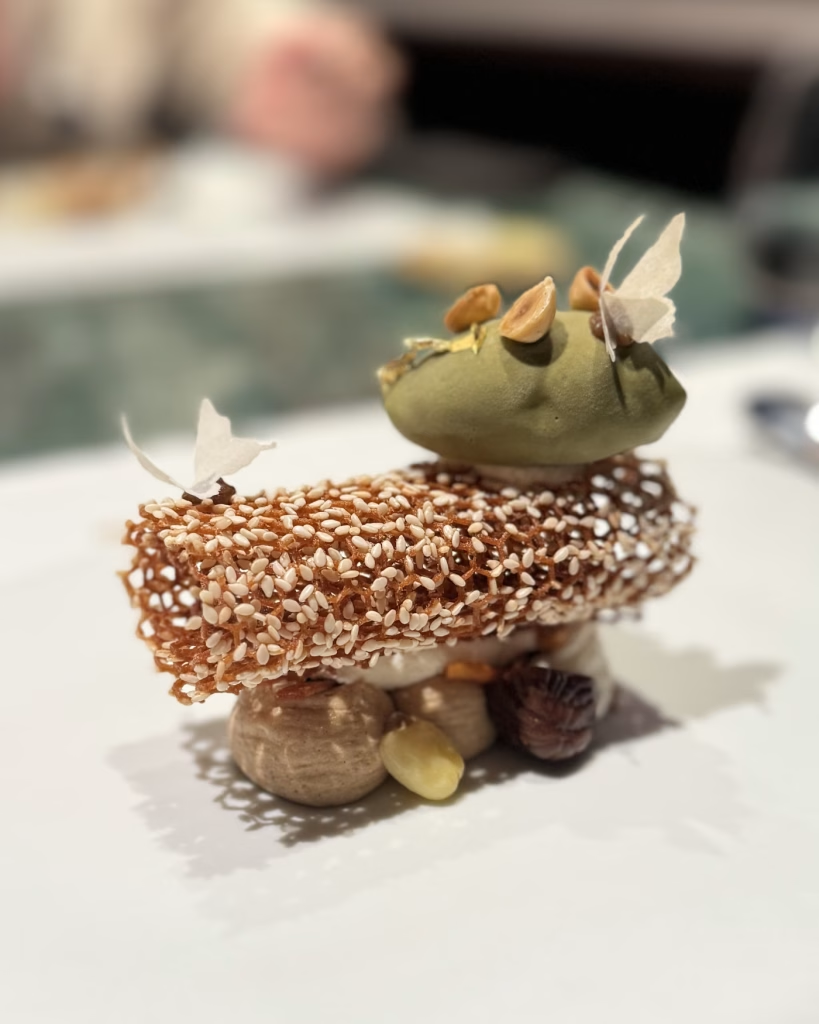
The second main dessert is themed on the traditional jujube paste pot cake, and it follows the route of "Western-style reorganization": visually, it is a linear main body, with honey sesame lace cake at the bottom to make a crispy structure, and three kinds of fillings are used next to it to guide the taste from left to right, red dates, blackJujube paste cream stuffing made from jujube frying, and the smoky whipped cream on the far right, embellished with honey chestnuts and lotus seeds on both sides, and finally topped with an ice cream made of Tieguanyin from Taiwan, sprinkled with toasted hazelnuts and gold leaf to complete the "contemporary version of Chinese dessert."
I like its idea very much: the performance of tea-flavored ice cream is particularly outstanding. Tieguanyin's roasting and sweetness make the overall sweetness cleaner, and it does take traditional desserts a step forward in the vocabulary of fine dining.
However, it is not very convenient to eat in practice. The structure requires "disassembled eating" to get a complete proportion. In addition, the bitterness that has not been removed by accidentally biting the lotus seed heart makes the ending that should have been rounded and rounded appear a little thorny, which is a pity.
Petit Four|Muffin-Preserved Vegetable Chocolate
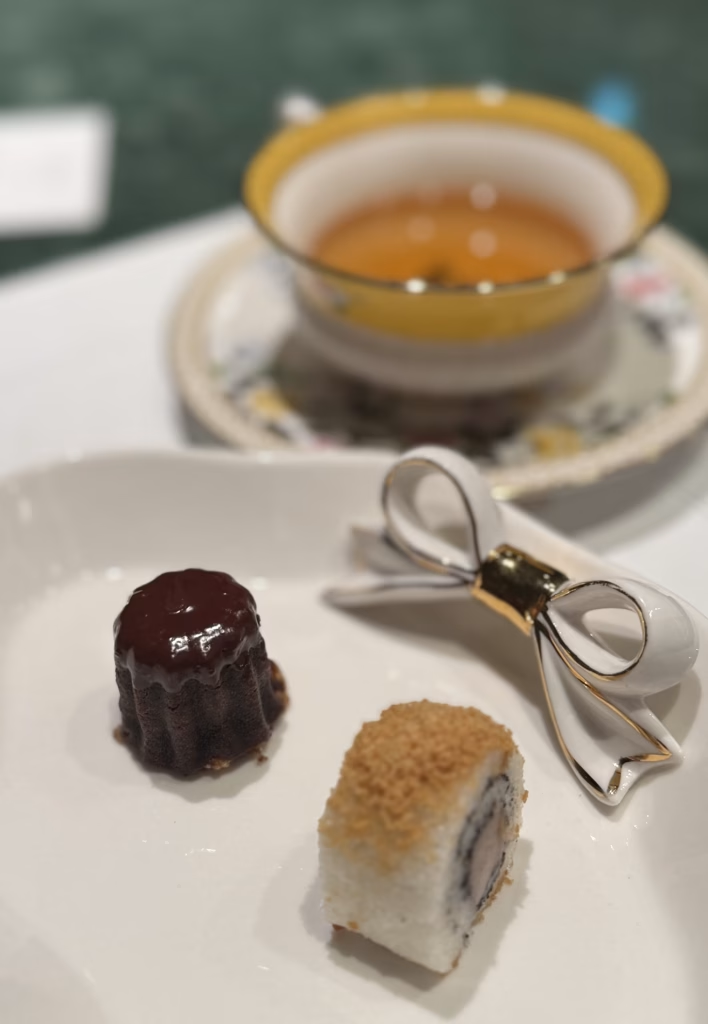
Refreshment offers two small snacks: one is a traditional muffin made of glutinous rice noodles and Jae Lai rice noodles, steamed with hand-fried sesame powdered sugar and taro filling, and topped with grape oil foam and peanut powdered sugar. It tastes like a familiar night market champion cake; The taste is not bad, but it is relatively well-behaved, and the sense of surprise is limited..
On the contrary, what is even more impressive is the chocolate cake on the other side, which has "preserved vegetables" added to it. Originally, when I heard the preserved vegetables, I couldn't help but worry that it was a shock, but it turned out to be an unexpected combination: the salty fermentation suppressed the sweetness of the chocolate, making it more edible and more recognizable. It is the kind of combination that "I will remember when I finish eating."
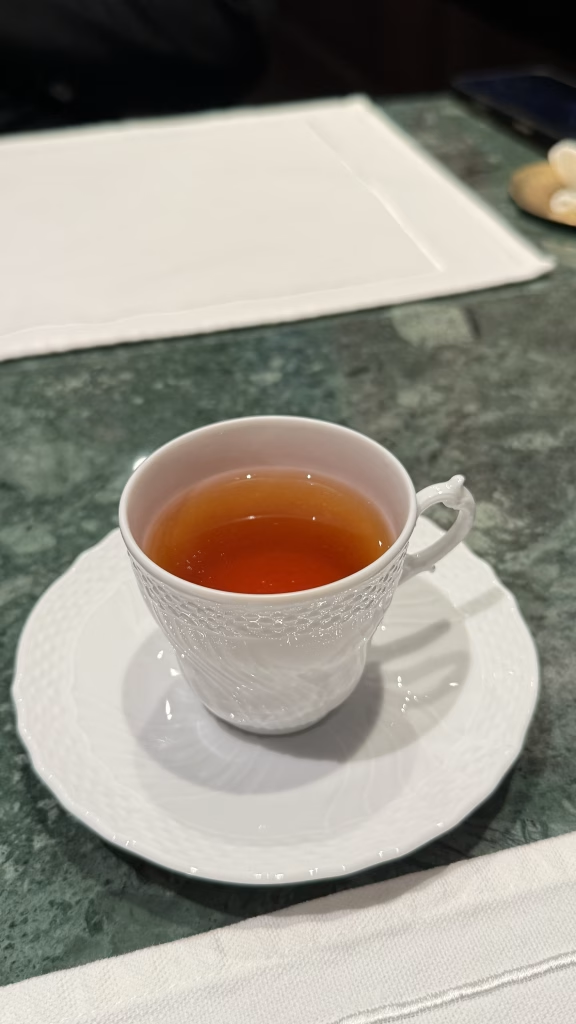
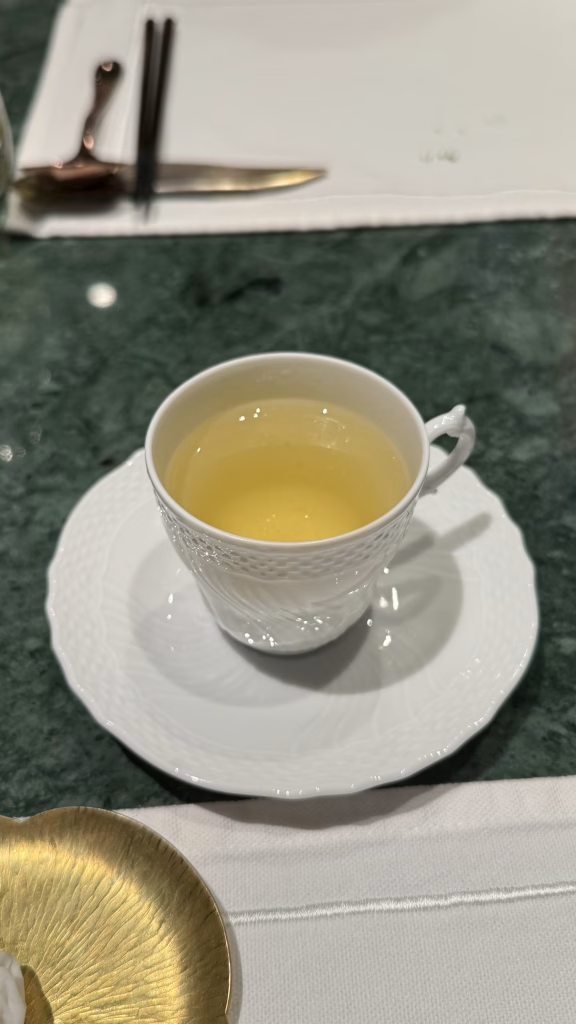
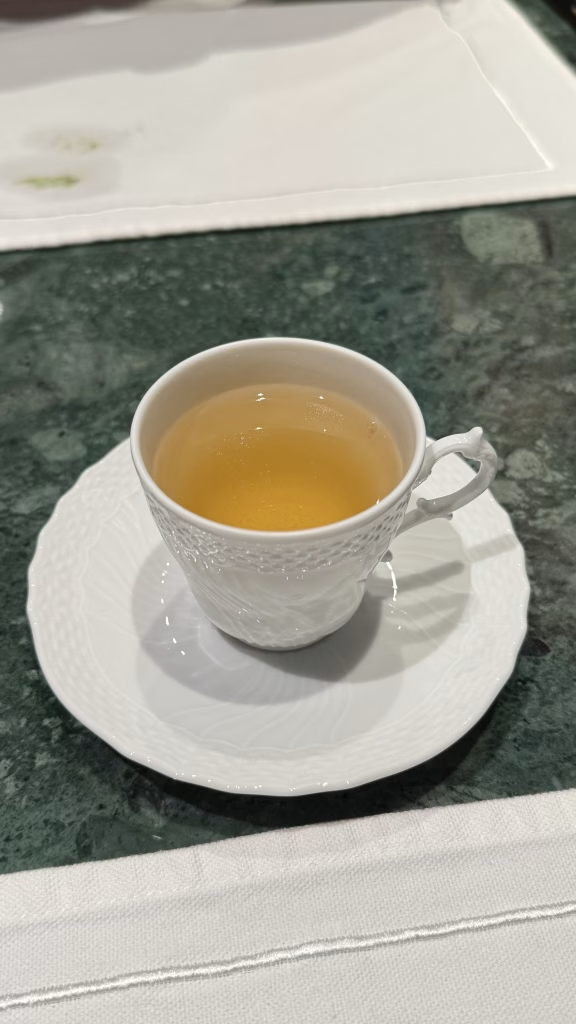
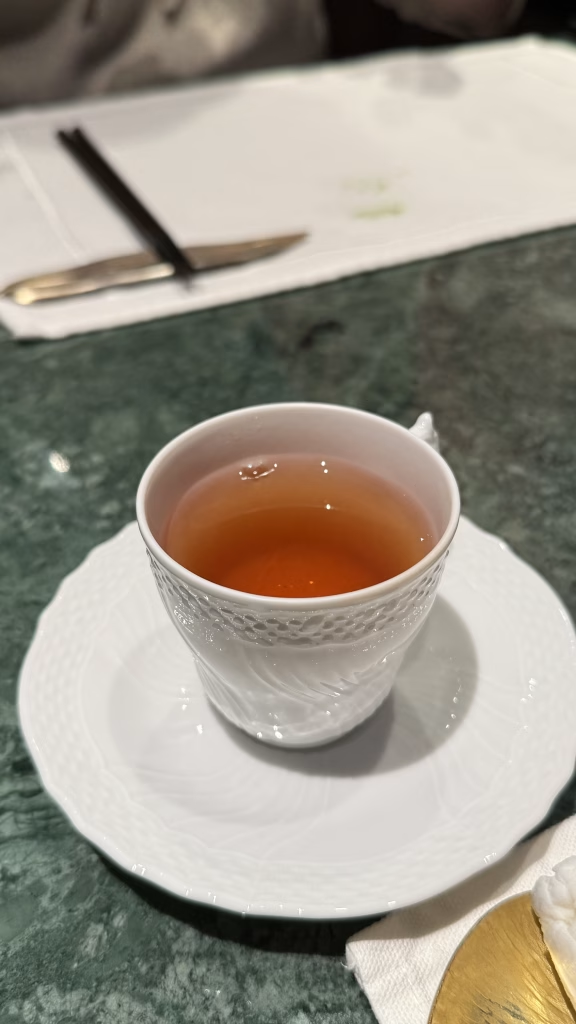
Tea Pairing|Try to match four Taiwanese teas
The pairing this time is tea pairing:
1. Miaoli Tongluo Honey Black Tea: floral and honey flavor, with smoked egg
2. Nantou Qilai Mountain Green Oolong: made with green tea craftsmanship and light baking, with a sense of seaweed and vegetables
3. Pingtung Manchurian Port Tea: slightly bitter in the mouth, salty with sea breeze, with Kung Pao Chicken
4. Alishan Heavy Roasted Oolong: Carbon Roasted Aroma is obvious, with fresh crab noodles
I must be honest, the logic of tea matching may be because I am not familiar with the tea system, I "don't know much" about drinking, and I don't feel a very precise multiplication of each other; it is more like a complete set of terroir display, but it is connected at the moment of "one bite of vegetables + one bite of tea"., Did not leave a strong memory point.
Final Thoughts
Suitable for bringing foreign friends, but the narrative is still broken
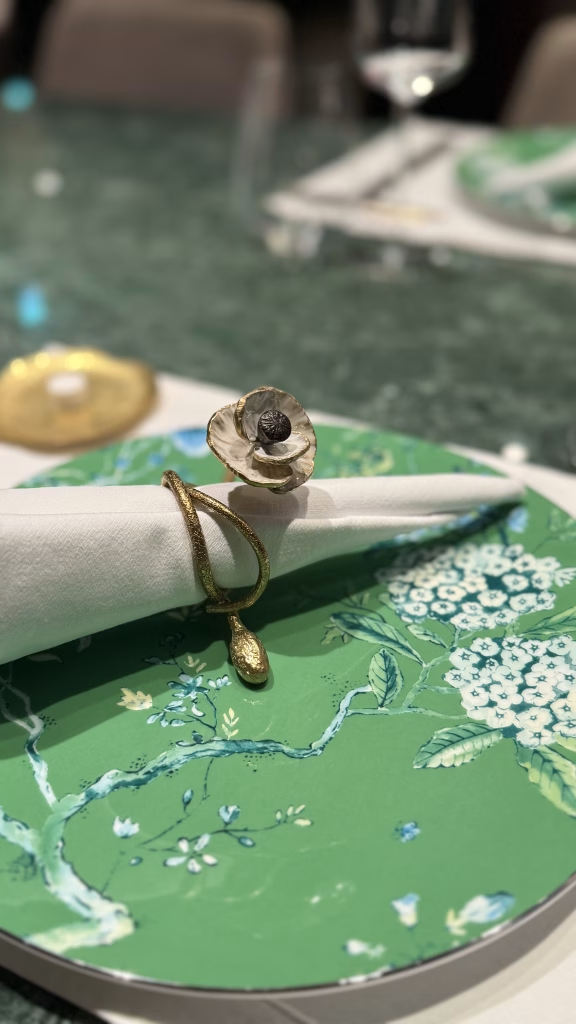
If you want to bring foreign friends to understand the "contemporary interpretation of Chinese cuisine", AMAZE is indeed a good choice: the utensils are exquisite (I heard that Wedgwood is used), the space is beautiful, the table is wide, and the overall sense of stage is also very good. The translation of Chinese cuisine and Western food is interesting, and the willingness to innovate is worthy of affirmation.
But also because it has done too much fusion, sometimes it makes the narrative not coherent enough, especially when the main axis of the menu is clearly advancing in the Chinese context, but the main meal suddenly switches to the logic of Korean cuisine with meat, which can make people lose direction in an instant. In addition, when I encountered a family dinner that day, although the environment was beautiful, the atmosphere was still noisy, which slightly weakened the sense of immersion that fine dining should have.
Rating and Cost
- Price|5,880/person
- Tea Pairing: TWD 1,280/bit
- Rating: 7.5/10
Restaurant information
- address:No. 598, Mingshui Road, Zhongshan District, Taipei City
- Reservation:https://inline.app/booking/-NrYsGNikWMkx54ruPU3%3Ainline-live-3/-NrYsGccvEkkXRXE8fiy
What other Chinese fine dining restaurants are recommended in your mind?
This meal is fully self-financed.