

Content table of contents
In the territory of fine dining in Seoul, EVETT is a quite unique and highly recognizable restaurant. Chef Joseph Lidgewood is from Australia and has participated in the well-known cooking show "Black and White Chef". Although he was eliminated early in the show, he successfully established his own cooking language with EVETT on the REAL-world restaurant stage.
THE CORE OF EVETT IS NOT "Western cuisine WITH A LITTLE Korean ELEMENTS", BUT THE OTHER WAY AROUND, TAKING Korean CULTURE, FOOD MEMORY AND TRADITIONAL INGREDIENTS AS THE STARTING POINT, reinterpreted THROUGH contemporary COOKING TECHNIQUES, IT IS A truly "cultural fusion cuisine" in the sense.
#Korean Food #Michelin #seoulfood #michelinstar #evett
(Dining in October 2025)
EVETT restaurant introduction and Dining experience
Space design
EVETT'S SPACE DESIGN ITSELF IS PART OF THE EXPERIENCE.
The restaurant takes open kitchen as its core vision, and the collaboration of chefs from different nationalities can be seen in the kitchen, symbolizing the essence of cultural reinterpretation pursued by EVETT. In addition, there is also an oval bar dedicated to the presentation of drinks and some dishes.
The tall indoor structure, with a large amount of natural light sprinkled in, makes the entire dining process appear bright, open and comfortable, and there is no sense of oppression that traditional fine dining can easily make people feel restrained.
In THE menu INTRODUCTION session, THE SERVICE STAFF WILL EXPLAIN IN PARTICULAR: THE ILLUSTRATIONS ON THE MENU CORRESPOND TO THE CORE INGREDIENTS USED THIS SEASON. Turn TO THE OTHER SIDE AND YOU CAN SEE A LIST OF ALL cooperative AGRICULTURAL PRODUCTS AND INGREDIENTS, EMPHASIZING THAT "high SEASONALITY" IS EVETT'S UNCHANGING COOKING PRINCIPLE.
The restaurant can be booked through the Catchtable platform. The actual operation is quite friendly and it is not difficult to book. The proportion of foreign guests on the day of the meal is not low, and the overall English service is smooth and natural. It is quite clear from the placement, the introduction of dishes to the interactive instructions, and it is very friendly to non-Korean users.
THIS TIME WE CHOSE A SHORT PACKAGE AT NOON, WITH A FAST PACE, BUT THE CONTENT INTEGRITY IS STILL VERY HIGH, WHICH IS VERY SUITABLE AS AN INTRODUCTORY VERSION OF GETTING TO KNOW EVETT FOR THE FIRST TIME.
Cooking record

Pumpkin cold soup
The appetizing cold soup served in traditional Korean pots and small cups has a strong cultural image visually. The bottom of the cup is covered with pumpkin seeds and dried pumpkin, while the soup is based on pumpkin water and pumpkin syrup.
The actual entrance feeling is quite subtle: sweet, gentle, with a faint herbal feeling, it is instantly reminiscent of the very popular "pumpkin anti-edema tea" in Olive Young in South Korea. As the first appetizing drink, it is not a strong impact type, but tends to "quietly open the taste buds."
Petal tower (hors d'oeuvres)
This dish is visually the first climax of the audience.
The petal tower is hung directly on the branch-shaped device and brought to the dining table. Pieces of petals are attached to it, making people really reluctant to swallow for a while.
The content includes: a crispy base made of leeks, eggs and powder, smoked mackerel with tuna mousse, soy sauce with rich flavor, soy milk cream and refreshing salad elements
This is a small dish designed to be eaten by hand, emphasizing interactivity.


Arras|E. J. Carr Late Disgorged 2007|Tasmania, Australia
Méthode Traditionnelle
This meal and wine pairing kicked off with a vintage champagne sparkling wine from Tasmania. For most people, Tasmania is still a relatively unfamiliar region, but as the sommelier said, the new star of sparkling wine in the world today, in addition to the United Kingdom, is Tasmania.
Arras is one of Australia's most representative top sparkling wine wineries, and this E. J. Carr 2007 is the flagship work of the winery. Brewed using the traditional champagne method, and only Late Disgorged after more than ten years of aging in the bottle, time has left a deep and elegant trace in this wine.
After opening the bottle, it shows the typical outline of mature sparkling wine: brioche bread, cream biscuits, and nutty aromas unfold in layers, followed by a little dark aroma of coffee and roasted grains, with the calmness and calmness unique to old sparkling wine.
The bubbles in the mouth are delicate and soft, and have been fully integrated into the body of the wine. The flavor is concentrated but not heavy, the nutty and roasted tones continue to the mouth, the structure is mature, the lines are round, and the finish is clean and long, showing the balance and depth after a long time of maturation.
This is not a sparkling wine that pursues unrestrained fruity aromas, but a work that exchanges time for level and maturity for complexity. It proves that Tasmania is not just an "emerging production area", but already has the strength to make world-class sparkling wines.

Cuttlefish cold noodles, hot sauce
EVETT'S INTERPRETATION OF CLASSIC Korean CUISINE IS QUITE COMPLETE IN THIS "COLD NOODLES".
The dough body is not traditional soba noodles, but cuttlefish into extremely thin filamentous shapes, visually resembling cold noodles themselves.
In the first stage, it is recommended to eat the original flavor alone: the flavor is salty and sour, the soup base is refreshing, and it has the level of vegetable and chicken stock.
Then add the hot sauce made from fermented cuttlefish, which is slightly spicy and has a fermented flavor. After stirring, it forms a completely different taste direction. You can experience two flavor structures in one dish.
Interestingly, the tableware was not provided immediately when the food was served. It was actually a bit confusing at first, and even silently deducted points in my heart. IT WASN'T UNTIL THE SERVICE STAFF BEGAN TO SHARE THE CHEF'S PERSONAL EXPERIENCE THAT THEY UNDERSTOOD THAT THIS WAS ACTUALLY A CULTURAL PLOT CAREFULLY DESIGNED BY EVETT.——
IN KOREAN CULTURE, TABLEWARE IS DISTRIBUTED BY THE YOUNGEST PERSON ON THE TABLE. THIS DETAIL IS OFTEN UNFAMILIAR TO FOREIGNERS, AND IT IS THROUGH THIS "BRIEF INCONVENIENCE" THAT EVETT ALLOWS CULTURE TO BE TRULY SPOKEN OUT.


Lichtenberger-Gonzalez|Edelbrunn 2022|Austria|Natural White Wine
As a white wine for dinner and wine pairing, this Edelbrunn 2022 shows a style that is extremely close to the "essence of ingredients". The sommelier's description of the "fish market" does not refer to the fishy smell, but the freshness, cleanliness and vitality that permeates the air when he walks into the early morning market.
This is a natural wine (natural Wine), fermented with wild yeast throughout the process, the grapes come from organic farming, and no chemical pesticides or artificial additives are used. The brewing technique is minimalist, the purpose is to preserve the most primitive state of grapes and land.
The aroma lines are very clean. For the first time, the fresh scent of green vegetables, grass, and white root vegetables appears, and then it brings out the spicy aromas of white pepper and wasabi. It is cold and neat, reminiscent of the just right seasoning next to sashimi.
The entrance is refreshing and straight, the acidity is bright, and the structure is pure. The delicate mineral feeling and starch-like soft texture can be felt in the body of the wine. It is not heavy, but has a slight wildness and transparency unique to natural wine. The finish is clean, and the spicy notes leave a very light but intriguing trace in the mouth.
This is a liquor made for "raw food cooking", which is just right for cold noodles with cuttlefish.
The wine and the food are not competing with each other, but reflect each other, just like the freshest bite in the fish market.

Fish, creamy white sauce
The fish used today is Kumtaek (red mullet) from Jeju Island. The meat quality is between delicate and oily. It is a Korean fish species that the chef loves very much.
The fish skin is fried over charcoal until crisp and fragrant, and the center is paired with a white sauce that looks like dairy products but is actually made from chicken fat. The taste is rich and smooth.
The creamy white sauce itself is quite delicious, but the surrounding vegetables have a high acidity, which slightly robs the main flavor. This dish has also become one of the representatives of the sourness in the whole meal.

Querciabella|Bâtàr 2020|Toscana IGT|Italy|Chardonnay × Pinot Bianco
This glass is a classic of Tuscan liquor that is typical but not formula-based. Bâtàr has always been regarded as Querciabella's liquor flagship, and the 2020 vintage has shown a fairly complete level and outline in its youth.
Bâtàr is blended with Chardonnay and Pinot Bianco (Pinot Blanc) and matured in French oak barrels. Although the production area is in Tuscany, Italy, the overall brewing philosophy obviously has the structure and fineness of French liquor. It is a liquor of "Italian soul and French language".
At the first smell, you can feel the obvious nutty tones, such as almonds and hazelnuts, followed by a touch of baking, cream and toast. As the temperature rises, white flowers, ripe yellow apples and stone fruits gradually unfold, with rich aromas but not pompous.
The texture of the entrance is round, the wine is medium and thick, with a delicate and oily feeling from oak barrels. The acidity is still clear and the lines are neat, which keeps the wine balanced while being rich. In the middle section, you can feel the fullness of nuts, cream, and ripe fruits intertwined, while the finish leaves a slight toasty and mineral feeling, clean and long.
The sommelier specially arranged to match fish dishes and grapefruit chicken fat cream. The citrus sourness of grapefruit corresponds to the fresh acidity in the wine, while the fatty aroma of chanterelle is perfectly connected with the roundness and nutty tones brought by oak barrels, making the wine appear more three-dimensional in the meal without being heavy.

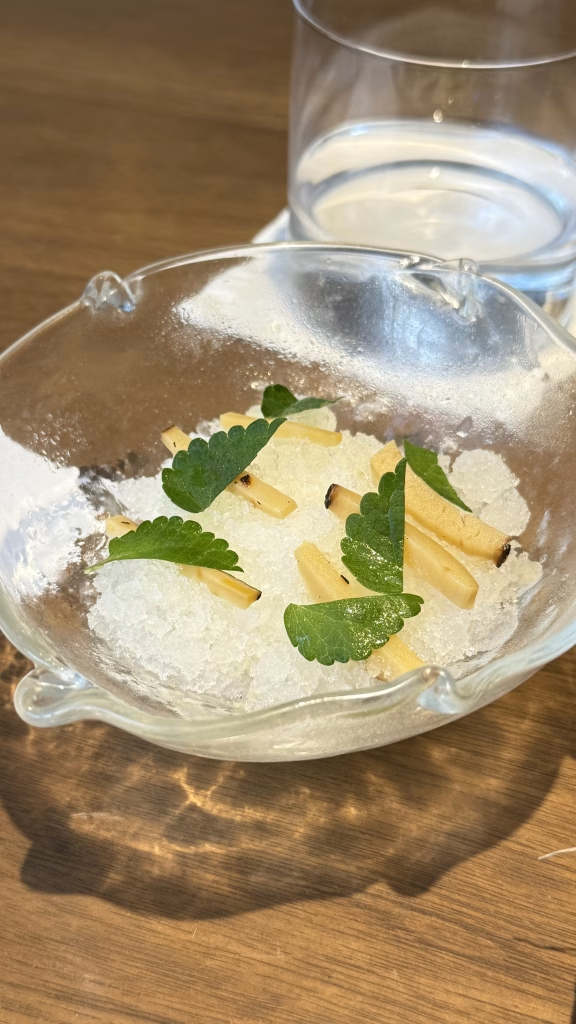
Sweet rice dew Sorbet
It is based on Sikhye (sweet rice dew), a traditional Korean drink. Sorbet is made from black rice instead, so it has a light red color, and the bottom is matched with Bodhi (traditional Korean fermented oil).
The original intention was to clear the mouth, but because many of the dishes in the previous section were sour, this one seemed unnecessary.

Abalone, radish, perilla seed, abalone liver sauce
This is a creative dish inspired by the Korean black kasa (traditional hat).
The black flakes cover the upper layer, like the brim of a hat. After crushing with a spoon, mix with the ingredients below.
The content includes: perilla seeds, rice, radish, abalone and abalone liver sauce, and a sour sauce made of Magli.
The sense of ritual at the moment of crushing is extremely strong, and the flavor is intertwined with sweet and sour, rich in layers. It is a dish that I personally like very much.


Pegasus Bay|Riesling 2015|Canterbury, South Island|New Zealand
This is a work that subverts most people's established impression of Riesling. When Riesling is often associated with Germany, Austria or Alsace, France, Pegasus Bay uses the cold climate of New Zealand's South Island to hand over a very convincing answer.
The wine comes from Canterbury in the South Island, which is colder than the North Island, allowing the grapes to retain their extremely bright and sharp acidity. Such climatic conditions have laid a clear framework for Riesling, and they also give it the potential to be elegant and resistant to aging.
In addition, the 2015 vintage was not released as soon as it was listed, but only after the winery matured in the cellar for several years, so while retaining the fruity fragrance, it also adds a layer of depth brought by time.
The first smell is still the fresh and fruity fragrance of a typical Riesling: green apple, lemon peel, white peach, followed by a faint scent of honey and white flowers.
As the wine is stretched in the glass, you can perceive a little smell of nuts, ore and ripe dried fruits. This is the delicate change brought about by the maturation in the bottle.
The acidity of the entrance is bright and concentrated, which is the sense of line of a typical cold production area. The middle section is full of fruity flavor, with a slight residual sugar, but it is not sweet and greasy, but makes the wine appear round and layered. The back section gradually turns clean, leaving a mineral feeling and a soft nutty finish, convergent but not sharp.
The sommelier specially recommends pairing abalone cream sauce with a side dish with a little sweetness and crispy taste. The acidity of Riesling can cut through the thickness of the cream, while the slightly sweet and fruity flavor connects the sweetness of abalone and chicken, making the overall match balanced and malleable.
Korean beef ribs, mushrooms, Korean blisters, Guido brown rice
The main course, Korean beef ribs, is marinated in soy sauce and slowly cooked. The meat is soft and tender, but the fat is high, and the later part is slightly heavy.
The blisters paired with the side dishes can indeed relieve greasy, but the flavor is not my dish.
It is worth mentioning the brown rice in the middle-the service staff specifically stated that this is a native Korean rice species that they personally planted and harvested in the field. The taste is between glutinous rice and rice, and the layering is quite excellent.


La Rioja Alta|Gran Reserva 890|2010|DOCa Rioja|Spain
This glass, as the sommelier said, is the highlight of the whole meal.
Coming from La Rioja Alta, one of Rioja's most iconic wineries, Gran Reserva 890 is the flagship of the winery and a classic example of the traditional Spanish style of aging Tempranillo.
Mainly Tempranillo, aged in oak barrels and bottles for a long time (more than ten years)
This wine has always been brewed only in the best years, representing the highest standards and winemaking philosophy of the winery, so it is often regarded as one of the symbols of Rioja.
The aroma level is extremely rich, and it has entered a mature and elegant stage: ripe red and dark fruits (black cherries, plums); sweet spice tones: vanilla, coconut (from long-term oak barrel maturation); vaguely emerging dried flowers, leather and smoky aromas; accompanied by delicate mushrooms, The aged aroma of the forest surface; the overall aroma is not publicity-oriented, but layers of unfolding and intriguing.
Tempranillo's original sense of power can still be felt in the entrance, but after a long time of maturation, the wine has become round, supple and easy to enter. The tannins are delicate and silky; the acidity is balanced with the body of the wine to support the overall structure; the middle and rear fruity flavors, spices and aged flavors are intertwined; the finish is long, leaving sweet spices and a little earthy, mushroom flavor.
This is a classic aged Rioja that is strong but not fierce, mature but not old.
Paired with the main course Galbi (beef steak) and mushrooms arranged by the sommelier, the ripe fruity and sweet spices in the wine can echo the fat and burnt aromas of meat, while the faint smell of mushrooms and forest forms an excellent flavor resonance with the mushrooms in the cuisine.

Kelp cake (birthday cake)
Transform the concept of kelp soup, a must-drink for Korean birthdays, into a dessert, and you can really eat the flavor of kelp itself. The creativity and completion are very high. It is an impressive cake that people like very much!

Persimmon dessert
The persimmons in autumn are roasted and matched with a white soup base and chestnut elements. The finish is slightly spicy, warm and full of seasonal flavor.

Domaine Cauhapé|Noblesse du Temps|2018|Jurançon|France
This glass is the "wine that the sommelier will definitely take out as soon as he arrives in southwestern France", and it is also one of the most representative styles of sweet white wine in the Jurançon region.
100% Petit Manseng, Jurançon is famous for Petit Manseng, a grape that is naturally high in acid and sugar accumulation, so that even if the wine has sweetness, it can still maintain a clear and neat outline.
The aroma is concentrated and pure, with ripe yellow peaches, apricots, pineapples, honey, and ripe citrus peel, vaguely with dried tropical fruits and nectar.
The aroma is not pompous, but firm and restrained, with the unique tension of Petit Manseng.
The core characteristics of sweetness and acidity in parallel can be felt in the mouth: the sweetness is round, but not sticky; the high acidity quickly supports the overall structure, making the taste refreshing and extended; the middle section is fruity and full, the finish is clean, and the lines are neat.
This is a sweet liquor that "will open up space in the mouth", rather than just staying at the sweet level, it is suitable for finishing desserts.

Toasted marshmallows
Finally, the guests are invited to walk into the kitchen and stand in front of the fire to bake marshmallows in person. It is a very interesting and memorable design.
The marshmallows are based on apples, with cinnamon, ginger, and red dates. They are inspired by the traditional Korean tea Samgwanman. Finally, they are coated with a sauce made of maggot, which is both sweet and slightly bitter, and the finish is warm.

Petit Four
Sesame caramel candy, served on a platter of eight treasures with traditional imagery, is paired with anti-greasy tea as the last sentence of the whole meal.
Wine pairing
In EVETT's lunch experience, wine pairing is not a supporting role.
The appearance of each glass of wine is accompanied by a complete description of the context: the region, the year, the brewing method, the flavor profile, and most importantly, why it stands next to this dish. This is the level that Michelin should have.
Final Thoughts
Overall, EVETT IS A HIGHLY COMPLETE, CLEAR concept, AND HIGHLY INTERACTIVE RESTAURANT.
From the dishes, utensils, tableware to the service process, they are closely related to Korean culture itself, but they are not superficial symbols, but truly transformed into a part of the dining experience.
IF YOU ARE NOT FAMILIAR WITH Korean CUISINE AND ARE WORRIED THAT THE FLAVOR OF TRADITIONAL Korean FOOD WILL NOT MATCH, EVETT WILL BE AN IDEAL ENTRY CHOICE.
The only obvious drawback is that the sour flavor in the whole meal appears slightly more frequently, which may not be fully acceptable to everyone.
BUT AS AN EXPERIENCE OF "UNDERSTANDING HOW Korean CULTURE IS TRANSLATED INTO CONTEMPORARY CUISINE", EVETT IS UNDOUBTEDLY A TWO-MICHELIN-STARRED RESTAURANT WORTH A TRY.
AT EVETT, DINING IS A WELL-DESIGNED CULTURAL DIALOGUE. When you leave the restaurant, it's not just the taste that you remember, but the everyday Korean life that has been re-understood: a pair of chopsticks, a bowl of cold noodles, and a slightly sour aftertaste. The truly brilliant cuisine is not to change the culture, but to let you see it again in one bite.


Rating and Cost
- Price| 190,000 KRW/ person
- Rating: 8/10
🏠 @restaurantevett
Restaurant information
- address:10-5 Dosan-daero 45-gil, Gangnam District, Seoul, South Korea
- Reservation:https://www.restaurantevett.com/menu
What other Korean Michelin restaurants do you recommend in your mind?
This meal is fully self-financed.