
Content table of contents
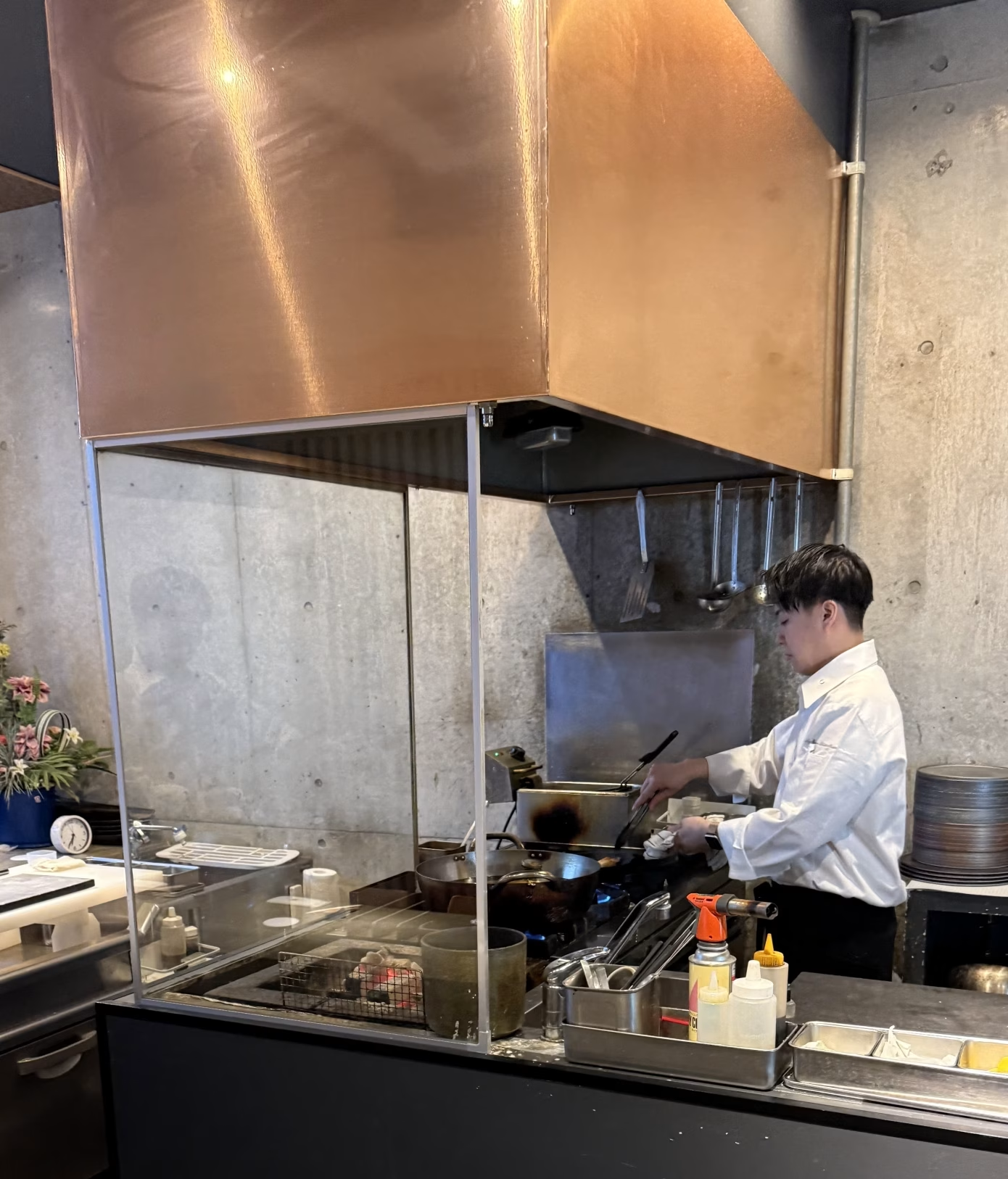
Ikkoku, tucked into a back street in Fukuoka's Yakuin neighborhood, was a completely unplanned find — we walked past, saw the reservation slot open, and booked on the spot. The dining room that night was full of Japanese regulars and not a single visible tourist, with a quiet, dimly lit atmosphere that leans creative rather than the loud, everyone's-shouting-kanpai style of a typical mass-market izakaya. Bottom line up front: Ikkoku is a good pick if you want a quiet, tourist-free taste of local Fukuoka izakaya culture, and the food clears the bar comfortably, but not every course impressed, and missing out on the sake we wanted to drink left the evening feeling slightly incomplete.
福岡、薬院、創作居酒屋、九州料理、中價位、居酒屋
(Dining in April 2026)
About the Restaurant
Ikkoku positions itself as a "Kyushu ingredient-driven creative izakaya" (九州食材創作居酒屋), a step up from the grilled-skewer, fried-everything style of a typical neighborhood izakaya. The menu is built around ingredients sourced from across Kyushu, plated with more precision than you'd expect at this price point — everything from sashimi to grilled dishes to the closing hot-pot rice feels composed, almost like a mini kaiseki, while the pricing and atmosphere still stay casual and izakaya-adjacent. The interior is dark wood, dim lighting, few seats — built for quiet conversation, not a rowdy toast-fest. It sits a roughly three-minute walk from Yakuin Station on the Nanakuma subway line, off the main tourist path, which is likely part of why the room was tourist-free that night.
The Food, Course by Course
We ordered the "Kyushu Ingredients Tasting, with Hot Pot Rice" (九州食材を堪能◎土鍋ごはん付き) course, priced at ¥6,000 for twelve dishes running from vegetables to fish to meat to a rice finale. Below are the courses that left the strongest impression — good or bad — all served as part of the set menu, so no individual pricing follows.
Opening Two: Green Bean Soup, Prosciutto with Caramelized Onion and Tofu Sauce
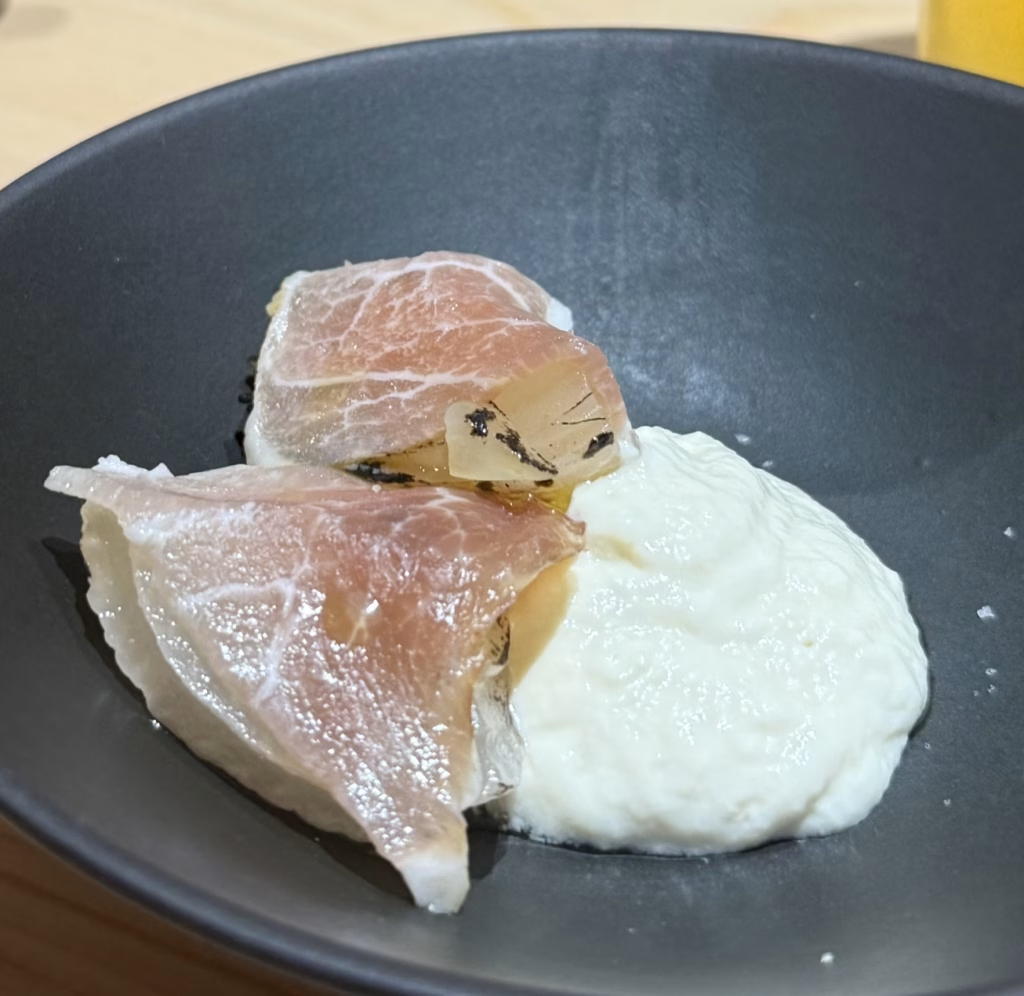
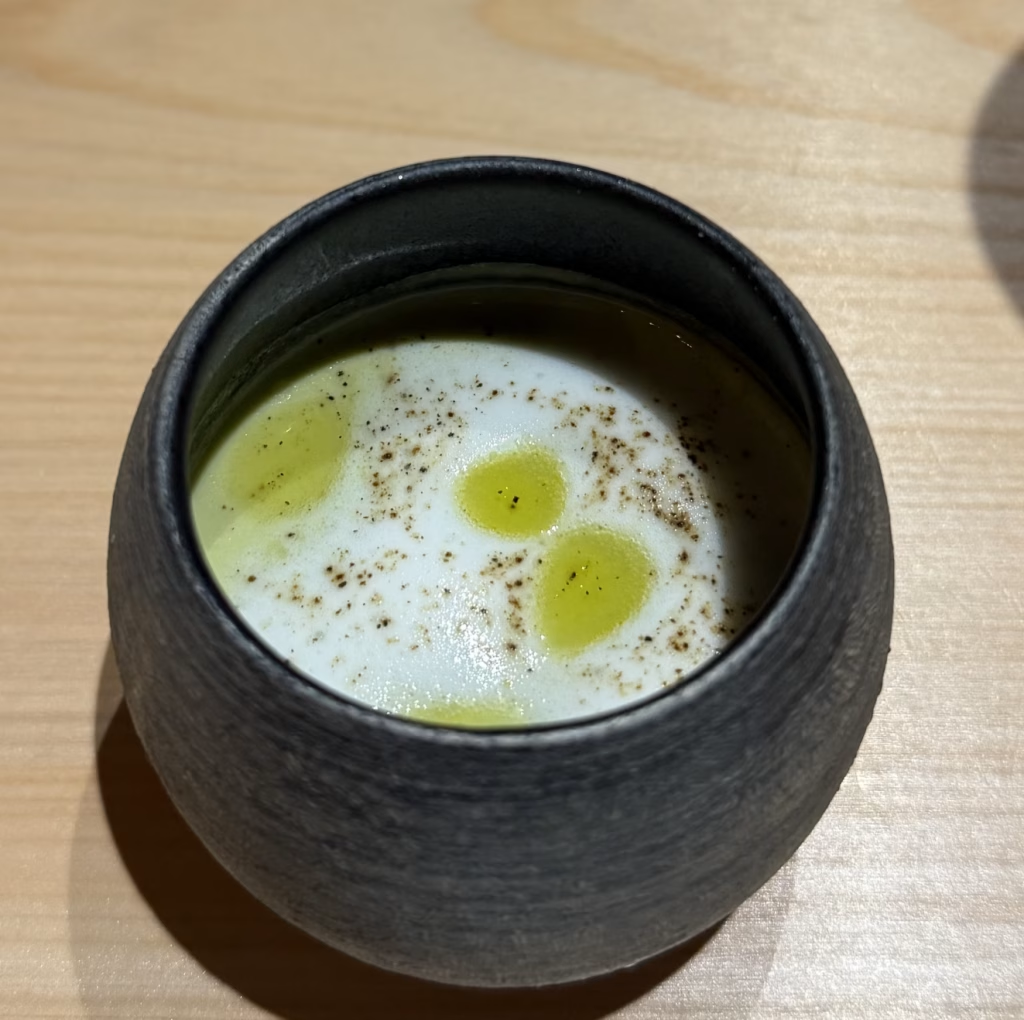
The meal opened with a warm, velvety green bean soup — mildly sweet, unremarkable in a good way, functioning as a gentle stomach-warmer rather than a showpiece. Next came prosciutto paired with caramelized onion and a tofu-based sauce: the salty cured ham against the bittersweet onion worked well, and the tofu sauce smoothed the whole bite into something more distinctly Japanese in character. A restrained, thoughtfully built starter.
Sesame-Soy Amberjack (Buri)
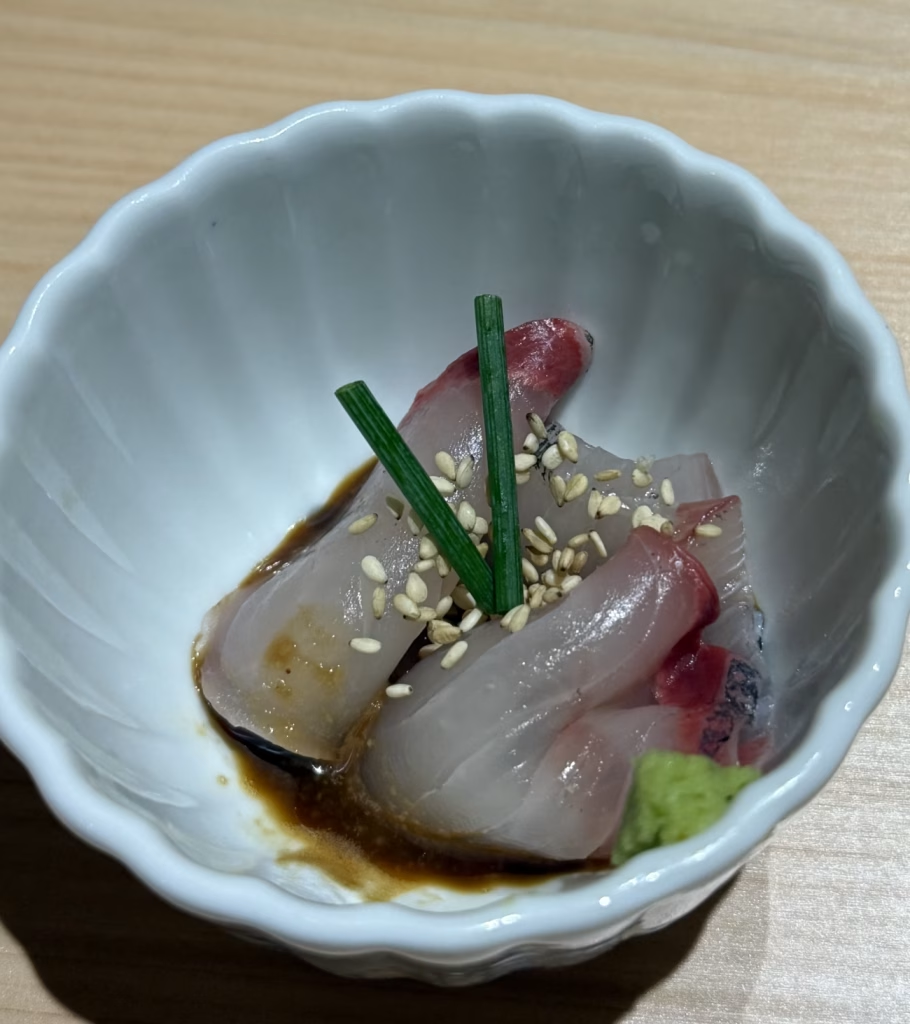
This was my favorite dish of the night. Rather than serving the amberjack (buri) sashimi with the usual soy sauce and wasabi, the kitchen dressed it in a sesame-soy sauce beforehand. The result had more aroma than typical sashimi, the fattiness of the fish came through more clearly, and it drank far better than a standard sashimi plate — it felt like an izakaya dish with real personality rather than kaiseki sashimi transplanted onto an izakaya menu. If I had to pick one dish that best represents what Ikkoku is trying to do, it's this one.
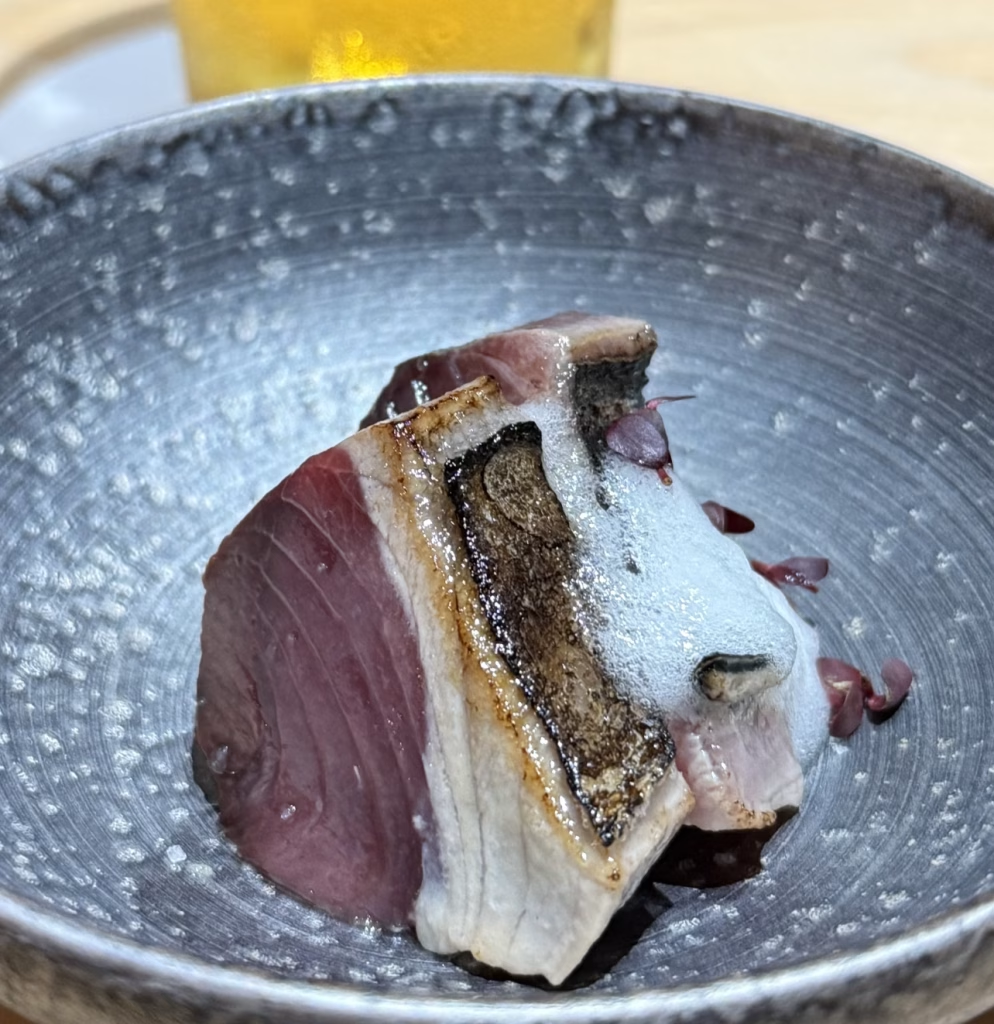
Lightly Smoked Bonito (Katsuo)
This course came with tableside theater — the bonito was smoked in front of us before being plated, which made for a good show and better photos. The eating experience was less consistent: the searing on each slice varied, some edges were a touch dry while some centers still ran raw, and the heat control could have been more precise. This was one of the few dishes where the presentation outshone the execution.
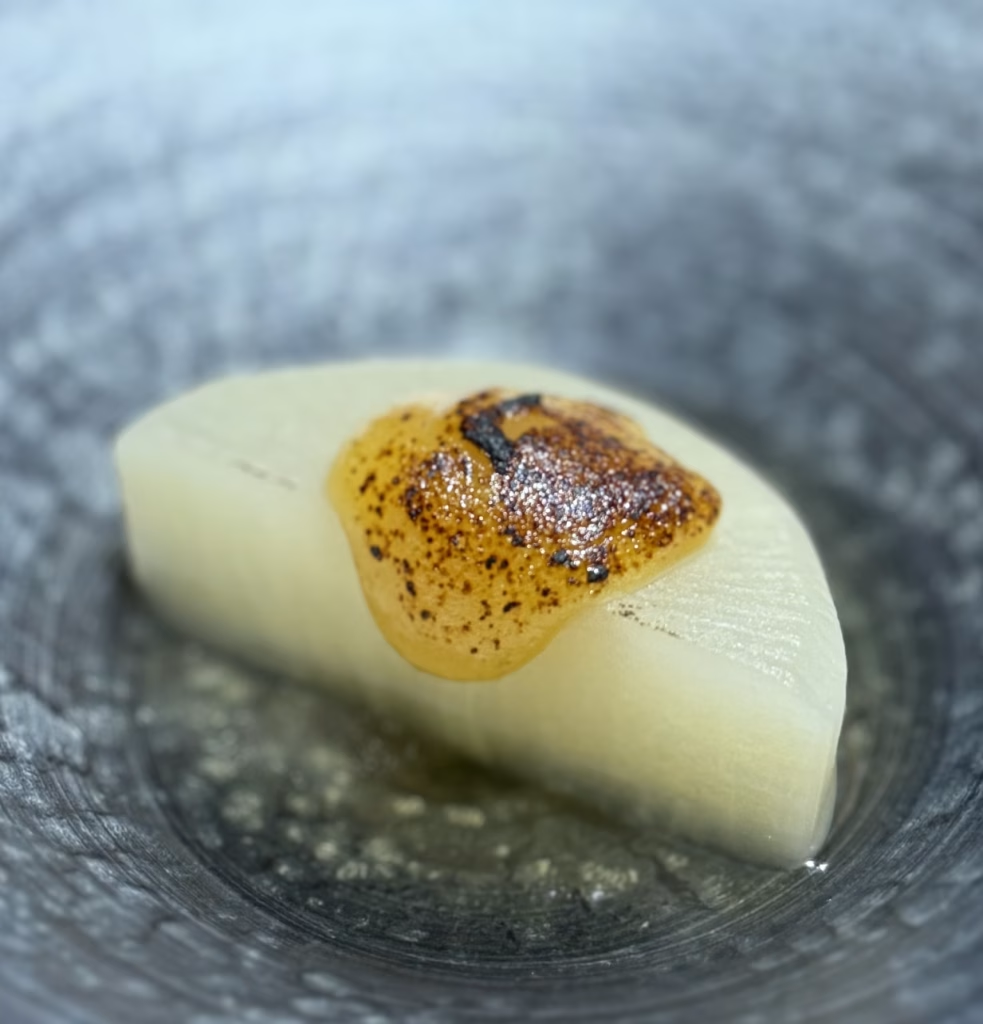
Grilled Daikon with Yuzu Miso
My favorite savory dish of the night, and the biggest surprise of the meal. The daikon was cut small, grilled until soft without turning mushy, and topped with a yuzu-scented miso sauce that was fragrant with a touch of sweet-tartness — the yuzu lifted the miso's heaviness into something lighter and more layered than it had any right to be at this size. Small, but the kind of dish you'd happily order a second plate of on its own.
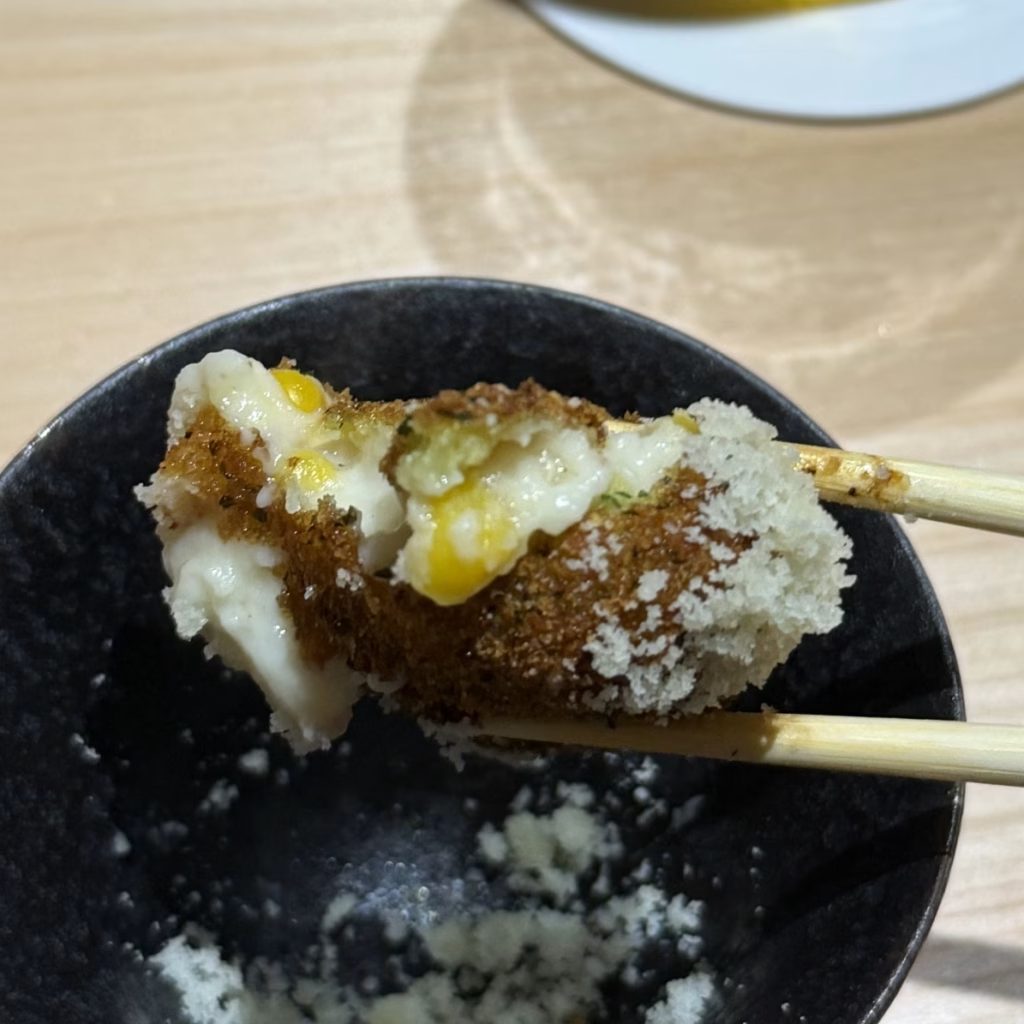
Chicken and Corn Croquette
Crisp on the outside, soft and juicy inside, with the sweetness of the chicken and corn balanced well and a dusting of cheese powder adding a salty finish. This is the crowd-pleasing, hard-to-mess-up dish of the set — more "safe and solid" than "memorable," but genuinely pleasant to eat.
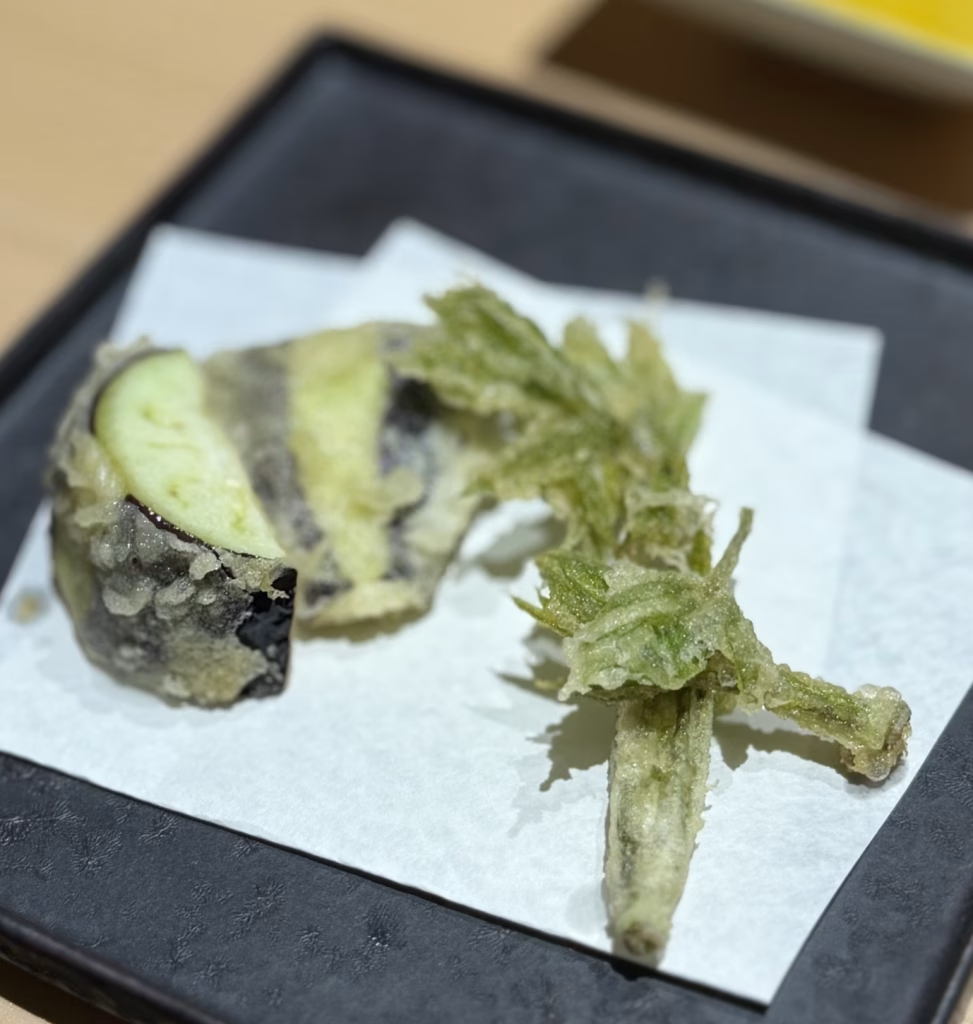
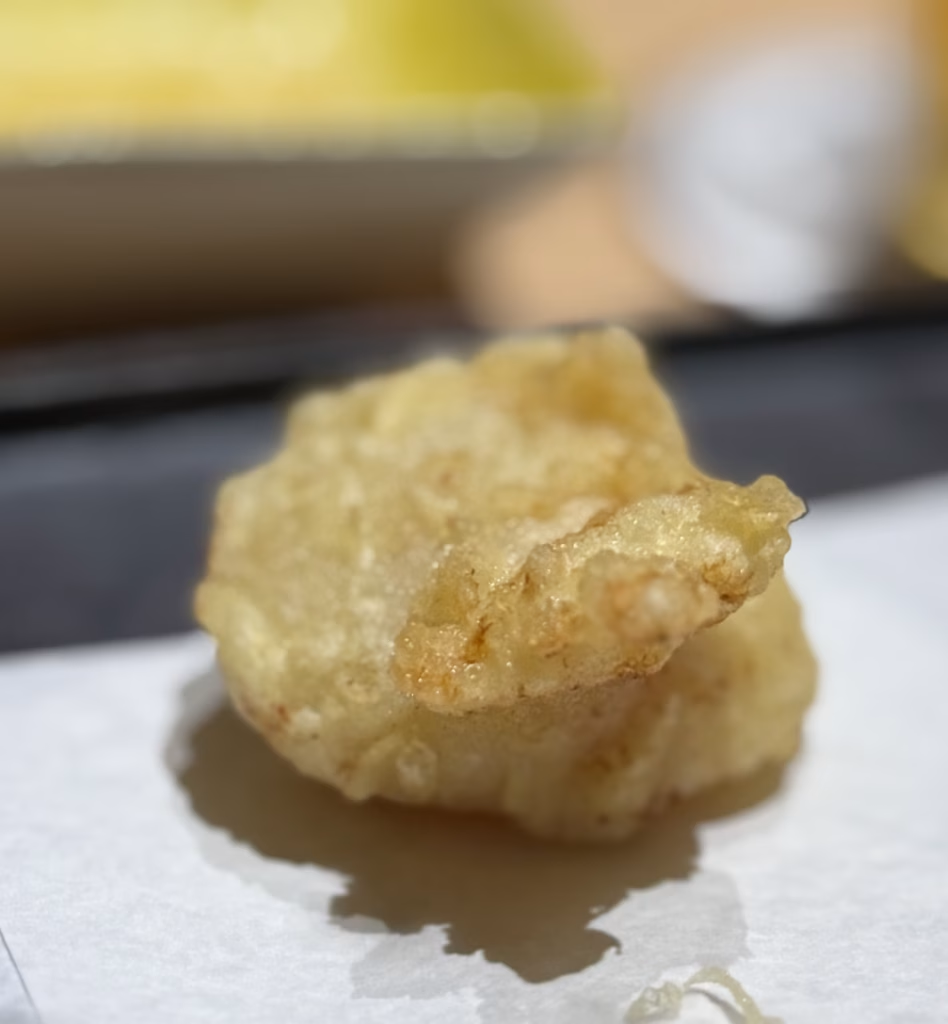
Tempura: Eggplant, Aralia Shoots, Scallop
Three ingredients — eggplant, young aralia shoots (kogomi-adjacent wild greens), and scallop — battered thin, with reasonably well-controlled oil temperature. The catch: if you've eaten at a tempura specialist in Fukuoka, this course reads as merely fine. It lacks the fried-to-order, crackling-outside-scalding-inside intensity that a dedicated tempura counter delivers. Competent, not distinctive.
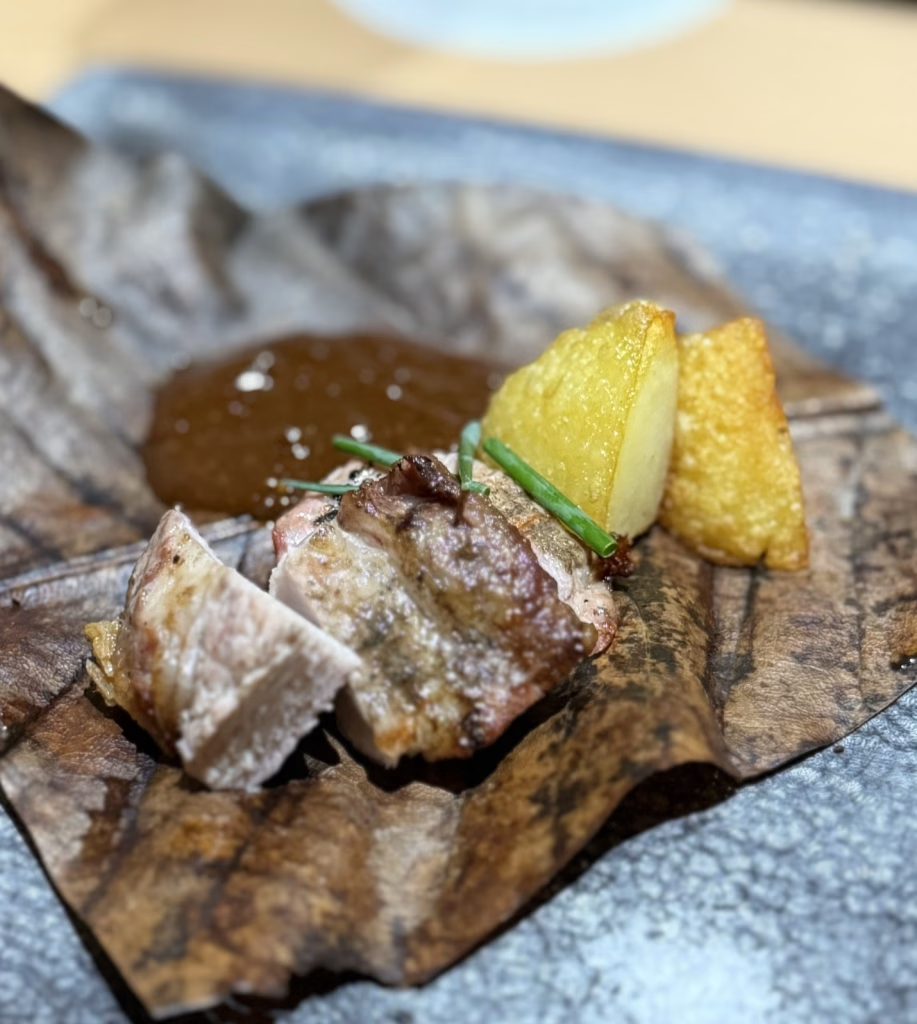
Main: Oita Kin'un Pork, Grilled in Magnolia Leaf (Hoba-yaki)
The main course was Oita-prefecture Kin'un pork, wrapped and grilled with hoba miso (magnolia-leaf miso) on a magnolia leaf. The meat was tender with even fat distribution, and the hoba miso carried both a charred, smoky note and the sweet-salty depth of good miso — good enough to eat on its own with rice. Saving a bit of the miso to stir into the closing hot-pot rice paid off; this was the dish that most deliberately connected the main course to the finale.
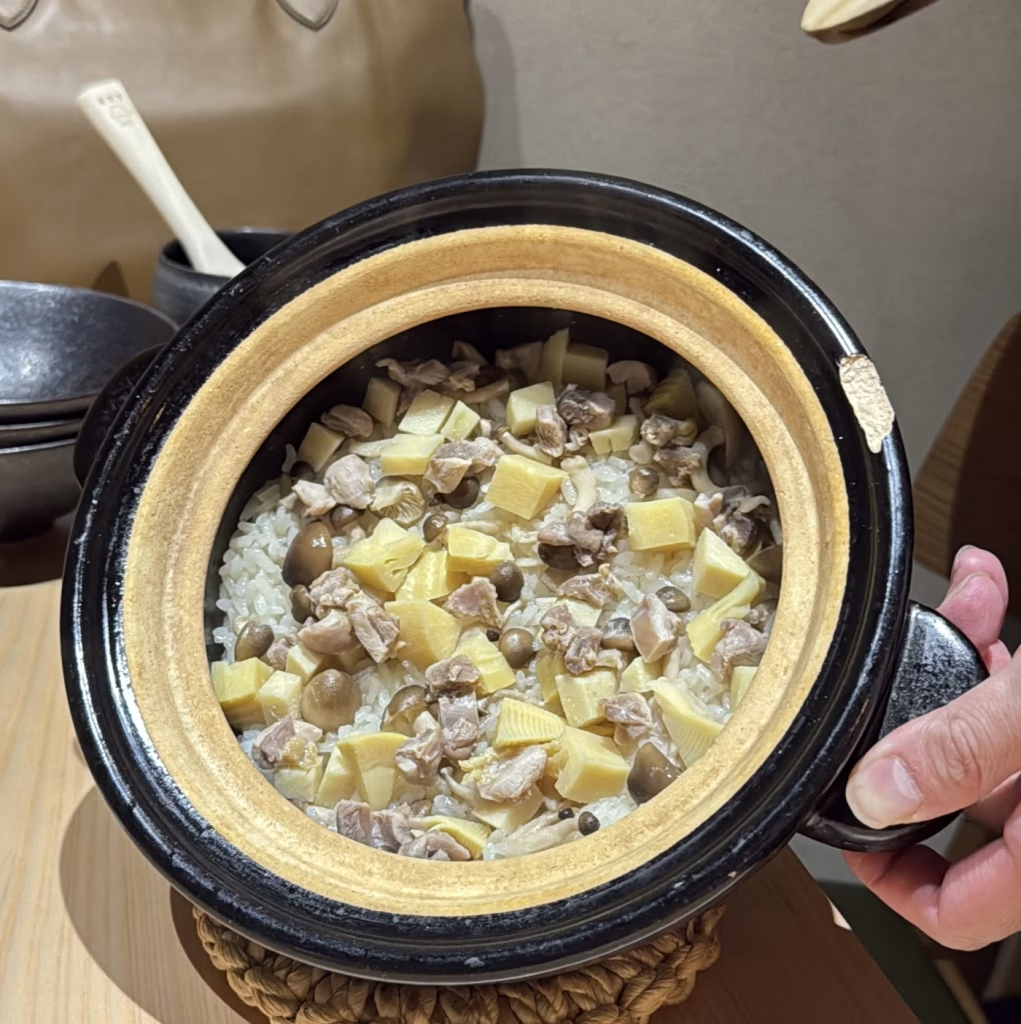
Hot Pot Rice with Bamboo Shoot, Mushroom, and Chicken
The closing course was a chicken-stock hot pot rice loaded with bamboo shoot, mushroom, and chicken — the rice had soaked up the broth's savoriness enough to stand on its own. The suggested way to eat it: try it plain first, then stir in the accompanying sauce or dashi the restaurant provides to turn it almost soup-like in texture. Getting two distinct eating experiences out of one pot of rice was a smart, warming way to close the meal.
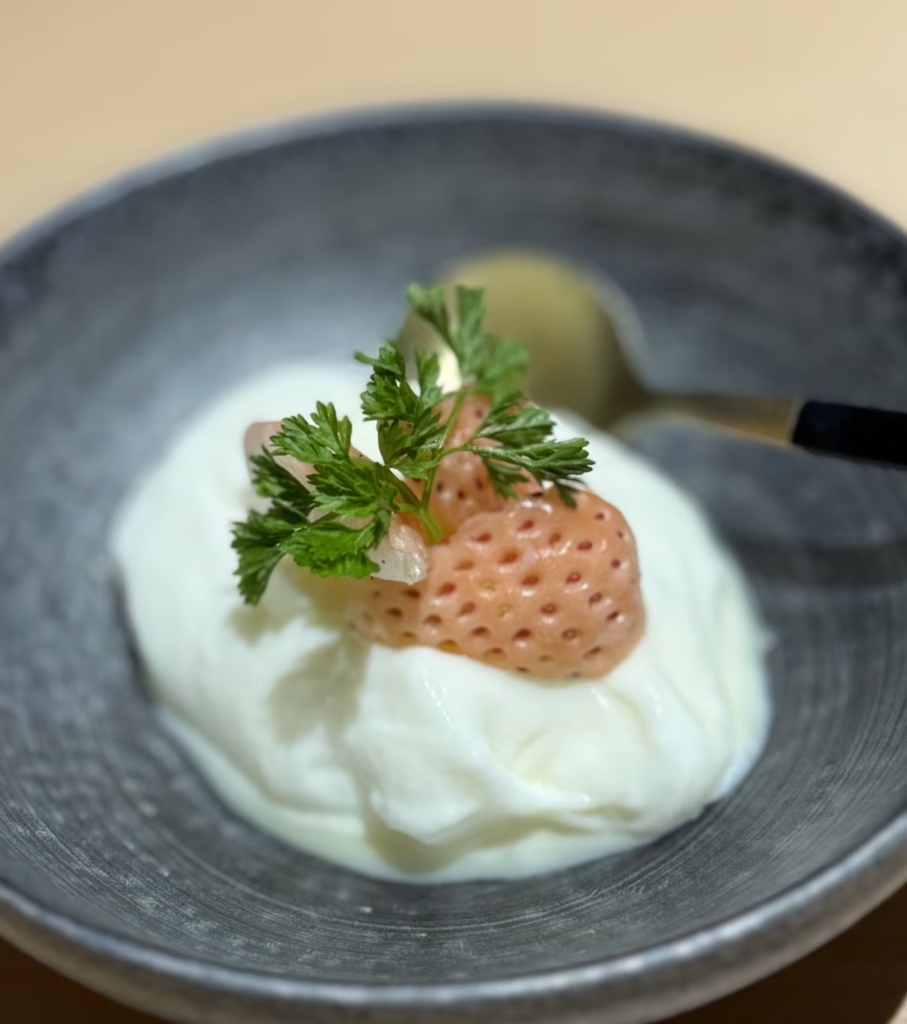
Dessert: Milk Mochi with White Strawberry
The dessert was one of my favorite dishes of the night. The milk mochi had a rich, creamy dairy flavor with a soft, non-sticky chew, paired with a lightly tart white strawberry. The sweetness was well-judged — not heavy after an already filling meal — and it closed things out on a genuinely strong note.
Final Thoughts
Not every dish at Ikkoku impressed. The sesame-soy amberjack, the yuzu-miso grilled daikon, and the milk mochi with white strawberry were the three dishes I'd actually remember; the shiso pork shoulder and the tempura were comparatively unremarkable, and the smoked bonito's execution wasn't consistent. The biggest miss was the drinks list — we didn't get to try the sake we'd wanted, which felt like a real gap for a restaurant positioning itself around creative, ingredient-driven cooking that should, in theory, be doing more with pairing. This restaurant suits travelers or local diners who want to avoid tourist crowds and experience a quieter, more refined side of Fukuoka izakaya culture, and who don't mind a slightly higher price point (¥6,000 and up, drinks excluded). If what you're after is one dish that genuinely stops you in your tracks, or a serious sake pairing alongside the meal, Ikkoku may not fully deliver. I'm scoring this visit 6.5 out of 10 — a pass with clear shortcomings: the atmosphere and a handful of standout dishes carry it, but inconsistent execution on a few courses and an underdeveloped drinks experience hold it back. I'd consider going back if I'm in Fukuoka again, but this isn't a place I'd rush to revisit or actively bring friends to right now,
The suitable customer base is those who want to avoid tourists and experience the atmosphere of Fukuoka's exquisite local izakaya, especially those who like a quiet dining environment and do not exclude travelers or local gourmets with slightly higher prices (starting at 6,000 yen, excluding drinks). If your focus is to have a dish that gives people goose bumps, or if you want to seriously drink a round of sake to accompany your meal, you may not be able to fully satisfy you for a moment. I will give this experience a score of 6.5 (out of 10), but there are clear disadvantages: the advantage lies in the atmosphere and the completion of a few highlight dishes, the disadvantage lies in the insufficient memory of some dishes, the heat control is not consistent enough, and the wine list experience is not full. If I have the opportunity to return to Fukuoka in the future, I will want to visit again, but this time I will not take the initiative to take my friends there, nor will I be in a hurry to visit again.
Related information
- Restaurant: Ikkoku (一刻)
- Address: Room 101, 1st Floor, Watanabe-dori, 2-8-3, Watanabe-dori, Chuo-ku, Fukuoka City, Fukuoka Prefecture
- Transportation: Yakuin Station on the Nanakuma Subway Line, about a three-minute walk away
- Reservation method: You can make an online reservation through Hotpepper Gourmet or AutoReserve, or you can make an appointment by phone. It is recommended to make an appointment in advance. On-site communication in Japanese will be smoother.
- Business hours: Monday, Wednesday, Thursday, Friday, Saturday from 17:30 to 23:00 (last order at 22:30); Sunday from 17:30 to 22:00 (last order at 23:30); closed on Tuesdays and irregular holidays
- Per capita consumption: 6,000 yenコース (excluding drinks), plus some alcoholic beverages, the overall per capita is estimated to be about 6,000 to 8,000 yen.
- Payment method: It is recommended to call or confirm whether you can swipe your card through the reservation platform before departure.
This meal is fully self-financed.