
Content table of contents
Grilled throughout the process, Kyushu black-haired wagyu beef, from the root of the tongue to Chateaubriand
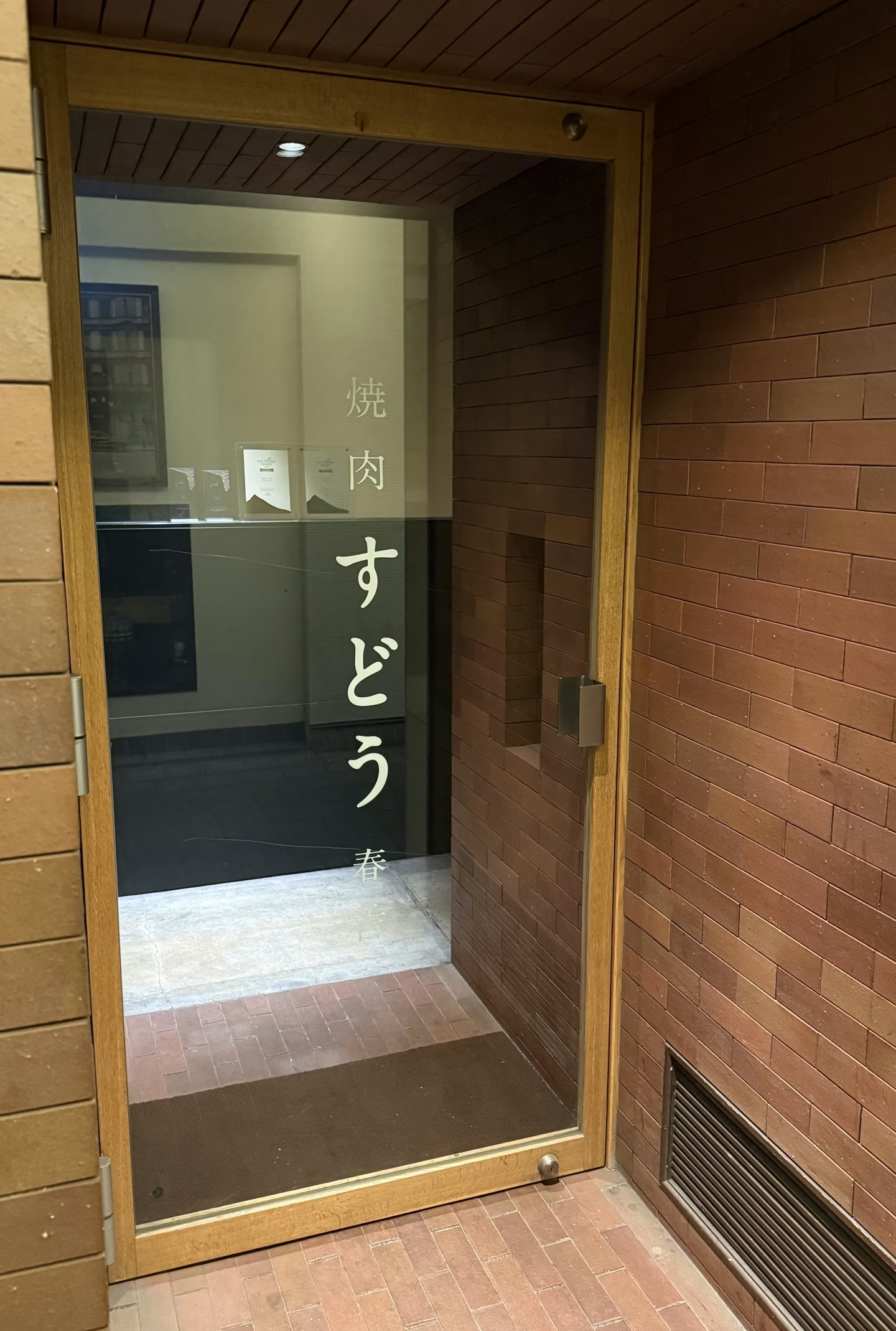
During my trip to Fukuoka in April 2026, I left one night to Haruyoshi's "Yakiniku Sudoku". I chose this one because it is the second store opened by Kumamoto's popular store in Fukuoka, and it takes the route of "yakiniku roasting on behalf of the whole process"-the guests do not touch the clips, and the heating, turning, and cutting are all done by a dedicated person at the table. Conclusion First: The special price of ¥16,500 is worth it. The grade and roasting skills of the meat can afford this price. The deduction mainly falls on the spicy beef sausage and red wine at the end of the serving. If you are here for a complete experience of wagyu beef parts, this is one of the few choices in Fukuoka that can be eaten in place at once.
#Fukuoka Gourmet #Fukuoka Yakiniku #Yakinikuすど # #Haruyoshi Gourmet #Wagyu #Chateaubriand #JapanEats #FukuokaGuide #Kyushu Travel #Japanese Cuisine #Michelin grade #FukuokaFood #Yakiniku #Wagyu #Chateaubriand #JapanEats #FukuokaGuide
(Dining in April 2026)
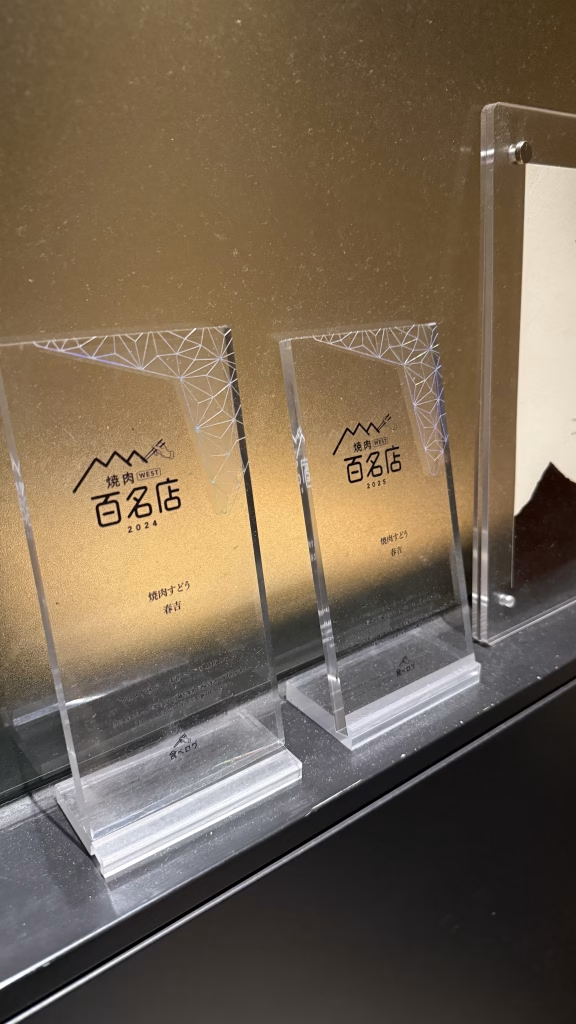
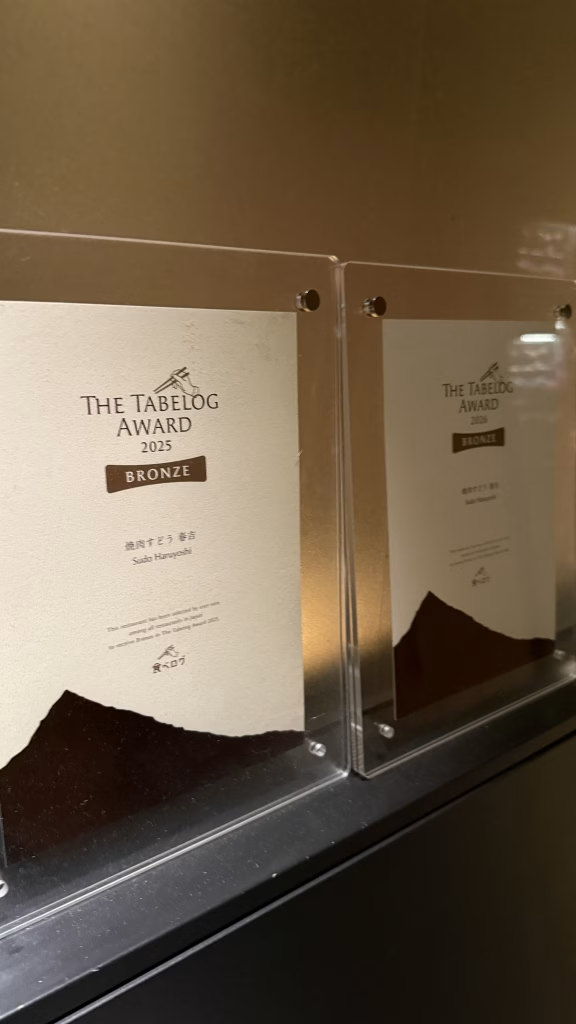
Store background: An Akasaka shop with eight seats, almost all of the guests are local Japanese.
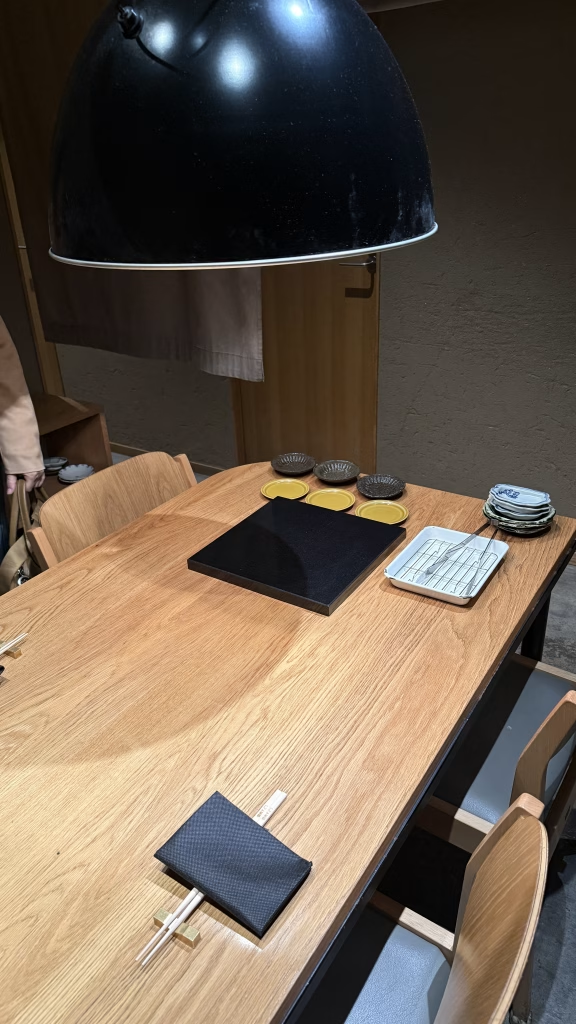
Yakiniku Sudou's main store is in Kamitori-cho, Kumamoto. Since May 2016, it has set up a store in Fukuoka. Haruyoshi's shop is located on the first floor of Panola Maskuya Hakata, about a 4-minute walk from Tenjin South Station. The space is not large. There are 30 seats up and down, and the counter seats are separated by a warm curtain in half of the room. The lights are lowered, and the volume of speech is naturally lowered. It is the kind of yakiniku shop where you can talk well-this is actually not common in the category of yakiniku.
The core setting of the store has two layers. The first layer is meat selection: mainly black-haired wagyu beef from Kyushu, emphasizing the individual quality from the feeding method and feed, and then deciding how to cut it. The second and more critical layer is the "yakiniku" system-using seven rounds and domestic charcoal, trained professionals judge the best heat and turning time for each part, and the guests are only responsible for eating.
This sounds like a value-added service, but when you actually eat it, you will find that it is a prerequisite for the establishment of the entire menu. Because when the store can fully control the time when each piece of meat leaves the fire, it can arrange the order of parts, the matching of sauces, and the rhythm of salt burning and sauce burning into a narrative line. The staff who served us that night were quite fluent in English. Each piece would explain the location of the part on the cow and why it was equipped with this dipping material. There were no obstacles to communication at all.
The Food, Course by Course
Premium yakiniku ¥ー ¥¥16,500
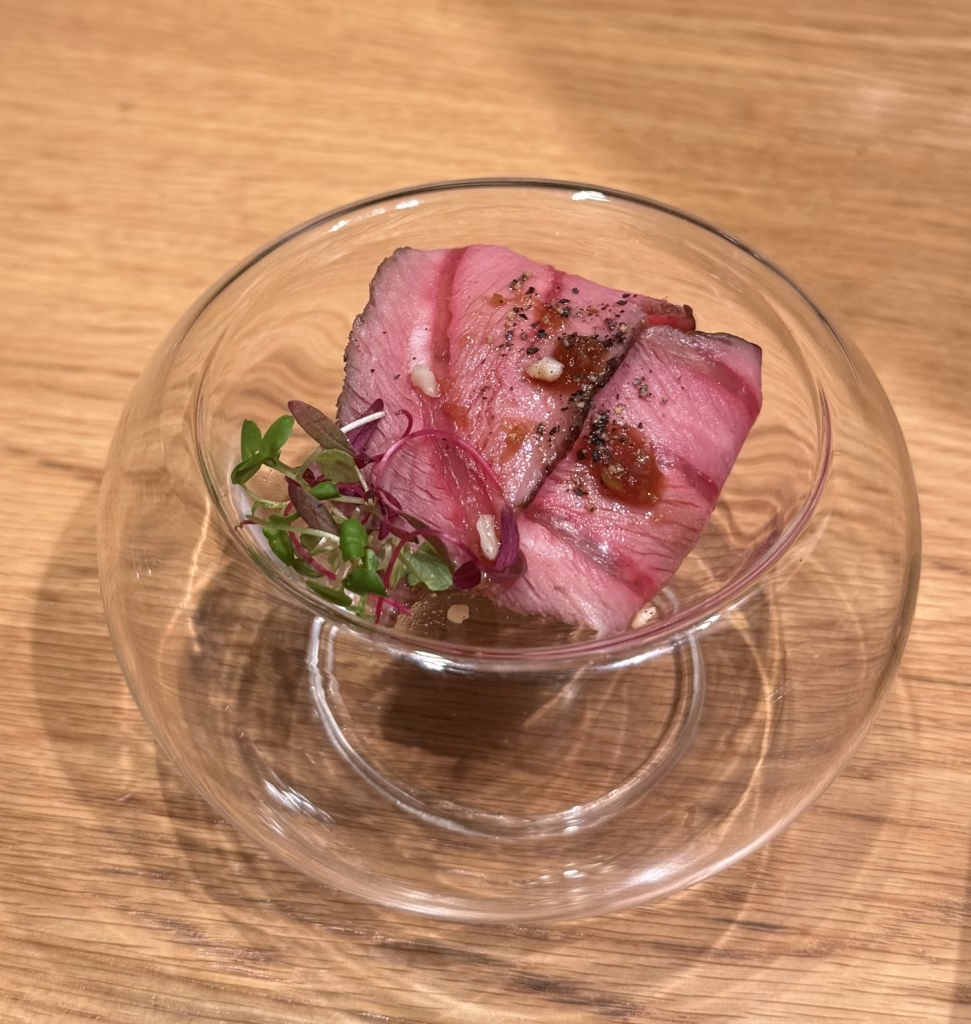
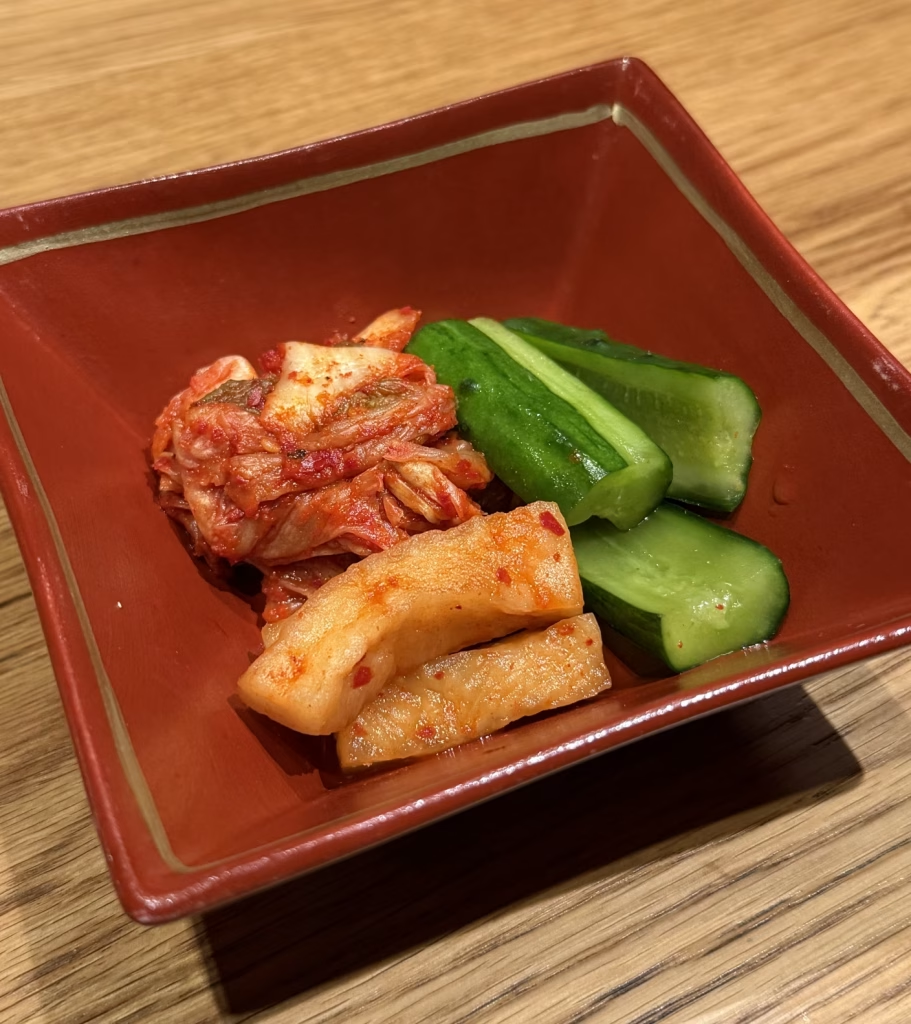
Opening three sketches|Kimchi, cucumber, Smoked beef slices
The first thing to serve is kimchi and cucumber with roast meat. The acidity is clean and not sweet and greasy. The effect is to wash the taste buds first. What is really interesting is the smoked beef slices-thin-cut, cold-fed, lightly smoked, and the fat has begun to loosen at room temperature, which is equivalent to giving a preview of "what does today's beef taste like" before the official fire. The opening portion is restrained, this is the measure of the course's cuisine.
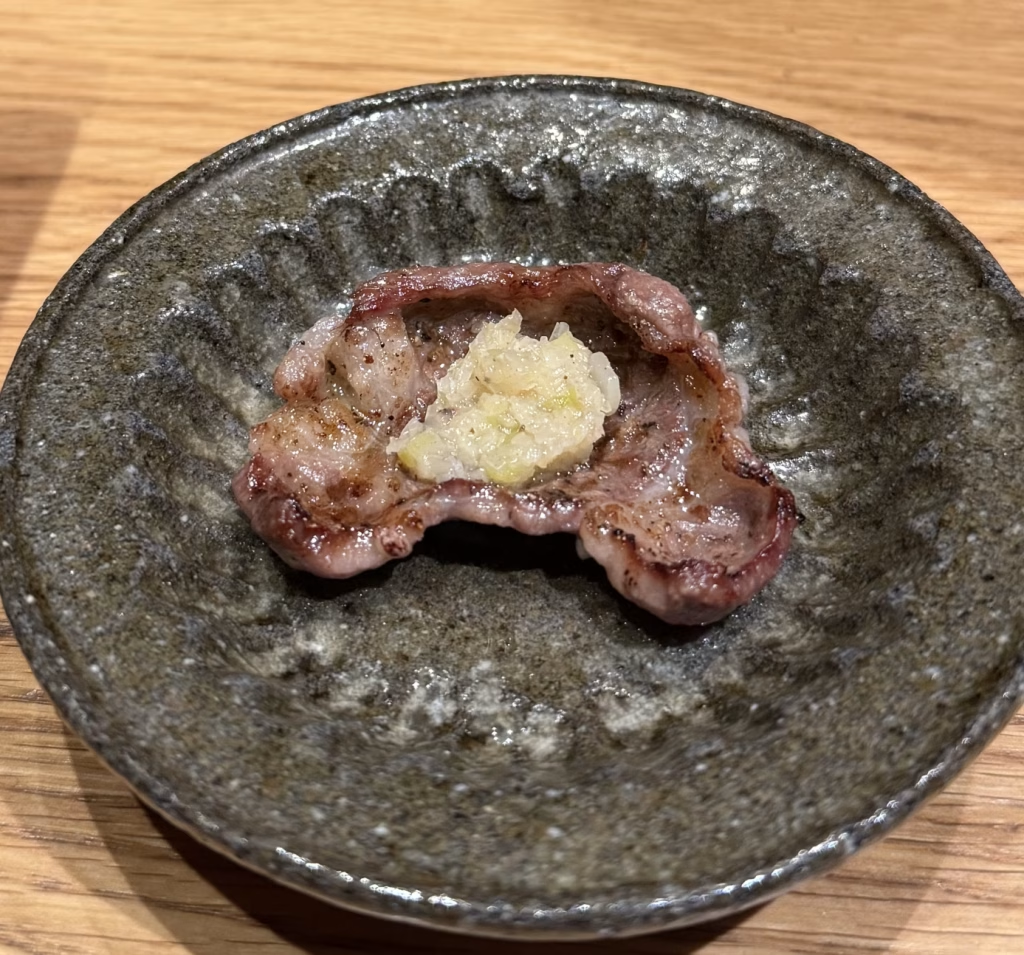
One and two of the five parts of salt roast | upper beef tongue × lemon, lower beef tongue × garlic
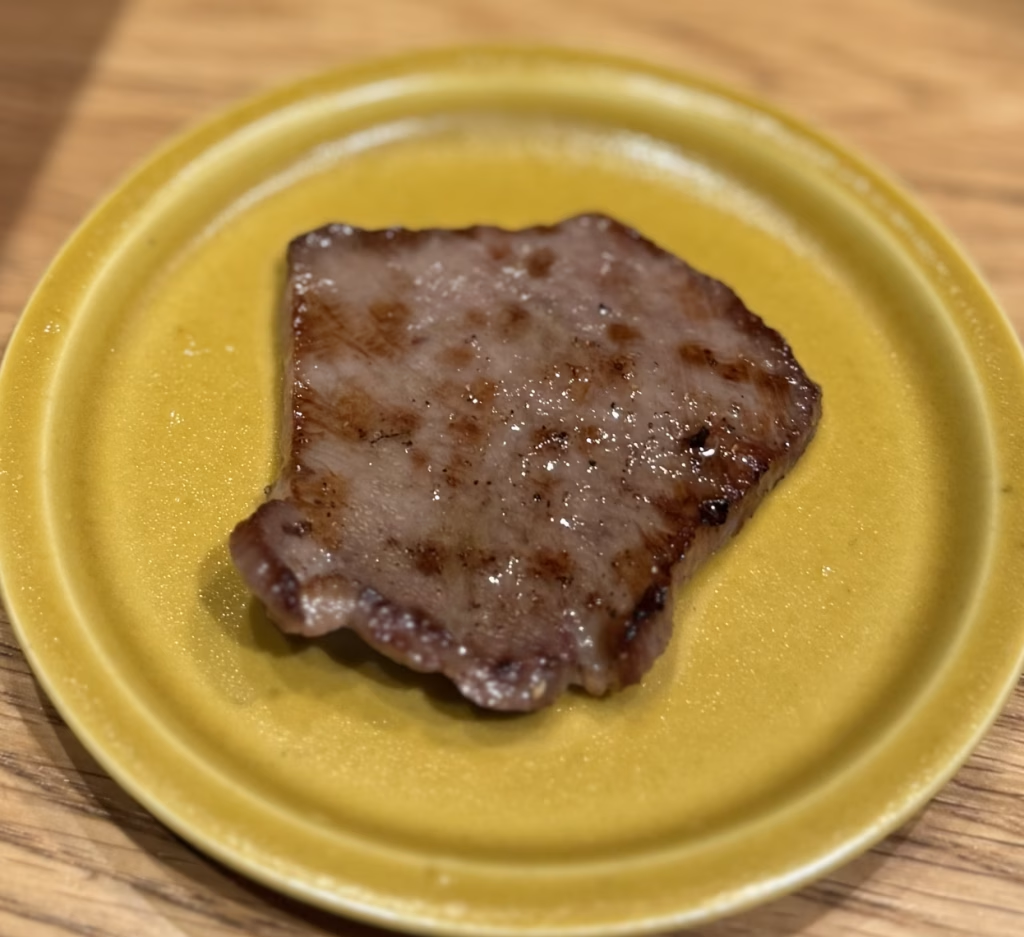
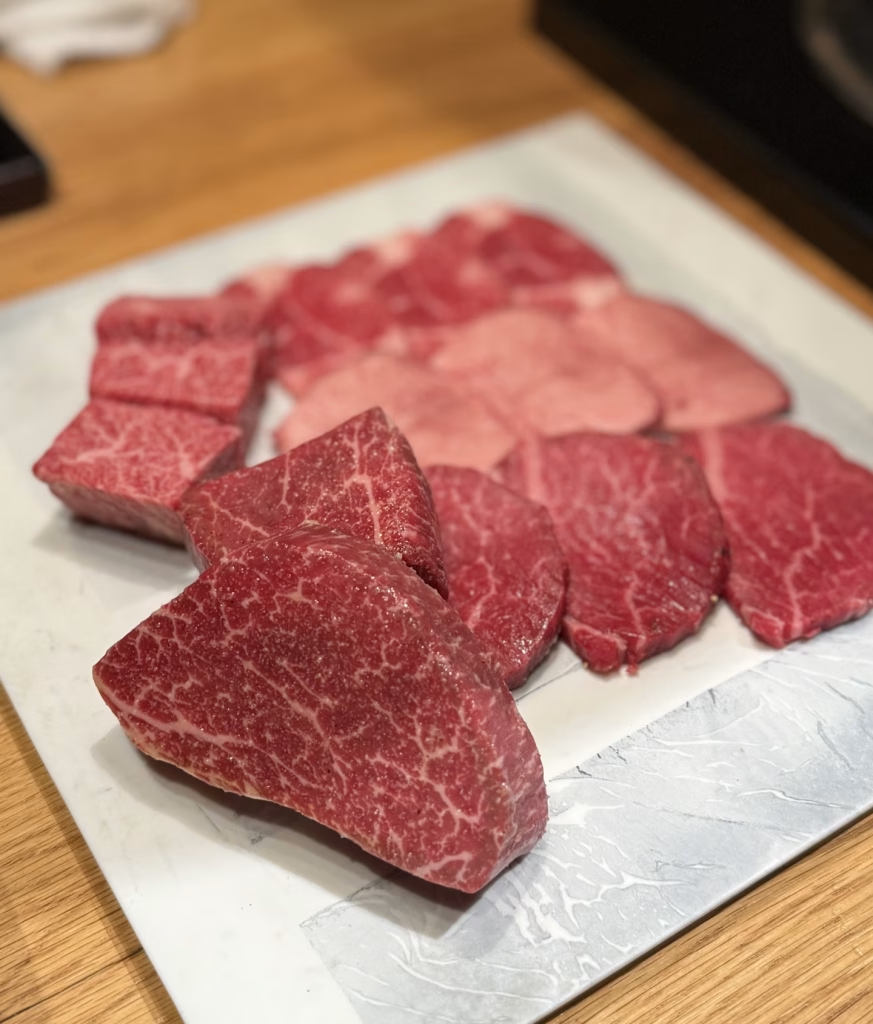
Beef tongue is given two paragraphs at a time. This is the first smart arrangement for the whole course. The upper beef tongue is taken from the root of the tongue, the oil is dense, the fiber is short, and the entrance is soft; with lemon juice, the acid cuts the grease, and the finish is clean. The fiber of the lower beef tongue is significantly thicker, the number of chews is doubled, and the meat taste is more direct; the change of garlic is to use the aroma to make up for its relatively thin sweetness.
The same ingredient, two parts, two kinds of dipping ingredients-this group is the best demonstration of "what is this store thinking" in the audience. Most yakiniku shops only make one kind of thick-cut beef tongue. After eating, you won't know that the tongue is actually layered.
Three of the five parts of Shioyaki|菲( (Filet) ×Miso
After the filet is connected to the beef tongue, it is a transition between temperature and taste. This part itself has less grease and a clean taste. When it is baked just right, it is dense rather than elastic. It is served with miso. The saltiness and fermented umami flavor support the flat flavor of the filet-it is easy to feel "soft but nothing to say" when eating the filet alone. Miso is the one who answered the call for it.
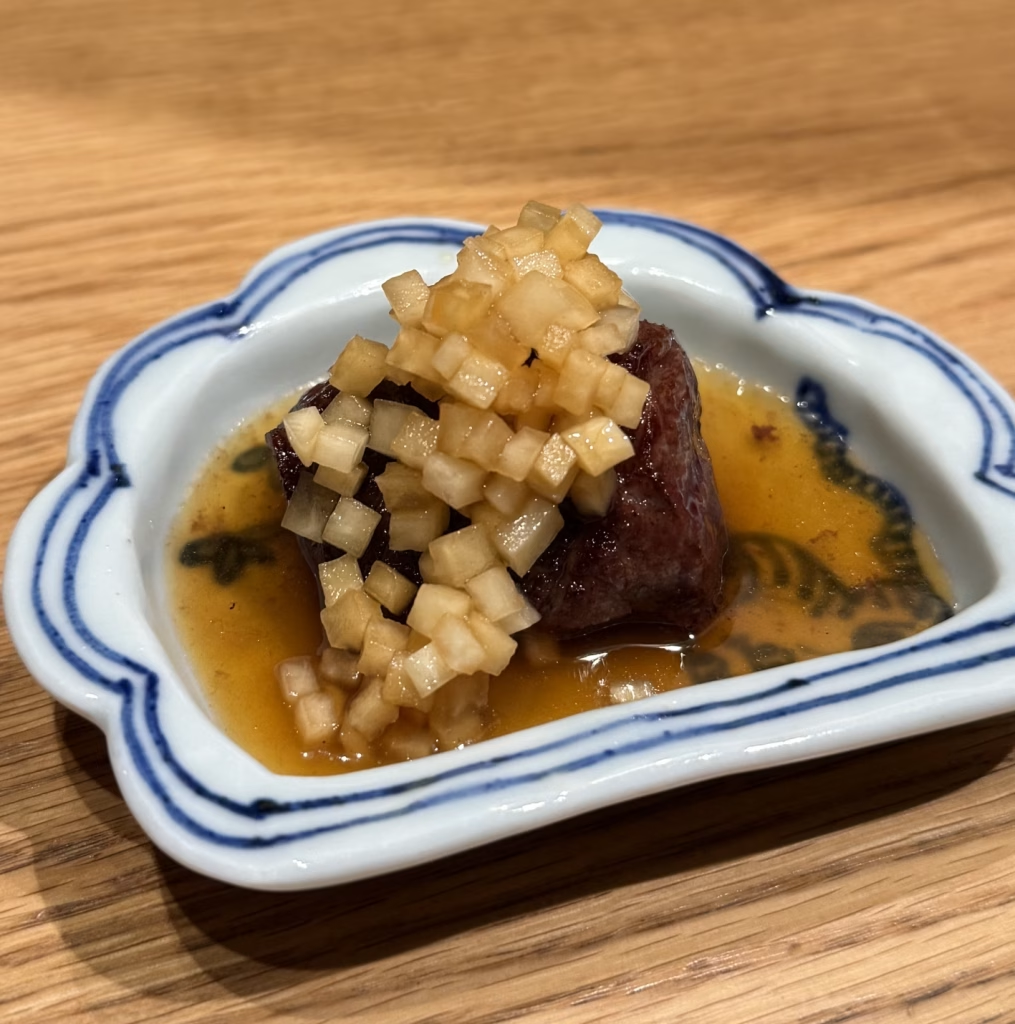
Four of the five parts of shochiyaki|ソハミ (outer skirt meat) × soy sauce Carrot puree
The outer skirt meat is on the outside of the diaphragm. It has a strong meat flavor and fat with tendon flavor. It is the most powerful piece of the whole set of salt roast. With soy sauce and radish puree, the spice and moisture of the radish will pull the concentration down one step, so as to avoid this piece directly pressing the back of Chateaubriand over. In order, the most personalized ones are placed before the finale, which is deliberately laid out.
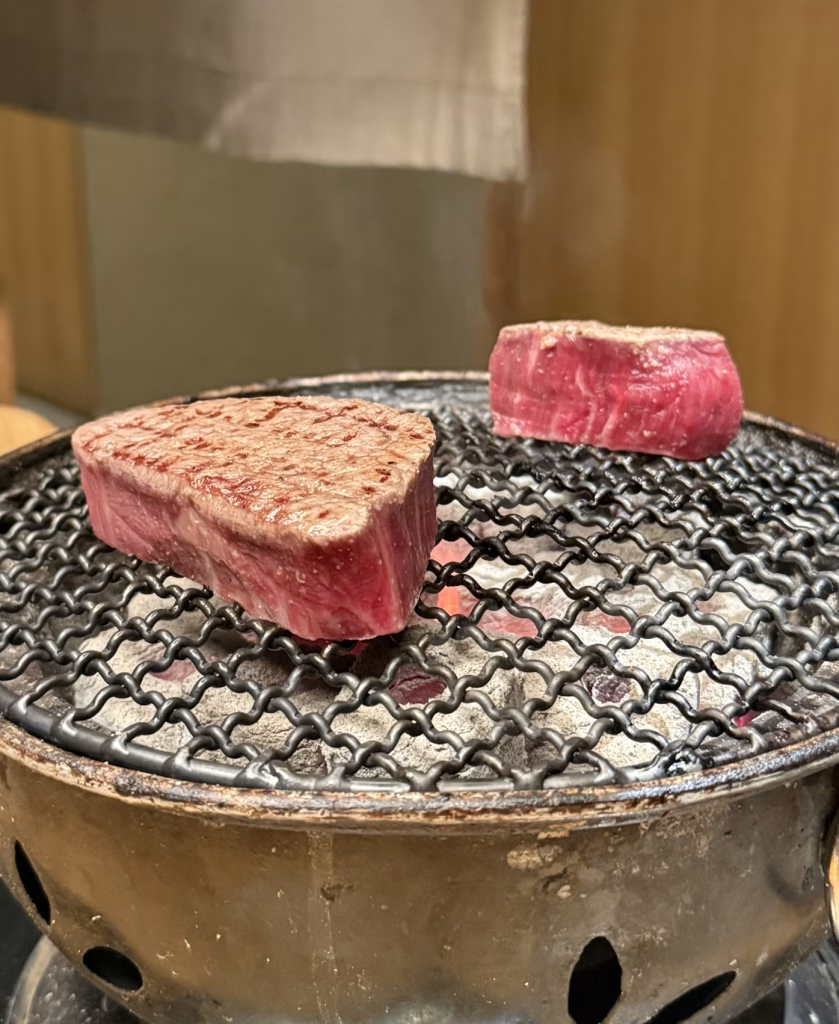
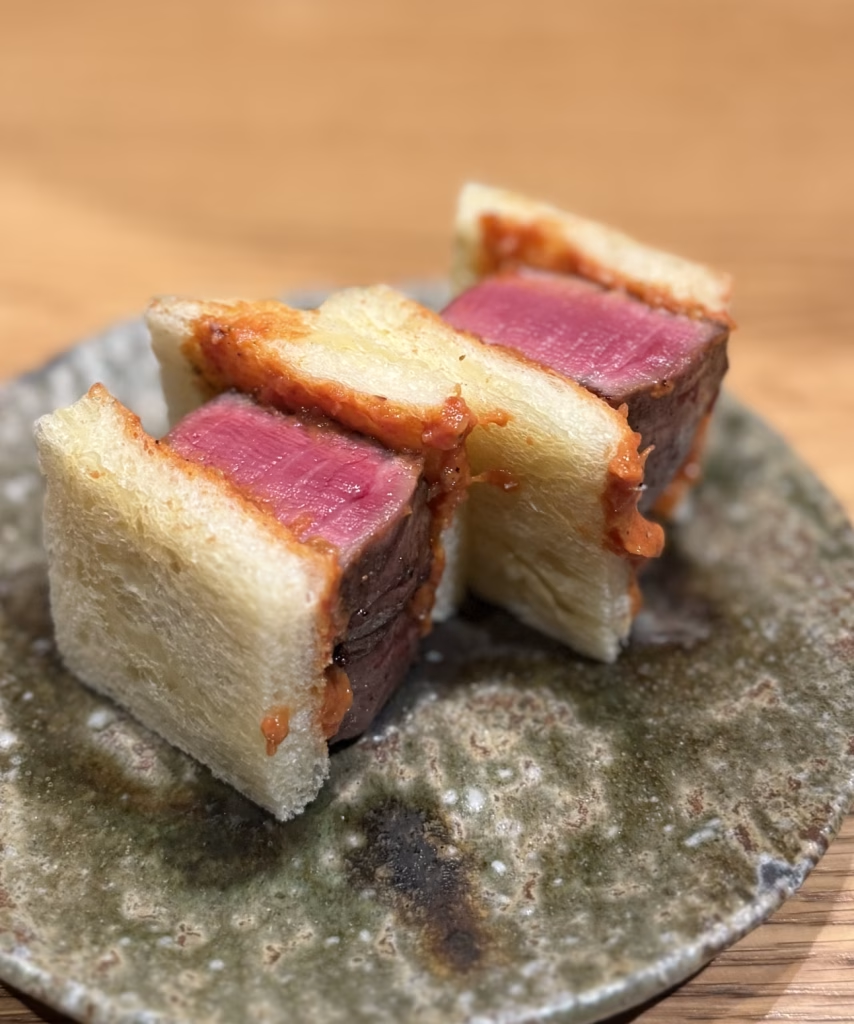
Five of the Five parts of Shochiyaki|三明治トーブンンン (Chateaubriand) Sandwich
The highlight. Chateaubriand is the most central part of Fili. The proportion of a cow can be taken is extremely low, and the price naturally stands at the top. Sudou's treatment is to make a sandwich-the grilled meat is sandwiched into toast and eaten in one bite.
The meat is indeed soft, and it is the kind of softness that is "soft but still has a sense of meat fiber", not softness that melts away. There is no luxurious embellishment such as truffles here, and the route is to put the original flavor of the protagonist at the forefront. My OWN REFERENCE GROUP IS USHIGORO S IN TOKYO, WHICH IS ALSO A CHATEAUBRIAND SANDWICH, WHICH IS MORE GORGEOUS IN Tokyo; BUT PUT THE PRICE TOGETHER, AND THE PRICE OF THIS BITE IS NOT LOST-YOU PAY FOR THE MEAT ITSELF, NOT FOR THE ACCESSORIES. Pay.
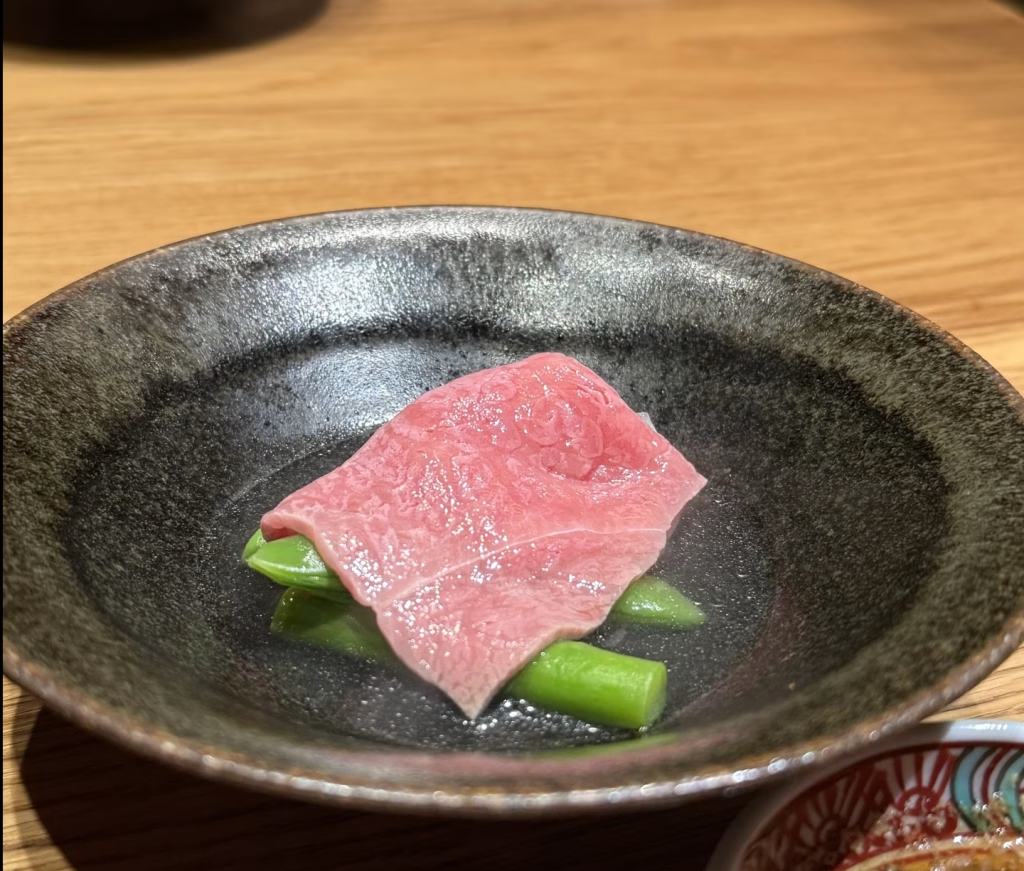
Midfield|Beef shabu-shabu (cooked in one minute)
Between the salt yaki and the sauce yaki, insert a portion of cooked beef shabu-shabu. This is the most commendable aspect of the rhythm design of the whole course: after eating five slices of charcoal-grilled meat in a row, the mouth has actually accumulated a lot of burnt flavor and fat, and the taste is reset with clear soup and a very short shabu-shabu time, and the difference can be seen in the sauce later. Without this one, the second half will be dull.
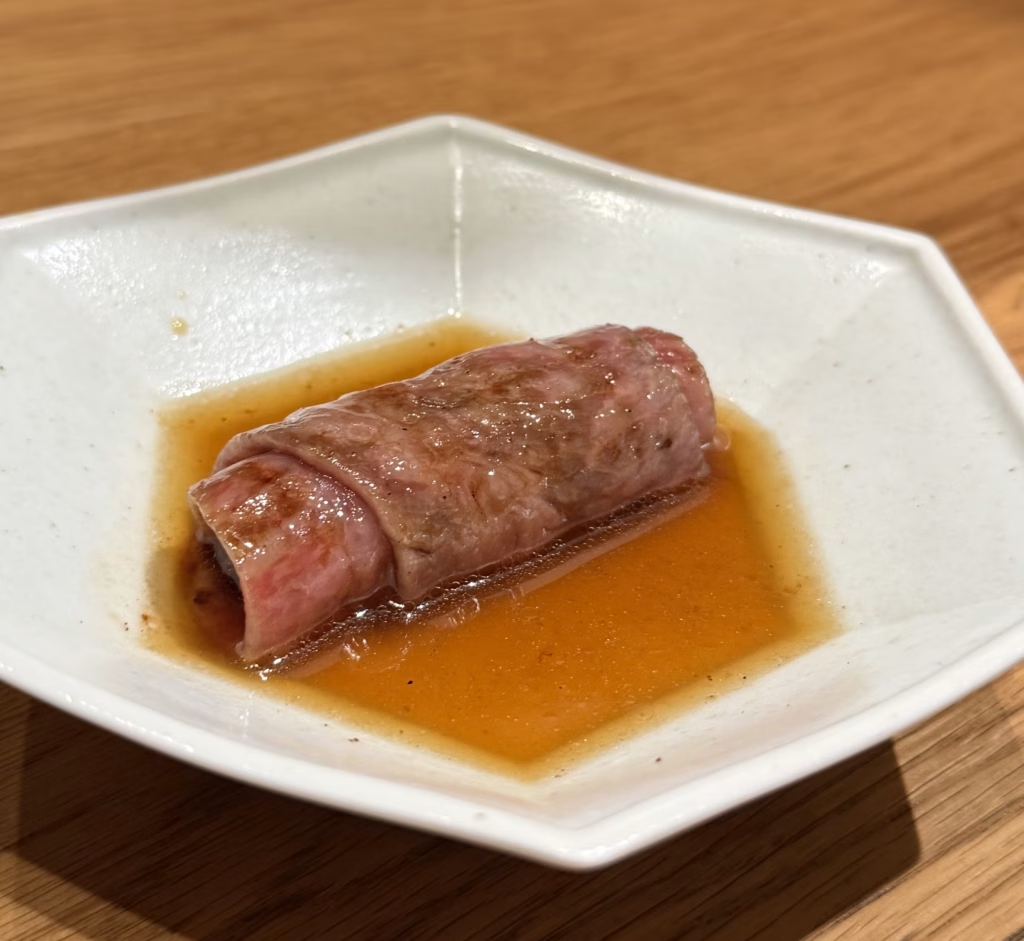
Three parts of misaki|sirloin (original flavor), hip meat (hot spring egg), waist and hip cover (with rice)
In the second half, change the sauce and roast, three parts with three ways to eat:
The original flavor of sirloin eaten directly with the sauce is the benchmark value-first let you know where the sweet and salty ratio of the sauce is. Hip meat is served with hot spring eggs, and the lipids of the egg yolks wrap up the saltiness of the sauce, making it round as a whole. The waist and hip lid (イボボ, that is, picanha in Brazilian barbecue) is served with rice. The sauce, fat and starch sweetness of the rice combine in the mouth to form the effect of a bite of donburi.
With the same sauce and three carriers, the matter of "sauce burning" is broken into three levels and finished. The design density of this group is frankly higher than that of the salt burn in the first half.
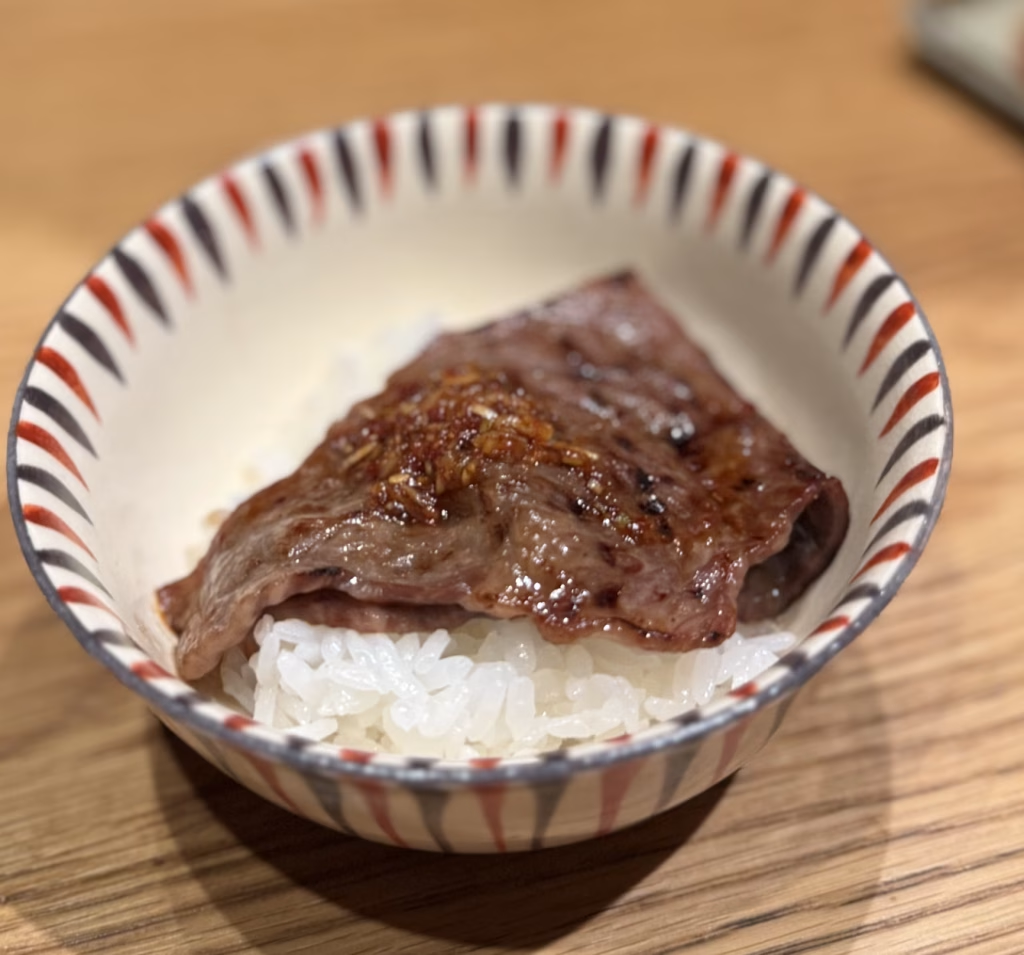
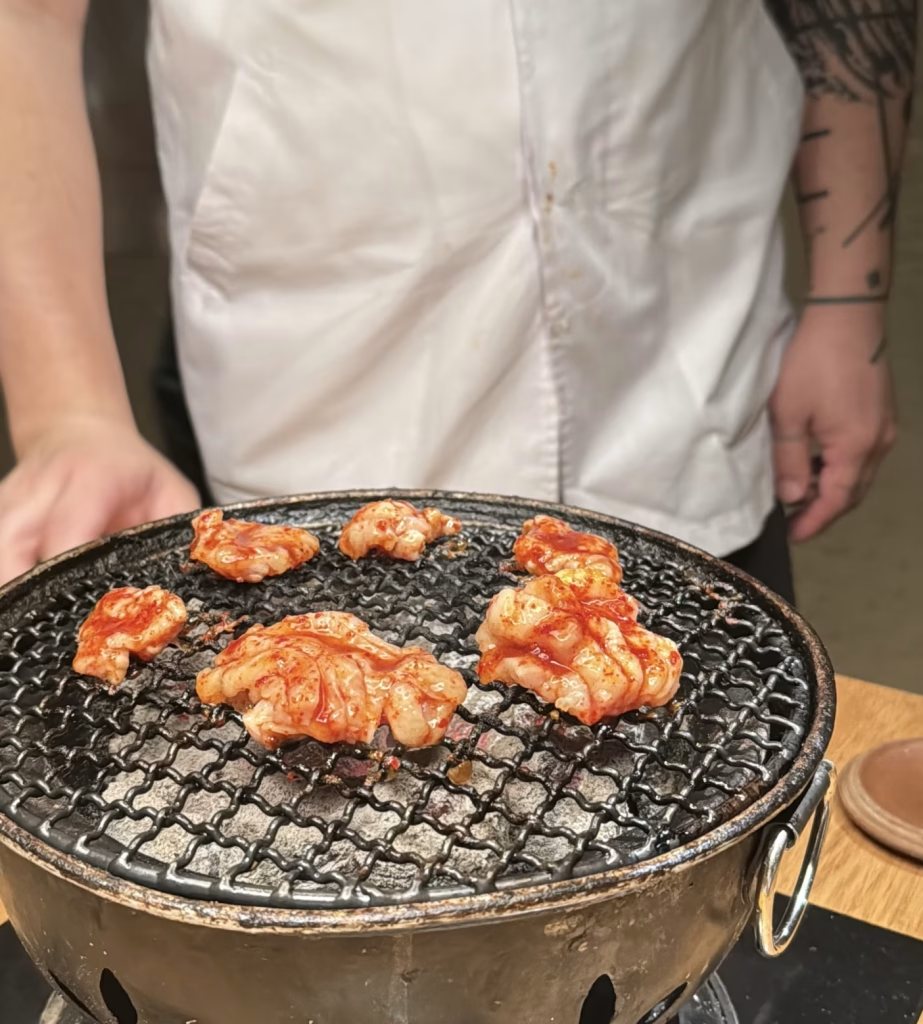
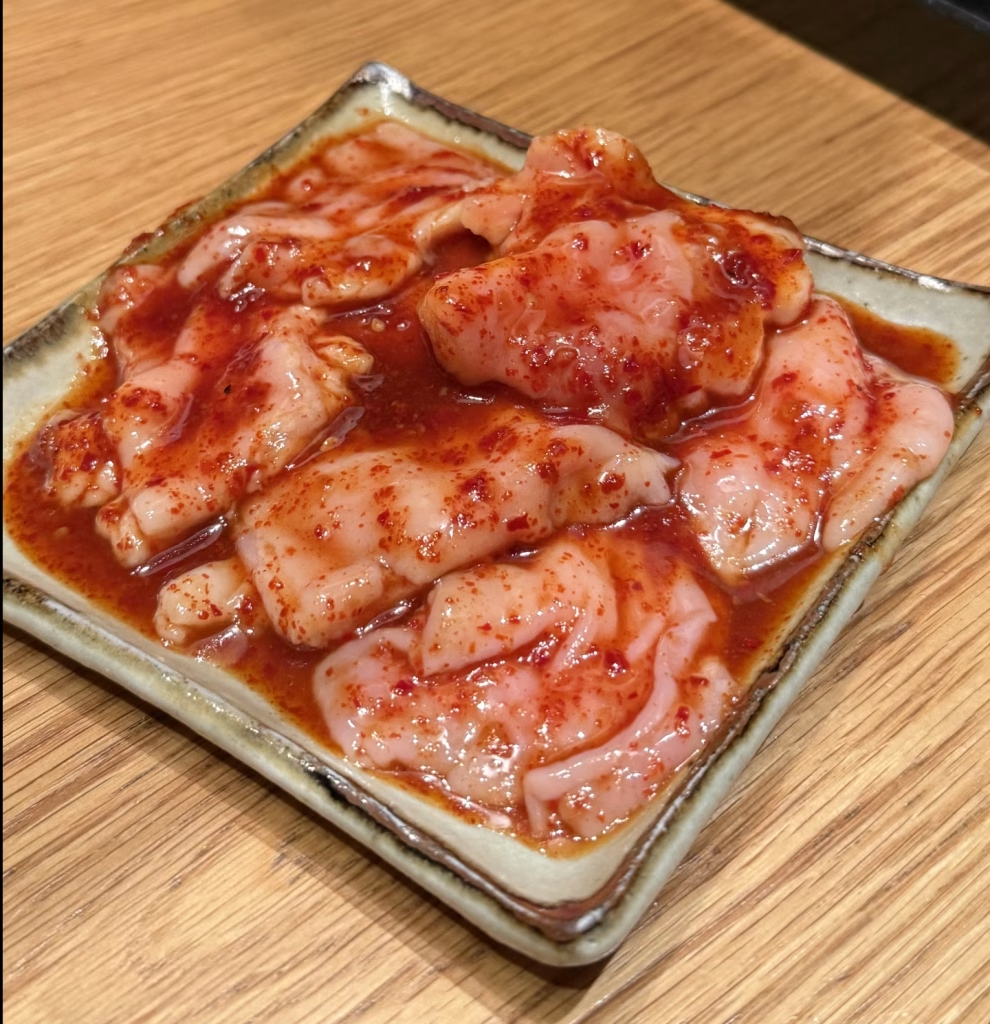
One of the finishing touches|Spicy beef sausage (I don't recommend this one)
The course ends with spicy beef intestines. This is the only one I can't eat in the audience-the texture is tough, and the chewing process is much like chewing gum. The more you chew, the less progress you make, and the spiciness is not strong enough to divert your attention. Offal is originally an extreme item of personal preference. People who like chewy may think it's just right, but at the end of a set of courses that are won by the fineness of the meat, I think it destroys the rhythm accumulated earlier.
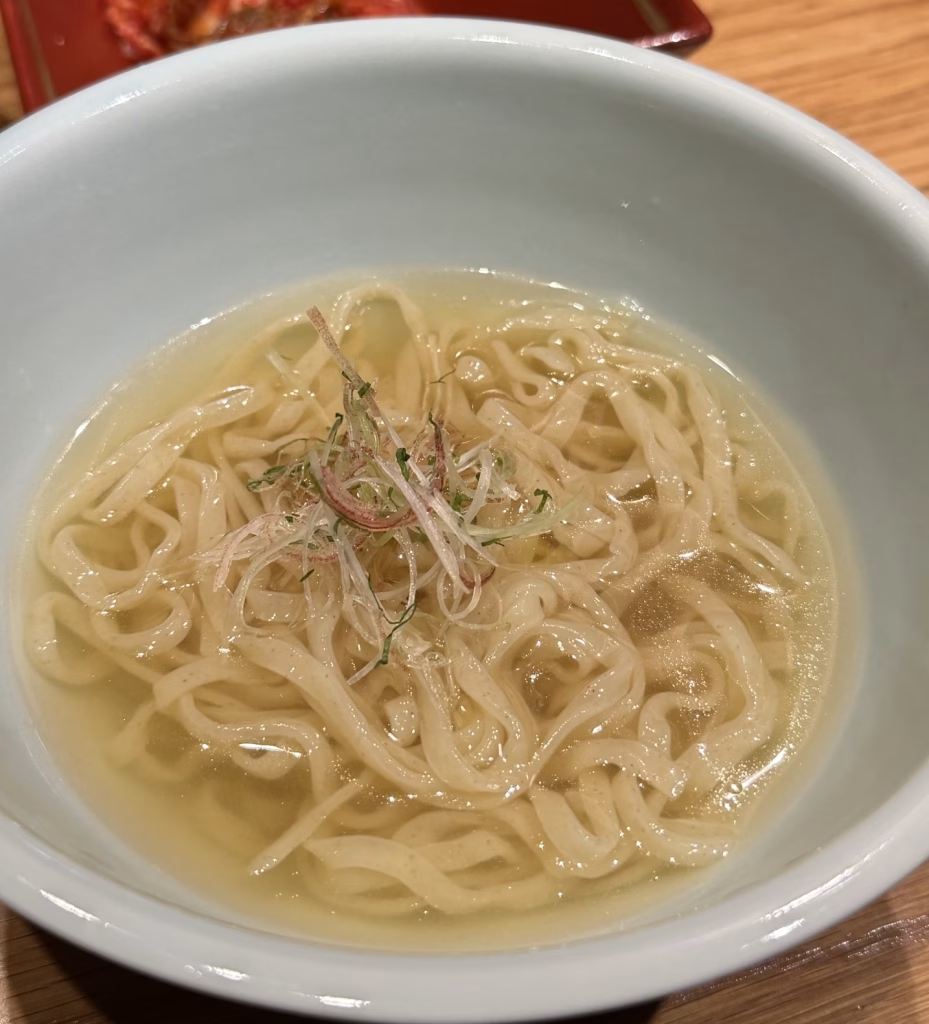
Finishing Two|Cold Noodles, French Brie
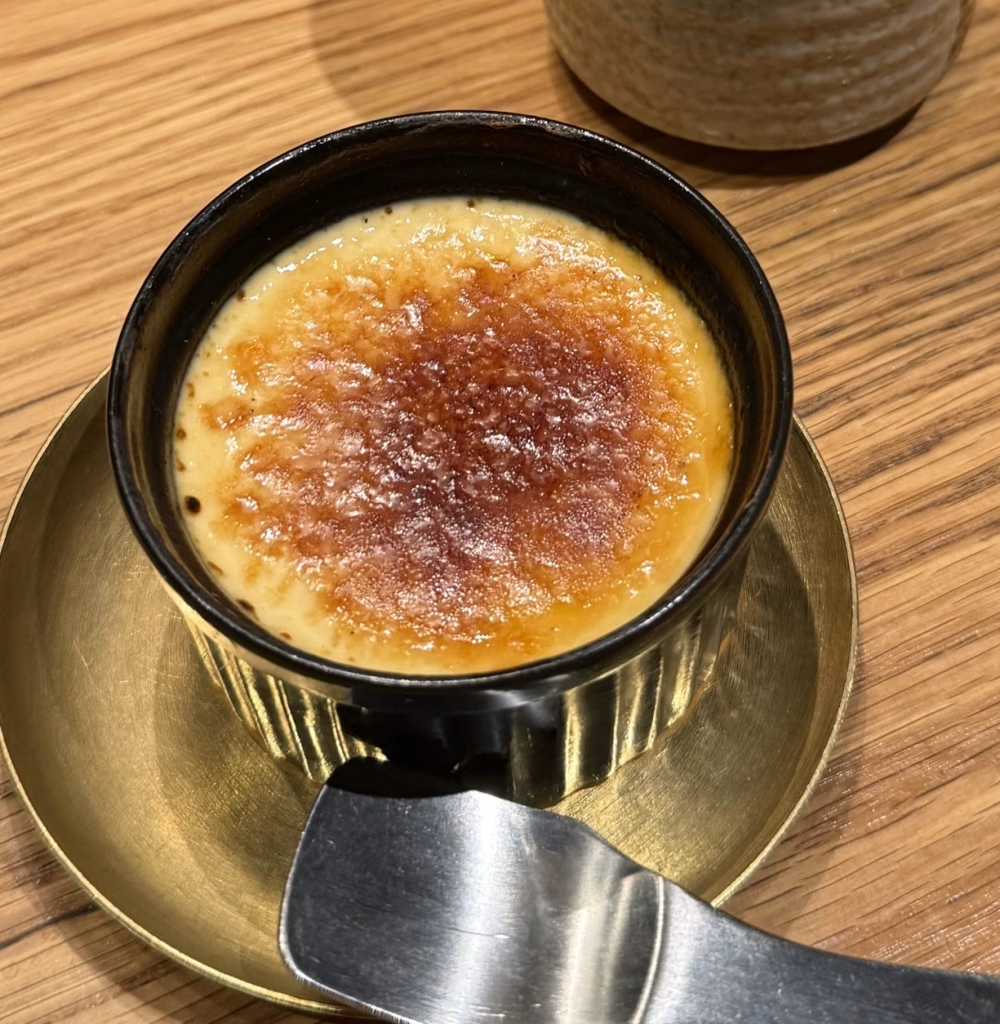
The cold noodles clear the mouth, and the acid and ice take away the oil in the mouth at once. This step is done cleanly and neatly. Finally, the French brie, with caramel crispy noodles and cold custard, is placed in a gentle position. The combined function of the two is very clear: let you leave without a mouthful of oil in your mouth.
Drinks and pairings: the only service shortcoming of this meal
I must be honest: the wine sommelier that night was not professional enough. Both the sommelier temperature and the service process can be seen that it is not the focus of this store's training-how precise the meat part is, and how casual the wine part is. For a shop with a per capita income of ¥16,500, this gap really exists, and it is one of the main reasons why I deduct points.
If you value the pairing of food and wine, my suggestion is to adjust the expectation value and make some adjustments in the strategy of ordering wine.:
Sake may be a safer choice here. Sudou's shop has roots in Niigata, and the selection of sake is a block where the store has the right to speak. Based on the structure of this set of courses, the salt-grilled (beef tongue, filet mignon) in the first half of the course is suitable for the "smoked wine" in the SSI classification-the Daiginjo system with gorgeous aroma and neat acidity. It is drunk at a cold temperature. The function is the same as that of lemon juice. Cut the grease.. In the second half of the sauce-yaki and rice-pairing paragraphs, it was changed to pure rice wine of the "mellow wine" series. Drinking at room temperature or slightly warm, the sweetness and taste of the rice can withstand the salty and sweet taste of the sauce.
If you must drink red wine, It is recommended to avoid the New World Cabernet Sauvignon with heavy tannins. The roast meat grilled at the table is one piece at a time and one at a time. The wine is not served with a whole steak. The heavy tannins will blunt the taste buds between the slices. Medium-bodied, bright-acidity options-such as Burgundy Pinot Noir, or red wines with high acidity in north-central Italy-can better keep up with this "piece by piece" rhythm. When ordering, you can directly ask the other party to confirm the temperature of the wine.
The most pragmatic answer: beer or golf. In a set of courses with charcoal and grease as the main axis, the efficiency of clearing bubbles and ice is the highest, and it will not step on the weaknesses of this store's service.
Final Thoughts
Honest summary: 8.5/10
advantages. The grade and slitting of the meat are precise, and the roasting master system allows each piece to be removed from the fire when it is time to leave the fire. This is a stability that you can never do by roasting by yourself. The sequence design of the course has a clear intention-beef tongue is compared in two stages, shabu-shabu resets the taste, and the three parts of the sauce are divided into three ways to eat. The whole set is structured, not just the expensive meat is lined up together. The service staff is fluent in English, the parts are clearly explained, and they are extremely friendly to foreign travelers. The space is quiet, suitable for speaking well.
disadvantages. First, spicy beef sausage as the finishing touch is completely out of place with me, and the texture is out of touch with the fineness of the whole course. Second, the sommelier level of red wine is obviously not equal to the professionalism of the food side, which shouldn't happen at this price.
Who is suitable. People who want to eat beef tongue, filet mignon, chateaubriand, sirloin, buttocks, and complete parts of the waist and buttocks at once in Fukuoka; dinner for two or four people who don't want to take care of the fire by themselves and want to concentrate on talking; travelers who need to communicate in English.
Not for anyone. People who want to order freely and pursue portion size and satiety (this is a curriculum system, and the rhythm is scheduled); people who regard meal and wine pairing as the focus of the meal; families with small children (see the practical information below, the reservation platform records that it is only available for lunch, and it needs to be ordered the same as adults).Course).
Why is it 8.5. There are almost no flaws in the food side. Just look at the meat and roasting skills, you can stand for 9 points; the end of the spicy beef sausage and the red wine waiter are deducted a little each. The willingness to return is very high, but next time I will skip the wine list and drink sake or golf instead.
Related information
- Shop name: Yakiniku Sudo Haruyoshi (Yakiniku Sudo Haruyoshi)
- Address: 3-11-19 Haruyoshi, Chuo Ward, Fukuoka City, Fukuoka Prefecture, 1F Panoramaクエアa Hakata
- Transportation: About a 4-minute walk from Tenjin South Station on the Nanakuma Subway Line. Opening hours: Dinner 17:00-24:00 (last order 23:00); Reservation system is used for lunch.
- Closed: The end of the year and the beginning of the year Seats: about 30 seats, half of the room with counter seats and warm curtain compartments (2-4 people)
- Reservation: It is strongly recommended to make an appointment in advance. Online reservation links (platforms such as TableCheck) can be found directly on the Google Maps business page, and you don't need to call to complete it; Dinner is popular, the earlier you book, the better.
- Set meal: Special yakiniku ¥ー ¥¥16,500/yakiniku ¥ー ¥ ¥13,200 (all prices include tax, service charge is included)
- Per capita consumption: about ¥16,500–20,000 (including drinks and service fees)
- Payment: Credit card (VISA/Master/JCB/Amex/Diners) and QR Code mobile payment are available
- Children: The reservation platform records that they can travel together during lunch, and they need to order the same course as an adult. Double counter seats are not available; It is recommended to confirm before making a reservation for dinner.
- Language: English, smooth communication
This meal is fully self-financed.