
Content table of contents
From "Cocktail" to "Sip", an experience that disassembles bartending into a sensory narrative
When you come to Barcelona, if you want to arrange a bar trip with a real memory point, Sips is almost impossible to get around. This bar once won the World's 50 Best Bars in 2023, the first in the world, and the first in Europe in the same year; and in the 2024 list, it ranked third in the world. 
This time I made a special arrangement to bring my parents to experience it together, and I am also very grateful for the recommendation of my friends. Sips can choose a la carte on site, or you can directly experience their more complete 14-course bartending tasting menu; since they are all here, of course you don't hesitate to choose a set meal.
Spanish Bar Barcelona Bar The World's third bar Sips Barcelona Bar Cocktails The World's 50 Best Bars
(Dining in March 2026)
Sips menu introduction and dining experience
When you walk into Sips, you don't just drink, you enter another world.
After passing through the relatively open space outside at the beginning, you have to pass through a string of beaded curtains before you can truly enter the core area inside. That moment was a lot like switching from a normal bar to another private venue dedicated to this experience. It was indeed ritualistic with a sense of VIP.
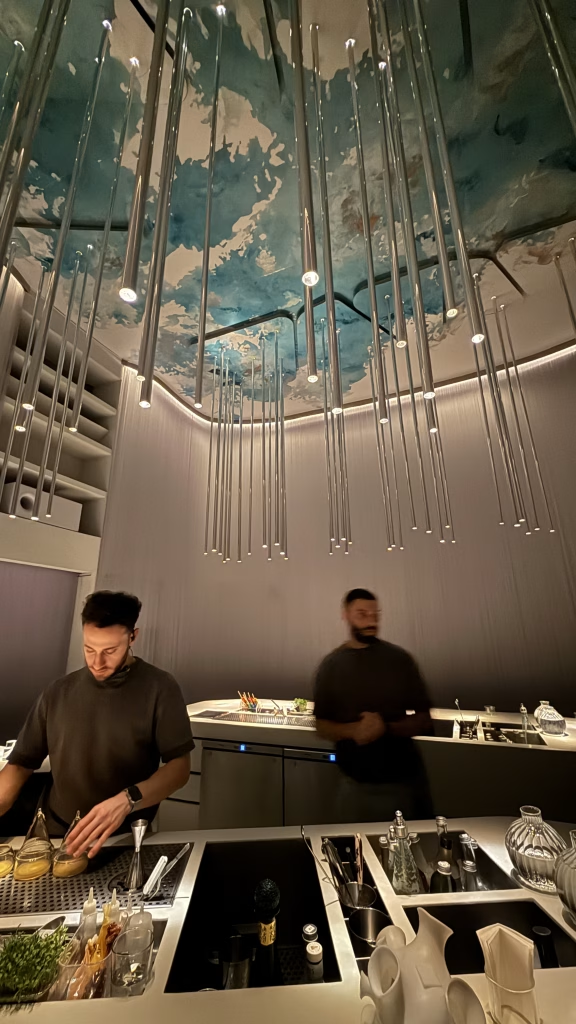
The space inside is very beautiful. It does not go through the route of luxury, but has a clean, futuristic, and laboratory design. There are about five or six positions on the left and right sides, and there are not many seats, so the overall experience is more concentrated and it is easier to feel the interaction between bartender and the guests. At the same time that night, two bartenders were responsible for the interpretation of the whole set of bartenders. The rhythm was smooth and the explanation was complete.
Before the official start, first send a very special menu. It's not to show you the wine list directly, but to look at the keywords through different apertures, and guess the direction of the next journey from the clues. This design is very in line with the core concept of Sips-they don't want to just bring out a "cocktail", but want to condense a concept, a texture, and a flavor narrative into a sip.
They themselves made it very clear:
What is done here is not cocktails in the general sense, but sips. That is, to reduce the capacity, increase the number of experiences, and turn drinking into a structure like a tasting menu. It's not just a drink, but through multiple small units, you can feel the advancement of texture, flavor, aroma and concept.
And this set of 14 cups is indeed moving forward according to this logic.
Chapter 1|Escoffier
Use the vocabulary of French cuisine to start the first flavor narrative
The first chapter is named after Escoffier, which directly moves the language of French haute cuisine into bartending. This paragraph is very similar to telling you: tonight is not just about drinking, but reading the history of cooking, techniques, and taste memory through bartending.
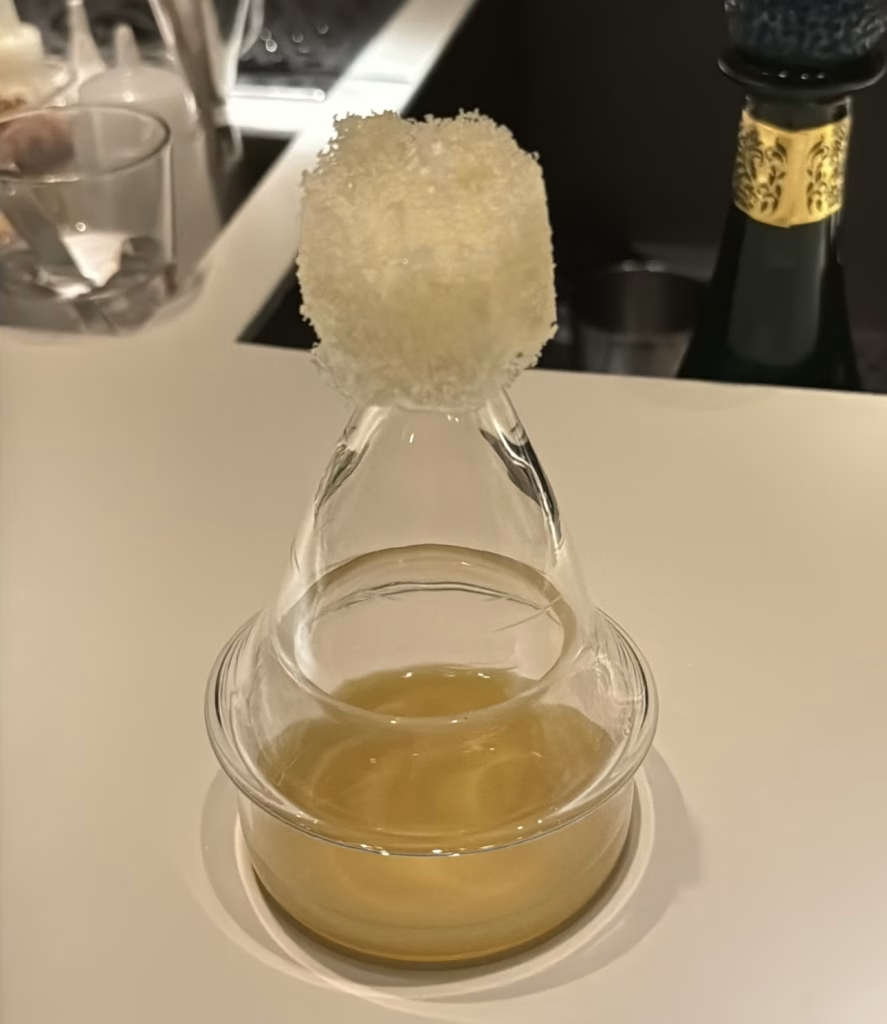
Butter & Bread
I was really surprised when the first course was served. The top looked like a soft sponge, but it turned out to be a sponge texture made of cream. It felt very light and melted at the touch. I almost couldn't believe it. The bottom is matched with a glass of non-sparkling Guevas-style liquid, which is overall sweet and has a little orange juice-like fruity feeling, and the wine is very light.
The way to drink this cup is not to drink it alone, but to take a sip of the creamy sponge first, and then take a sip of the liquid underneath. The former is fatty and dense texture, while the latter provides sweetness and flow. There is a way to disassemble the "butter bread" and reassemble it into a liquid and air feeling. It's very interesting and suitable as the opening of the whole menu.
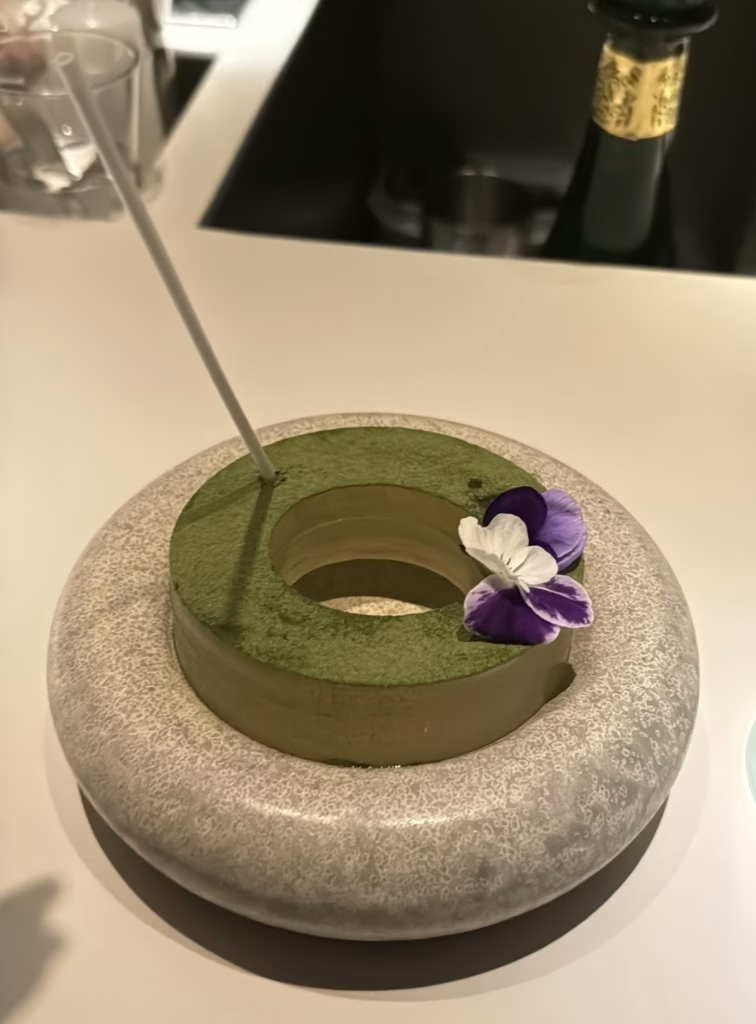
Spinach Gilding Donuts
The appearance of this dish is so cute that it even makes people reluctant to start. On the surface, it looks like a green donut, but it is actually a gilding structure with the concept of French aspic. It combines green apples, basil, tarragon, and even brings in the subtle contours of yellow mustard.
The drinking method is also very ritualistic: you have to pierce Giliding directly with a straw and drink the liquid hidden under it. That kind of "destruction" moment happens to be the most interesting place about this cup. From its visual cuteness, it suddenly cuts into the complexity of acid, herbal, and slightly spicy aromas.
Chapter 2|Tokio
Inspired by Japan, play with texture, fermentation and citrus
The second chapter is called Tokio. Although the spelling is not Tokyo, the concept of the whole paragraph is very obvious, that is, with Asian and especially Japanese flavors as the main axis. In this paragraph, I think it is more like reinterpreting the "Japanese sense" in Sips' own language than simply imitating Japanese bartending.
Japanese Style Amazake × Citrus Gili Ding
The structure of this cup is very layered: the main liquid has an amazake (sweet wine)-like rice fermentation, paired with oranges, ylang-ylang essence and gin; next to it are two pieces of citrus gilding, and a piece of perilla leaf is placed on one side.
The drinking method is designed as a three-stage action:
First take a bite of one of the solids, then take a sip of wine, and finally take another solid to accompany the drink. Therefore, the same glass of wine will produce two different impressions because of the presence or absence of perilla and the order of Gilding.
I like the ingenuity of this cup very much. It does not rely on a strong sense of wine to convince you, but makes you feel how the aromas of rice, orange, floral and perilla are intertwined in your mouth. It is a very delicate interpretation of Japanese inspiration.
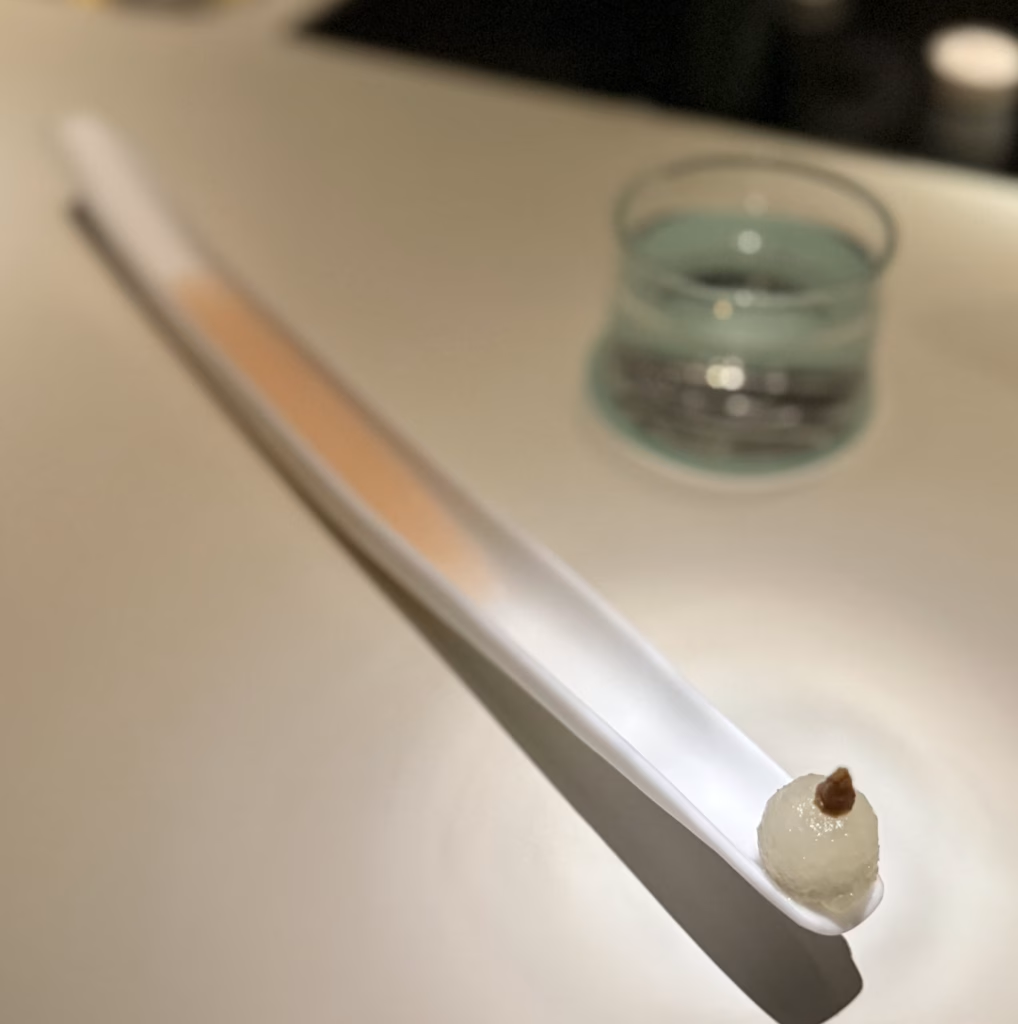
Grapefruit × White Port × Miso Melon
This dish is actually a group of works jointly established by liquids and solids. The liquid part is centered on sake, white port, and grapefruit juice; the solid part is azuki, vanilla, and white melon, and a little miso is stacked on it to pull umami in.
I think the most interesting thing about this cup is that its sense of taste exists at the same time:
Sour, sweet, bitter, salty, and fresh almost all appear together.
Moreover, the vessel itself is not a simple cup, but a specially designed carrying form that allows you to eat the solid in one bite before finishing with the liquid. The process of winding from sweet bean paste, miso, melon, to bitter grapefruit and white porter is very rich, almost like eating a liquid dessert.
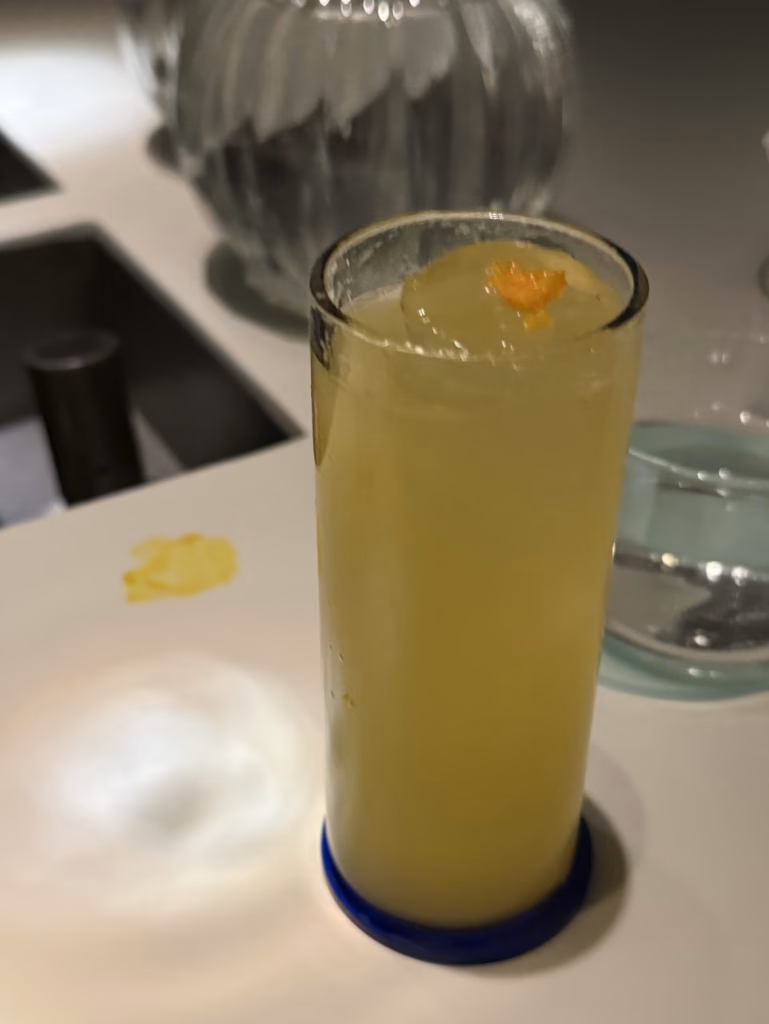
Whisky Highball with Calamansi
This cup is based on Japan's most classic and popular Whiskey Highball, but it replaces the traditional soda and uses homemade soda with calamansi (Philippine calamansi) flavor, and adds Chinese kumquat peel citrus zest, and the whole goes through a slight smoking cycle.
The impression of drinking is very clear:
Smoky, sour, and citrus peel feel oily, but they are unexpectedly balanced when they hit each other. It is also matched with a small bubble-like solid element next to it, which makes the flavor level of whiskey more complete.
I think this cup is very suitable for the description of "the sense of conflict is charming". It's a highball on the surface, but it actually contains more Asian citrus and smoky herbs.
Chapter 3|Neu
Ice and snow, forest, honey and mushrooms, an abstract sensory experience
Neu is "snow" in the Catalan language. This chapter is obviously playing with the feelings of ice, nature, forest and cold textures. It is also the most visually intense section of the entire menu, but at the same time it is also the most personal taste.
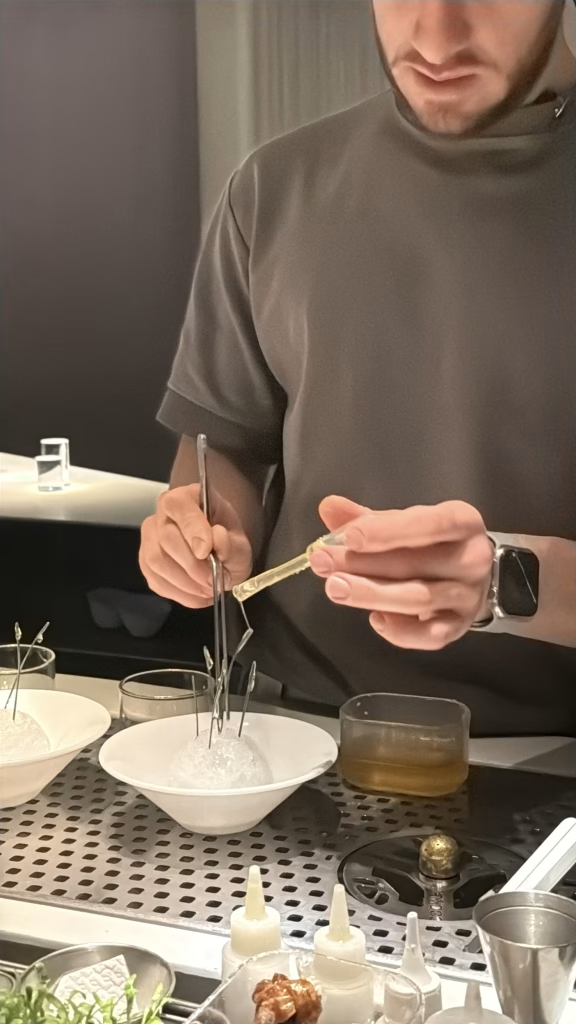
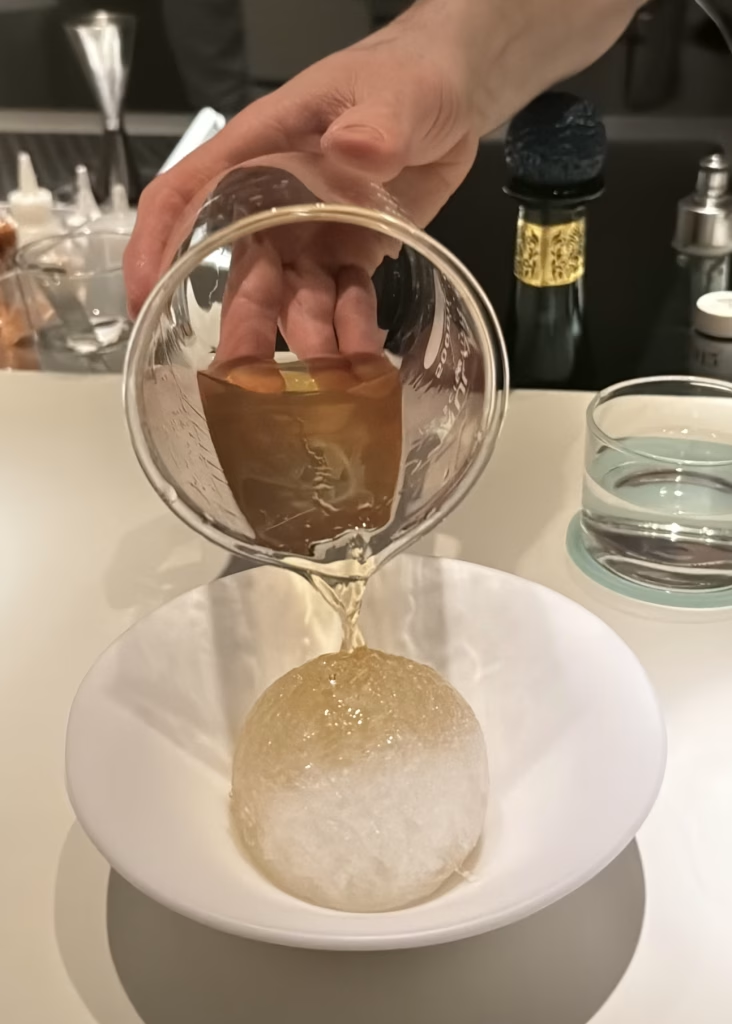
Honey pine branch × Mushroom wine
The vision of this cup is very beautiful. Like a snowball stuck in a pine branch wrapped in honey, first suck off the honey from the pine branch, then put it next to it, and then bartender will pour the liquid and let you drink it like soup.
The liquid itself uses mushrooms, turpentine, oak, some elements with a sense of forest, and a little tequila to pull the structure apart. Conceptually, it is a "forest in the snow", not just a glass of wine.
To be honest, the taste of this cup is really amazing, but the taste is a bit unacceptable to me personally. It is more like a highly artistic flavor device, rather than a drink that I would like to order back simply because it is delicious.
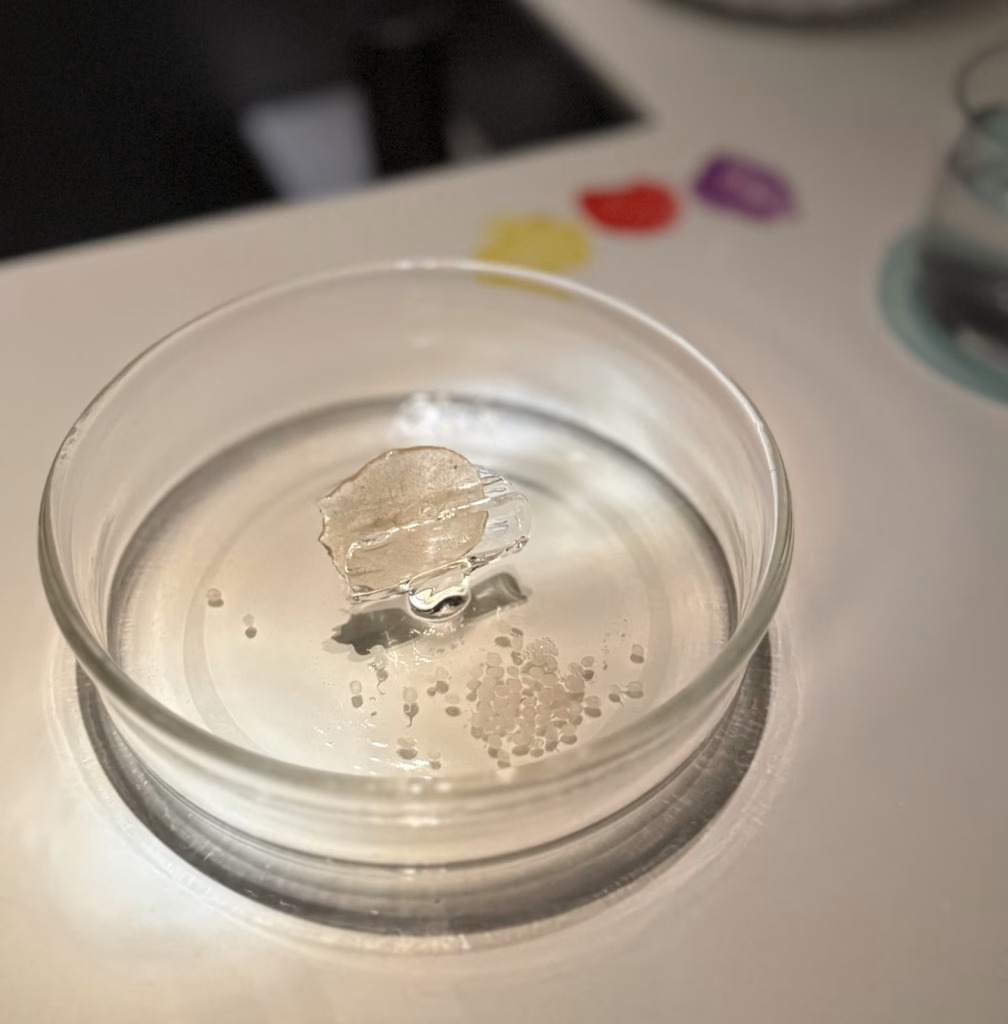
Lychee × Finger lemon × Lavender borneol
This cup is relatively pleasing. First eat a small piece of lavender-flavored borneol, and then drink a liquid with the aroma of lychee, which is matched with the bursting acidity of finger lemon.
The order of entry is very important:
Lavender first opens the nasal cavity and mouth, then lychee brings out a soft fruity fragrance, and finally finger lime brightens the whole with a very fine, very strong acid.
This cup has a sense of perfume, and it also has the transparent and cold floral atmosphere of "Ice and Snow World". I think it's quite special.
Chapter 4|Oxid
With the theme of oxidation, the sense of time of sherry is brought in
In the chapter of Oxid, the logic of flavor began to deepen, and the sense of wine was relatively clearer. The theme is oxidation, so the whole paragraph is almost a tribute to Sherry's familiarity with oxidation.
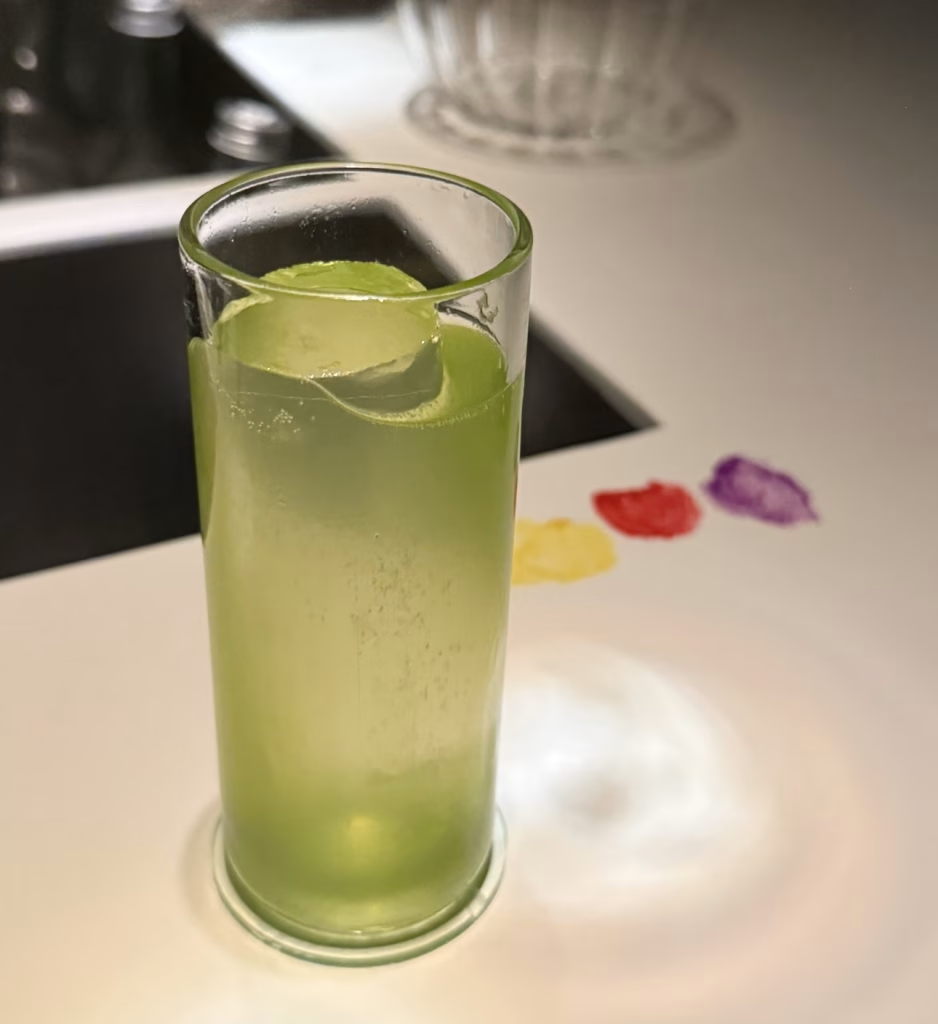
Mint sherry
This bartender said from the beginning that the concept is a bit like Mojito, but in fact there is no apple or lime in it. Instead, it uses the logic of sharing/sherry to rewrite the familiar outline of Mojito, and then replace the Sprite with homemade mint soda. Soda.
It's really interesting to drink. The entrance is sour, fresh, and herbal with mint, but the skeleton is not Mojito's lime and lamb, but a drier, more mature, and more oxidizing sherry structure.
This cup keeps me confirming the contents with bartender, because the taste is really hard to guess intuitively.
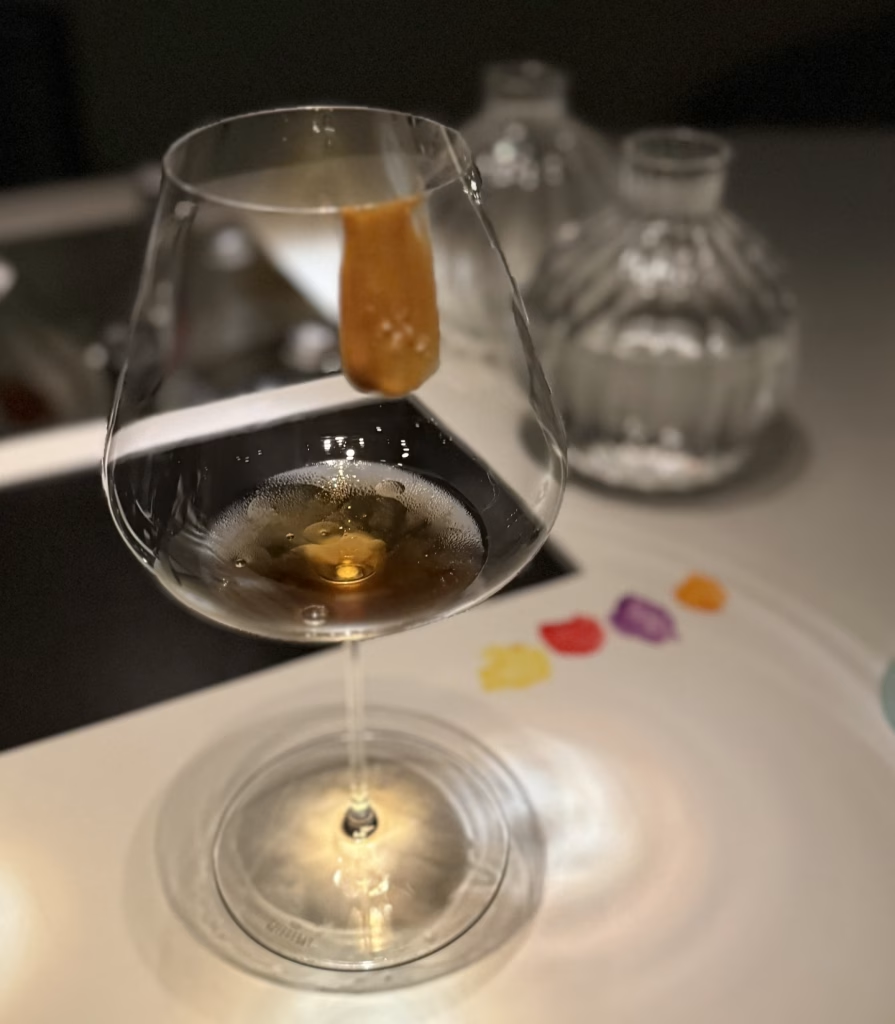
Hazelnut sherry
This cup is my favorite cup in the whole set.
The body of the wine emphasizes the aromas of raisins, nuts and hazelnuts that will appear after oxidation and maturation. It is paired with a cream with hazelnuts and salt, and a few drops of hazelnut oil to increase the aroma. The drinking method is also very interesting. You have to lick the hazelnut sauce by the glass before drinking sherry.
The result was an unexpected overshoot.
Sherry originally had ripe nuts, dried fruits, and woody aromas, but hazelnut sauce pushed these flavors in the direction of sweet and salty interlacing, making the whole more three-dimensional and charming. I even licked the hazelnut sauce on the side of the cup cleanly, and I really like it.
Chapter 5|Folic
Redefine Bloody Mary with the theme of tomato and folic acid
This chapter is named after Folic and points to folic acid, which is common in fruits and vegetables, and tomato is one of the representative ingredients. Therefore, this paragraph is actually doing two different versions of Bloody Mary.
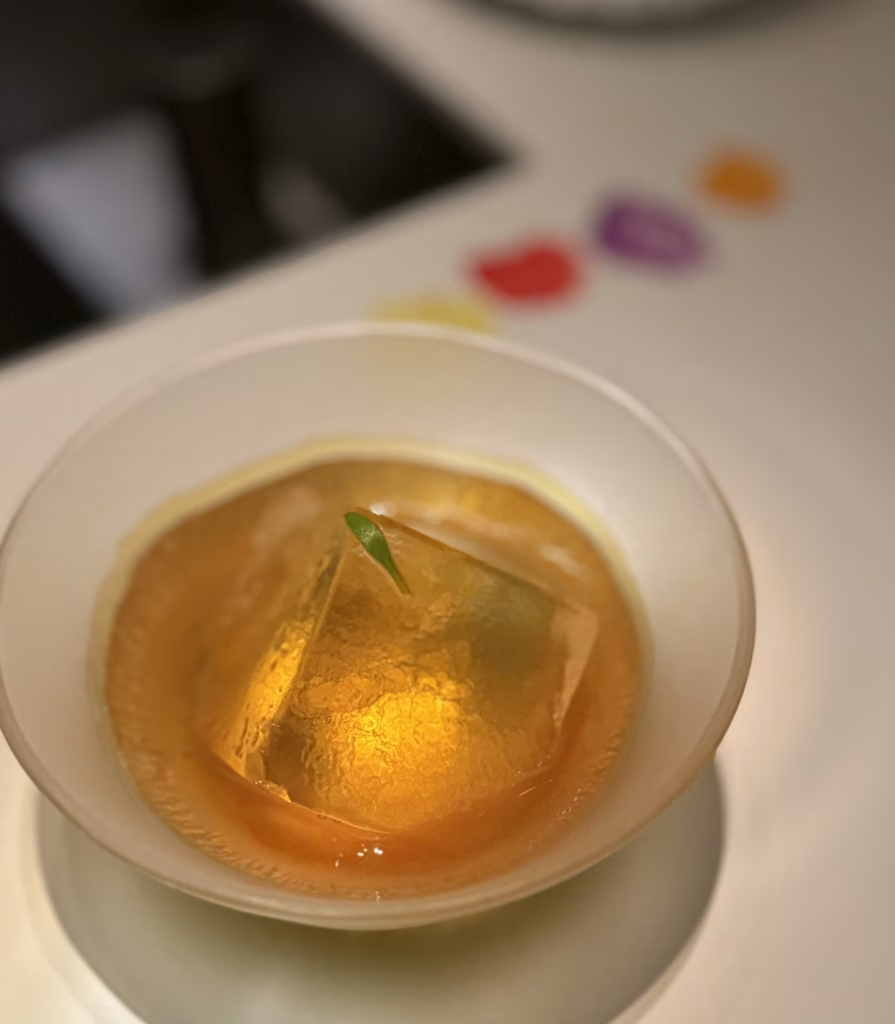
Tomato Clarified Bloody Mary
This cup is centered on tomate de corda, an important local tomato variety in Spain. This tomato is also a common choice for making pan con tomate, one of Barcelona's most classic tapas.
Sips clarified Bloody Mary, making the original heavy and turbid tomato texture clean and transparent, and the overall appearance is more elegant. But the spicy, sour, spicy spices and tomato base that should be in the flavor are still there.
But if you talk about concepts alone, this cup is very powerful. It transforms a classic cocktail that was originally "rough" into a version that looks almost like crystal clear consommé, retaining the soul of Bloody Mary while completely refurbishing the texture.
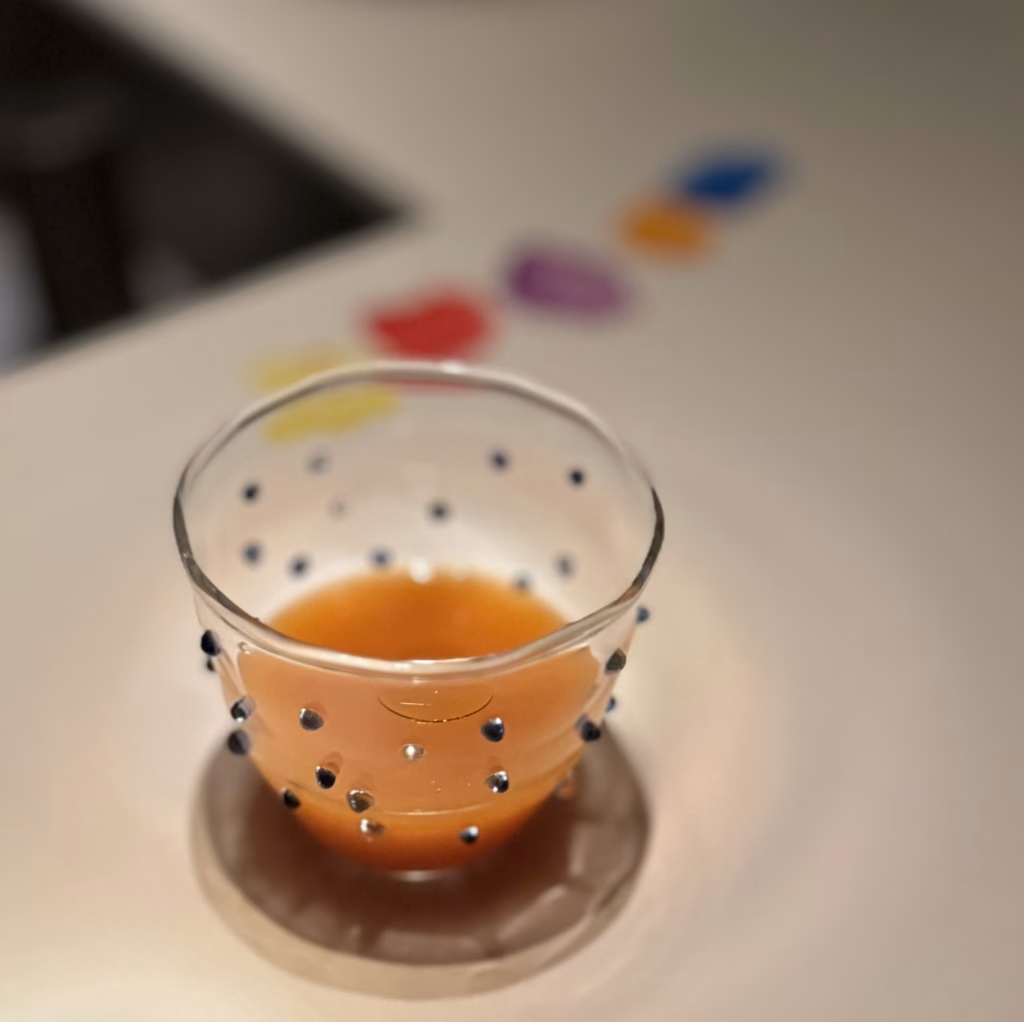
Sea urchin × Carrot Bloody Mary
The second cup is more inclined to the concept of "land and sea fusion". Instead of tomatoes, it combines sea urchins with carrots, and only a few drops of extra virgin olive oil are added to the surface to provide texture.
The focus of this cup is not to be like Bloody Mary, but to extend the spirit of Bloody Mary's "vegetable sense + salty freshness". Carrots provide sweetness and a sense of land, sea urchins provide ocean umami, and olive oil makes the taste more rounded.
This cup is very Sips: you know it is quoting classics, but it will not do it, but simply dismantle and reorganize the classics.
Chapter 6|Nature
Plants, flowers, rhizomes and animal milky sensations put nature directly on the table
After entering the Nature chapter, the atmosphere of the entire menu has once again turned to be more organic, more vegetative, and closer to the interaction between smell and touch.
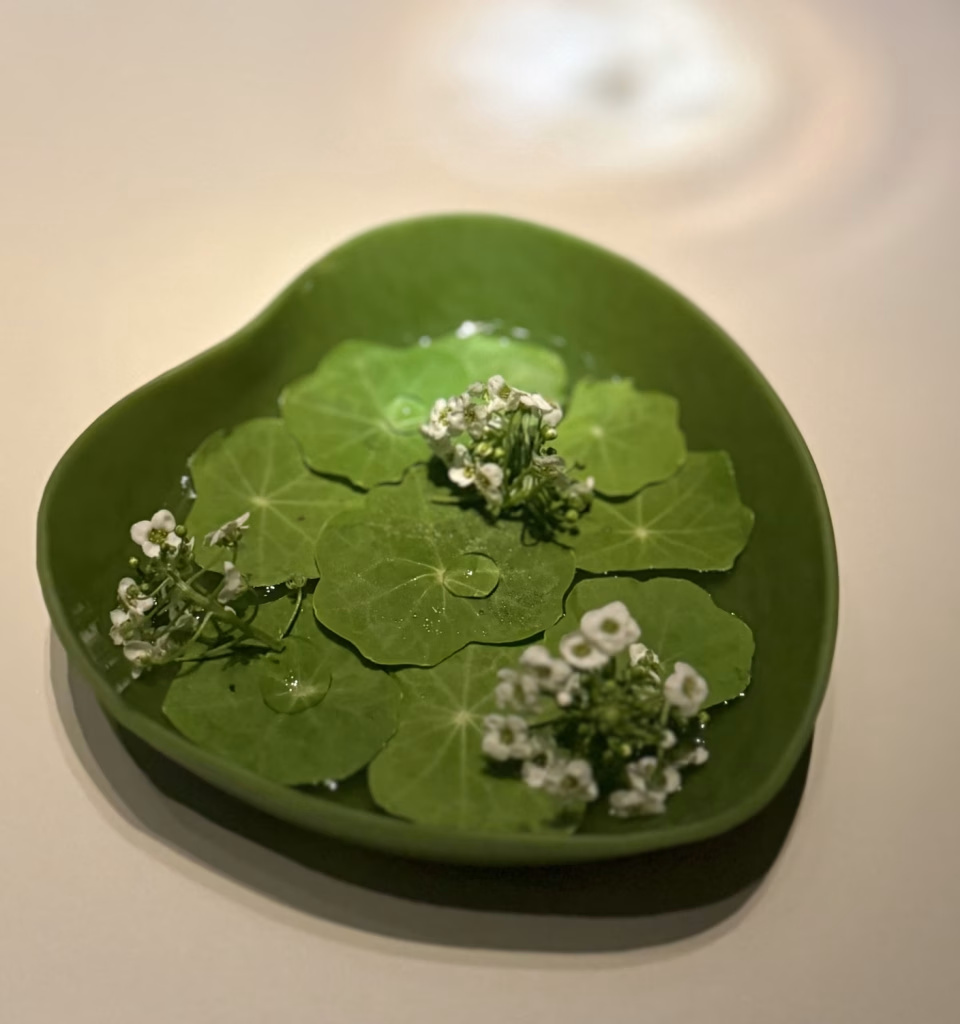
Celery × pear × Vermouth
There is a complex liquid hidden under this cup, and there is a visual design like a potted plant on it. There are a variety of herbs in the liquid, and vermouth is used as the skeleton, with extra virgin olive oil, celery, pear and other elements. The way to drink is to drink the liquid normally first, and then eat those plants and small vegetables.
Some of the leaves really taste like water radish, with a pronounced spicy taste, and even a bit nasal, like wasabi or radish.
This cup is like reminding you that nature is not just gentle and floral, it also has earthy, spicy, herbal, bitter and stimulating flavors.
The concept is very complete, but it is also a work that depends on personal acceptance.
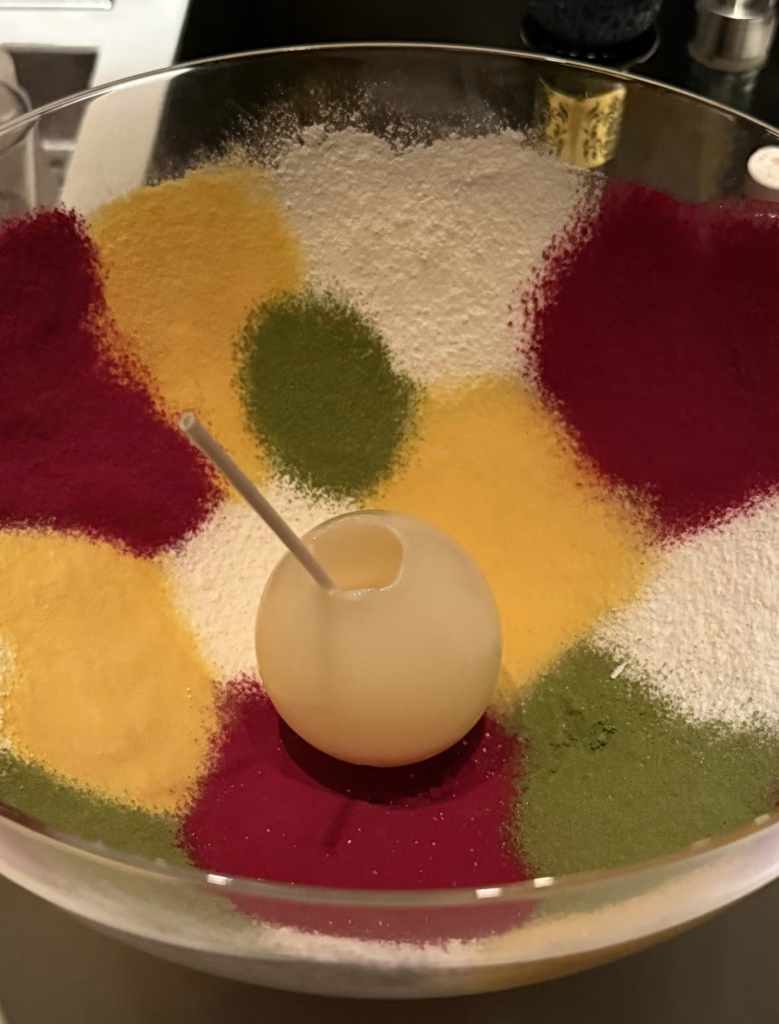
Osmanthus honey goat Milk Wine
The appearance of this cup is really super eye-catching. The whole person should be like a hummingbird, sticking his head into the center of a vessel like a flower or a small bonsai to smell the fragrance, and then drinking the liquid in the middle. Bartender even directly said that the concept of this cup is hummingbird.
There are aroma elements of different colors on the periphery, which will smell like flowers, plants and green leaves; the intermediate liquid contains whiskey, rosemary flower, tonka bean, honey and goat milk.
In theory, it should be a work of floral fragrance, honey, animal milk and herbs intertwined.
But to be honest, most of what I actually smell is matcha or green plants. It's really special and has a sense of ritual, but if you think of it in terms of pure "taste level", I'm not as stunning as the vision.
Chapter 7|Theobromine
Use a fake tomato as a knot to keep the sweetness and fragility to the end
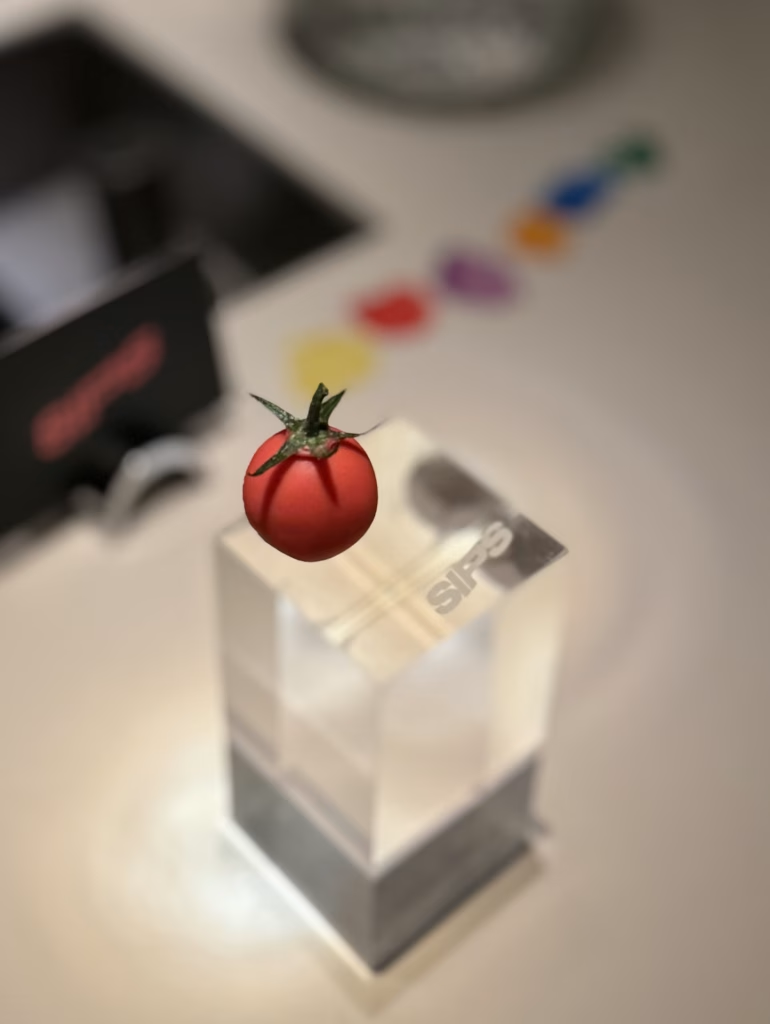
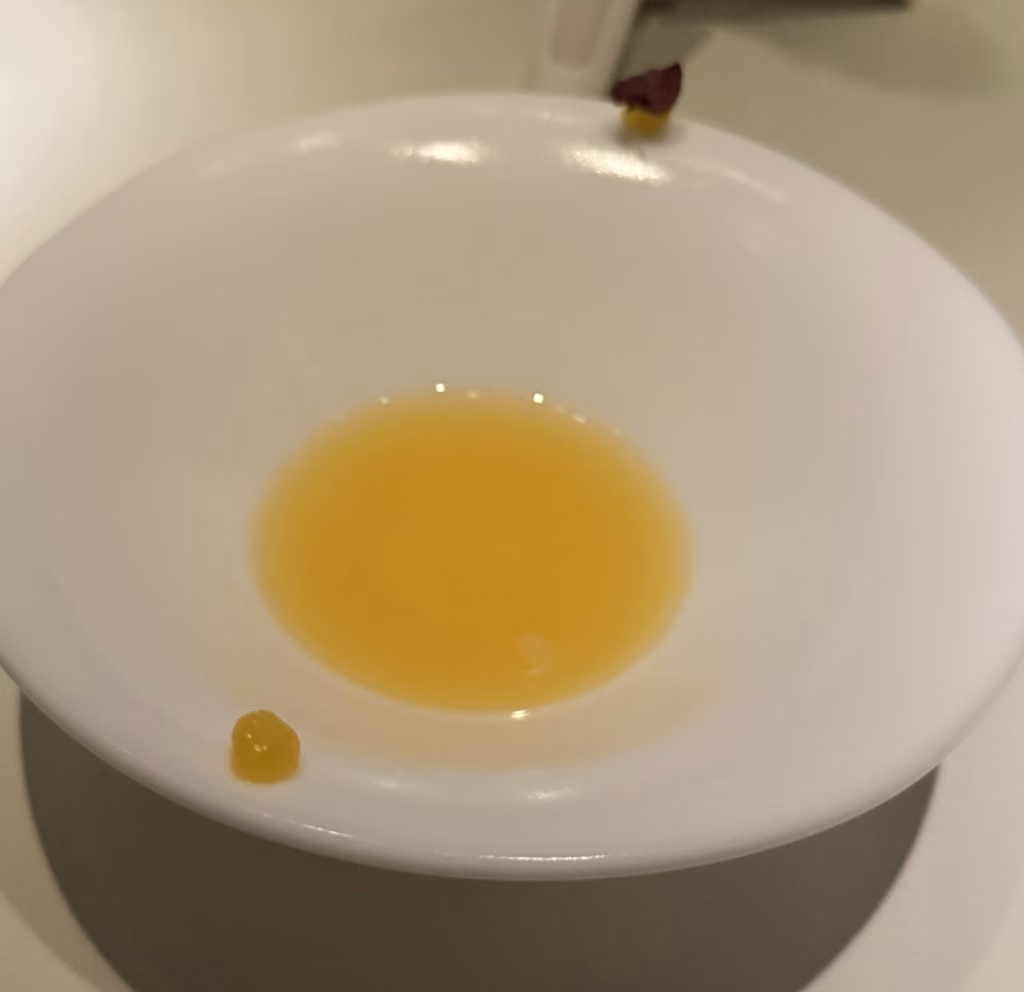
Fake tomato
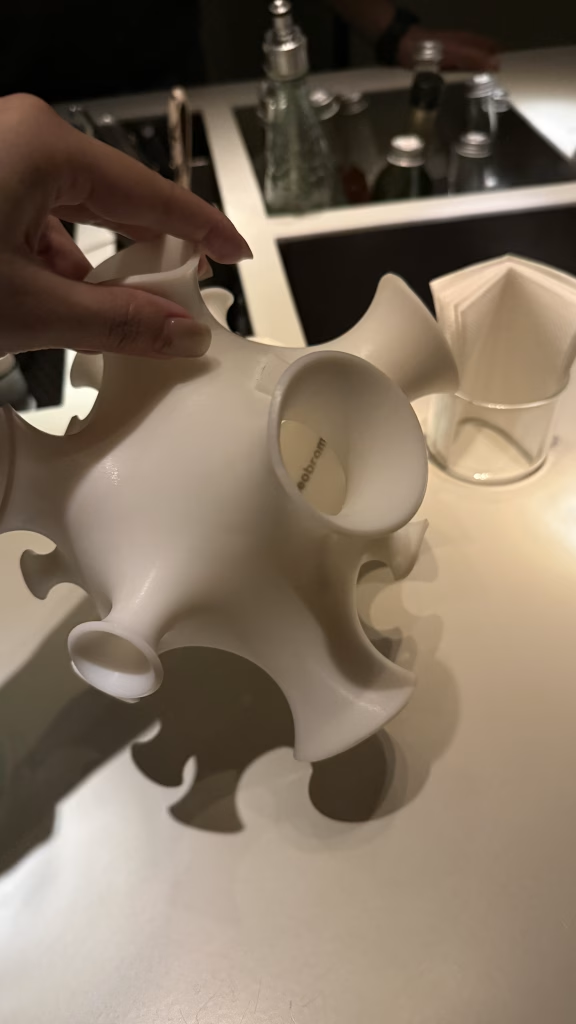
The last cup is a very delicate fake tomato. It's actually liquid. The contents include orange juice and hazelnut cream. The whole is extremely fragile. You have to pick it up from the green tip and eat it in one bite, but the green part itself cannot be eaten.
This cup is like a playful ending-visually like a real tomato, but actually a sweet, fruity and nutty liquid bomb. Very fragile, but also very Sips.
Final Thoughts
This is not a bar that simply "drinks", but a sensory experience that turns bartending into a tasting menu.
If you use the simplest sentence, Sips is really a very creative bar. The powerful thing about it is not just to make the wine beautifully, but to integrate the color, fragrance, taste, texture, interaction, vessel design, and narrative concepts together, so that what you drink is not a single glass of bartending, but a complete set of experiences.
It's a lot like moving the whole idea of fine dining into the bar:
Each chapter has a theme, and each cup has an action design. Every sip is not just for drinking, but for you to participate.
My favorite is the hazelnut sherry in the Oxidation. That cup of oxidized maturation, hazelnut, saltiness and texture is very complete, and it is also one of the few works that I really want to drink again all night.
But if you want to say the shortcomings, it is also very clear:
The sense of wine is really not strong.
The overall preference is for a style that is easy to enter, creative, and interesting. The presence of alcohol in many glasses is relatively low, and it is not the type that will make you clearly feel that "this glass of wine is very powerful and the skeleton is very heavy." To some extent, it does make people feel a bit biased towards the "sister wine" route, so it may be more popular with young customers.
But if what you are looking for is not heavy drinking, but want to experience what the world's top bars are doing; want to feel the complete structure of the cocktail tasting menu; want parents or friends to easily participate, so as not to be scared by too strong wine; want to arrange a real memory in Barcelona.Point of the night…
That Sips is really worth a visit.
It's not just "delicious",
It's about letting you see... the original story can also be designed as a complete narrative.

Rating and Cost
- 🌟 Rating: 9/10
💰 套餐:€97 / 人
Restaurant information
- address:C/ de Muntaner, 108, Eixample, 08036 Barcelona
- Reservation:https://sips.barcelona/esencia/
在巴塞隆納安排一個有記憶點的夜晚,住宿可參考 巴塞隆納訂房。(聯盟連結,不影響你的價格)